


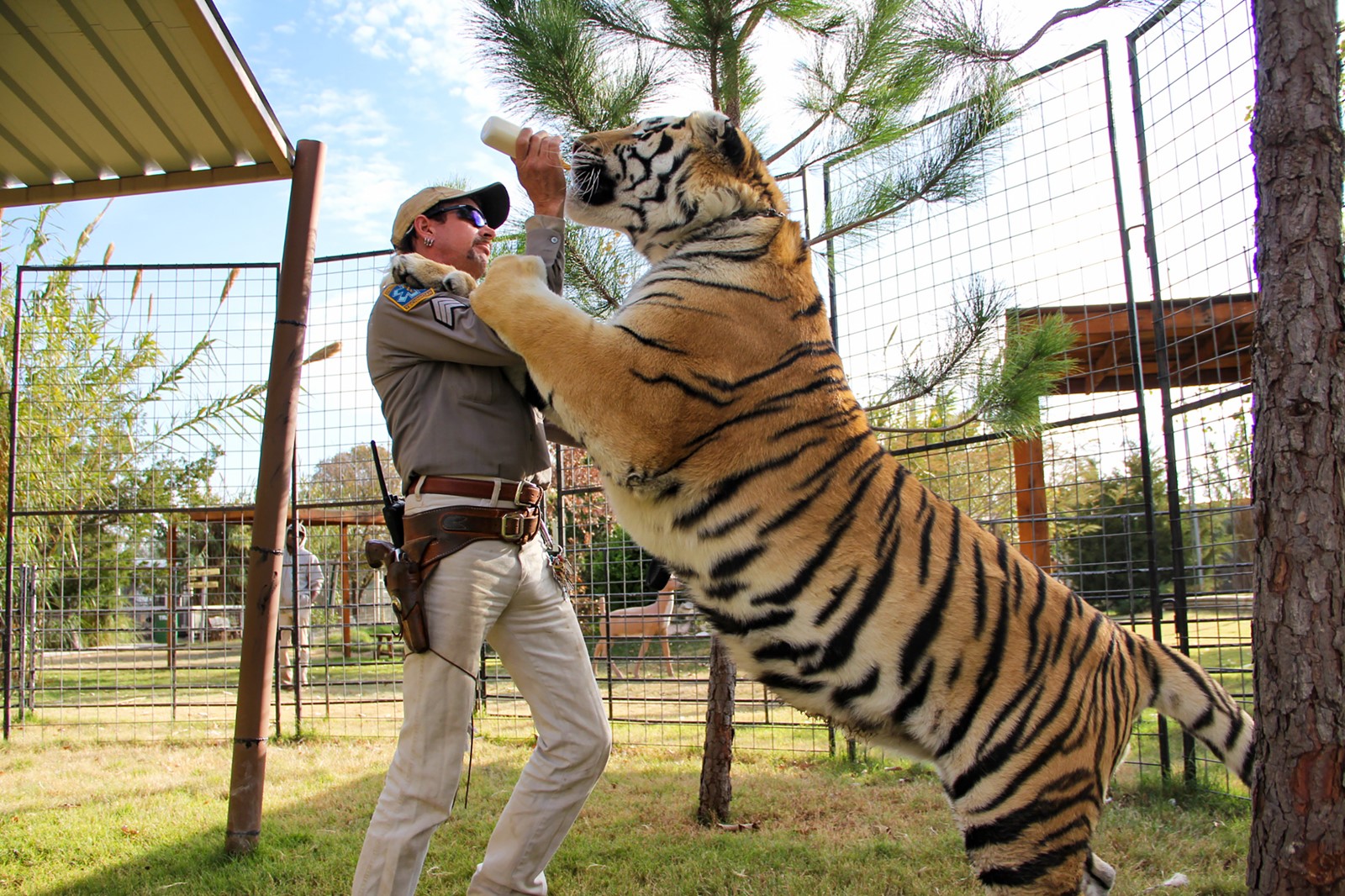


The days of paying to pet lion and tiger cubs, as portrayed in the hit Netflix documentary television series “Tiger King,” are officially over in the United States.
On Tuesday, President Joe Biden signed a bill into law that seeks to halt the exploitation of big cats by preventing unlicensed people from owning, breeding and transporting these animals. The law also bans licensed exhibitors — mainly zoos and sanctuaries — from allowing the public to touch the animals or hold cubs.
“Tiger King,” which captivated viewers stuck at home in 2020, shone a light on the fraught world of private big cat ownership and highlighted the “miserable conditions thousands of tigers, lions, leopards, and pumas are kept in by irresponsible owners,” Rep. Mike Quigley, D-Ill., said in a statement.
The seven-part series depicted a turbulent industry of roadside zoo attractions in the U.S. and zoomed in on a now-shuttered facility in Oklahoma once operated by Joseph Maldonado-Passage, a colorful character who also goes by the name Joe Exotic.
The show also focused on simmering discord between Maldonado-Passage and Carole Baskin, a self-described animal welfare activist often clad in animal-print apparel who denounced Maldonado-Passage’s zoo.
In January 2021, several months after the show’s release, Quigley introduced the “Big Cat Public Safety Act,” which in July of this year passed in the House of Representatives with a 278-134 vote and then in the Senate unanimously earlier this month. The animals covered under the bill are species of lion, tiger, leopard, cheetah, jaguar, cougar and hybrids of these cats.
The new law will “not only help end the cruel and inhumane cub petting industry,” Quigley said in a statement, but also keep communities safer.
Animal rights advocates celebrated the legislation, which they described as long overdue.
Under the new law, owners of big cats have 180 days to register their animals with the U.S. Fish and Wildlife Service. People who fail to do so face a fine of up to $20,000 or five years in prison.
 PREVIOUS ARTICLE
