


Digital lives driving brick-and-mortar boom
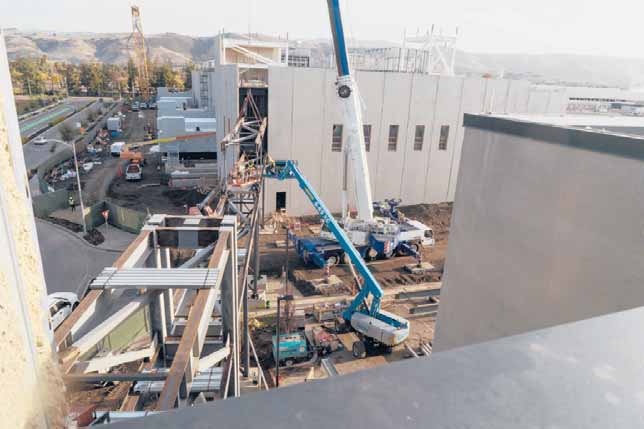


The shift to digital work and play from home, hastened by the pandemic, has wreaked havoc on commercial real estate. But experts say it has also generated one surprising bright spot for the industry: data centers.
The growing reliance on cloud-based technology — and the big, blocky buildings thathouseitshardware— has createdgreateropportunities for developers and investors as businesses and consumers gobble up more data in a world that has become increasingly connected.
“Our houses are connected, our cars are connected, our streetlights and parking meters are connected, and every single one of those connections is passing data back and forth,” said Sean O’Hara, president oftheexchange-tradedfunds divisionatPacerFinancial, an investment advisory firm in Malvern, Pennsylvania.
And companies that provide data storage are preparing for even greater demandasnewtechnologies like 5G and artificial intelligence become more widely used.
“Our business has continued to grow through the pandemic,” said Nelson Fonseca, chief executive of Cyxtera, a company that owns 62 data centers across the United States and in five markets in Europe and Asia.
“Itactuallyacceleratedallthe driversthatweregrowingthe industry in the first place.”
Fonseca said Cyxtera, which typically leases space in its centers for three-year contracts, was on the hunt for new markets.
“We’re seeing demand across the board,” he said.
“Ourpipelinegoinginto2021 is even larger.”
The acceleration of existing consumer behaviors and workforce trends has driven companies to demand more space for their data, said PatrickLynch, seniormanagingdirectorofthedatacenter solutions group at the real estate services and investment firm CBRE.
“Things like working from home and online shopping and distributed workforces all just layered into the momentum the industry had,” he said.
And investors have taken note.
“Over the past 90 days, we’re seeing a massive shift in capital toward this industry by big investment funds,” said Andy Cvengros, senior vicepresidentandamember of the technology solutions practice at JLL, a real estate services and investing company.
Goldman Sachs announced in October an investment of up to $500 million in data center infrastructure, and the private equity firms Blackstone and KKR have recently announced data center investments.
Real estate investment trustsfocusedondatacenters delivered returns of 19% in thefirsthalfof2020— oneof only two REIT sectors that showed growth, according to a recent report by JLL.
(The other sector, industrials, yielded a modest 2% return.) By comparison, returns for hotel and resort REITs plunged 49%, those for retail fell 37% and office space dropped 25%.
“It’s an acknowledgment that this is not a niche real estate market anymore,”
Lynch said.
Datacentershaveemerged as a critical part of the digital infrastructure that connects peopleandbusinessestoone another and the rest of the world, said Jon Lin, president for the Americas region at Equinix, one of the largest globaldatacentercompanies.
“We’re the foundation, in a lot of ways, for that digital infrastructure,” he said.
That infrastructure is no longer just the purview of technology companies. The Sept. 11 attacks and 2012’s Hurricane Sandy prompted many companies across a variety of sectors in New York, like finance and media, to rethink their information technologyasahedgeagainst future disasters or damage.
Now, pandemic-induced office closures and remote workarrangementsarespurring corporations to reevaluate where and how they house their central nervous systems.
“A lot of companies had been moving into cloudbased services before, but the lockdown forced them to move to cloud-based a lot faster,” said Keith Snyder, an equity analyst at CFRA Research, an investment research firm.
Demand for space in data centersisalsobeingfueledby the growing number of businessesthatusecloudservices to manage their operations without having to buy, maintain and update hardware and software. Many providers of these services want to haveelectronicoutpostsnear their clients’ servers.
In addition, corporate America’s increasing adoption of sophisticated data analytics aided by artificial intelligence and machine learning requires more computingpower, whichalso takes up physical space.
“Youthinkaboutdataasan intangible asset, but data has tobestoredsomewhere,”said Milena Petrova, an associate professoratSyracuseUniversity who teaches real estate and corporate finance.
The more data a company is going to analyze, the more it is going to need to invest in serversandstoragespace, she said. Largercompaniesmight be able to afford to buy that kind of space, but for many others, it’s cheaper to lease space in a data center that houses multiple companies under one roof.
And storage providers are tryingtomakeleasingaseasy as possible by offering flexiblesizeandpaymentoptions.
“You can go to the cloud and swipe your credit card and have data center space on demand,” said Cvengros of JLL.
Silicon Valley might have the reputation as the shiny place where the future happens, but real estate professionalssaydatacenters are being built all around the country. Most are on the outskirts of major metro areas including Atlanta, Chicago, Dallas-Fort Worth, New York and Phoenix.
A key criterion in site selection is proximity to the clusters of undersea cables that send and receive data from all over the world. In theUnitedStates, thecloud’s Grand Central Terminal is Northern Virginia.
“TheAshburnareaoutside D.C. is the largest data center marketintheworld,” saidLin of Equinix.
Other considerations include the costs of land and localtaxes. Buildingafacility can create as many as 1,000 temporary jobs. Completed data centers do not require largelaborforces, butthejobs are generally high paying, so cities and states compete fiercely for these developments by offering tax incentives.
Data centers typically are new construction, given the challenges with retrofitting a building to meet requirements, such as raising the floor above the foundation and running powerful coolingsystemstokeepthehardware from overheating.
Becausedatacenterswork around the clock, they need ready access to cheap, reliable power.
“Data centers are hungry in terms of power consumption,”
Snyder said. “Reliable power delivery is probably one of the most important factors in choosing a location.”
All the complexities make choosingasitetobuildadata center more complicated.
“It’snotsimplerealestate,”
O’Hara said. “It’s not an apartment.”
The growing reliance on cloud-based technology — and the big, blocky buildings thathouseitshardware— has createdgreateropportunities for developers and investors as businesses and consumers gobble up more data in a world that has become increasingly connected.
“Our houses are connected, our cars are connected, our streetlights and parking meters are connected, and every single one of those connections is passing data back and forth,” said Sean O’Hara, president oftheexchange-tradedfunds divisionatPacerFinancial, an investment advisory firm in Malvern, Pennsylvania.
And companies that provide data storage are preparing for even greater demandasnewtechnologies like 5G and artificial intelligence become more widely used.
“Our business has continued to grow through the pandemic,” said Nelson Fonseca, chief executive of Cyxtera, a company that owns 62 data centers across the United States and in five markets in Europe and Asia.
“Itactuallyacceleratedallthe driversthatweregrowingthe industry in the first place.”
Fonseca said Cyxtera, which typically leases space in its centers for three-year contracts, was on the hunt for new markets.
“We’re seeing demand across the board,” he said.
“Ourpipelinegoinginto2021 is even larger.”
The acceleration of existing consumer behaviors and workforce trends has driven companies to demand more space for their data, said PatrickLynch, seniormanagingdirectorofthedatacenter solutions group at the real estate services and investment firm CBRE.
“Things like working from home and online shopping and distributed workforces all just layered into the momentum the industry had,” he said.
And investors have taken note.
“Over the past 90 days, we’re seeing a massive shift in capital toward this industry by big investment funds,” said Andy Cvengros, senior vicepresidentandamember of the technology solutions practice at JLL, a real estate services and investing company.
Goldman Sachs announced in October an investment of up to $500 million in data center infrastructure, and the private equity firms Blackstone and KKR have recently announced data center investments.
Real estate investment trustsfocusedondatacenters delivered returns of 19% in thefirsthalfof2020— oneof only two REIT sectors that showed growth, according to a recent report by JLL.
(The other sector, industrials, yielded a modest 2% return.) By comparison, returns for hotel and resort REITs plunged 49%, those for retail fell 37% and office space dropped 25%.
“It’s an acknowledgment that this is not a niche real estate market anymore,”
Lynch said.
Datacentershaveemerged as a critical part of the digital infrastructure that connects peopleandbusinessestoone another and the rest of the world, said Jon Lin, president for the Americas region at Equinix, one of the largest globaldatacentercompanies.
“We’re the foundation, in a lot of ways, for that digital infrastructure,” he said.
That infrastructure is no longer just the purview of technology companies. The Sept. 11 attacks and 2012’s Hurricane Sandy prompted many companies across a variety of sectors in New York, like finance and media, to rethink their information technologyasahedgeagainst future disasters or damage.
Now, pandemic-induced office closures and remote workarrangementsarespurring corporations to reevaluate where and how they house their central nervous systems.
“A lot of companies had been moving into cloudbased services before, but the lockdown forced them to move to cloud-based a lot faster,” said Keith Snyder, an equity analyst at CFRA Research, an investment research firm.
Demand for space in data centersisalsobeingfueledby the growing number of businessesthatusecloudservices to manage their operations without having to buy, maintain and update hardware and software. Many providers of these services want to haveelectronicoutpostsnear their clients’ servers.
In addition, corporate America’s increasing adoption of sophisticated data analytics aided by artificial intelligence and machine learning requires more computingpower, whichalso takes up physical space.
“Youthinkaboutdataasan intangible asset, but data has tobestoredsomewhere,”said Milena Petrova, an associate professoratSyracuseUniversity who teaches real estate and corporate finance.
The more data a company is going to analyze, the more it is going to need to invest in serversandstoragespace, she said. Largercompaniesmight be able to afford to buy that kind of space, but for many others, it’s cheaper to lease space in a data center that houses multiple companies under one roof.
And storage providers are tryingtomakeleasingaseasy as possible by offering flexiblesizeandpaymentoptions.
“You can go to the cloud and swipe your credit card and have data center space on demand,” said Cvengros of JLL.
Silicon Valley might have the reputation as the shiny place where the future happens, but real estate professionalssaydatacenters are being built all around the country. Most are on the outskirts of major metro areas including Atlanta, Chicago, Dallas-Fort Worth, New York and Phoenix.
A key criterion in site selection is proximity to the clusters of undersea cables that send and receive data from all over the world. In theUnitedStates, thecloud’s Grand Central Terminal is Northern Virginia.
“TheAshburnareaoutside D.C. is the largest data center marketintheworld,” saidLin of Equinix.
Other considerations include the costs of land and localtaxes. Buildingafacility can create as many as 1,000 temporary jobs. Completed data centers do not require largelaborforces, butthejobs are generally high paying, so cities and states compete fiercely for these developments by offering tax incentives.
Data centers typically are new construction, given the challenges with retrofitting a building to meet requirements, such as raising the floor above the foundation and running powerful coolingsystemstokeepthehardware from overheating.
Becausedatacenterswork around the clock, they need ready access to cheap, reliable power.
“Data centers are hungry in terms of power consumption,”
Snyder said. “Reliable power delivery is probably one of the most important factors in choosing a location.”
All the complexities make choosingasitetobuildadata center more complicated.
“It’snotsimplerealestate,”
O’Hara said. “It’s not an apartment.”
 PREVIOUS ARTICLE
