




The human cost of the war in Ukraine has been well documented. But Russia’s invasion is also affecting the country’s pets in surprising ways.
In a study published in December, in the journal Evolutionary Applications, a group of researchers found that exposure to the conflict in Ukraine had, in a short period, transformed dogs that were formerly pets into the kind of dogs found in more wild environments.
Scientists gathered a variety of data from 763 dogs across nine regions of Ukraine. The team worked with animal shelters, while veterinarians and volunteers gathered data from stray dogs in potentially safe areas and, sometimes, areas designated as dangerous territories.
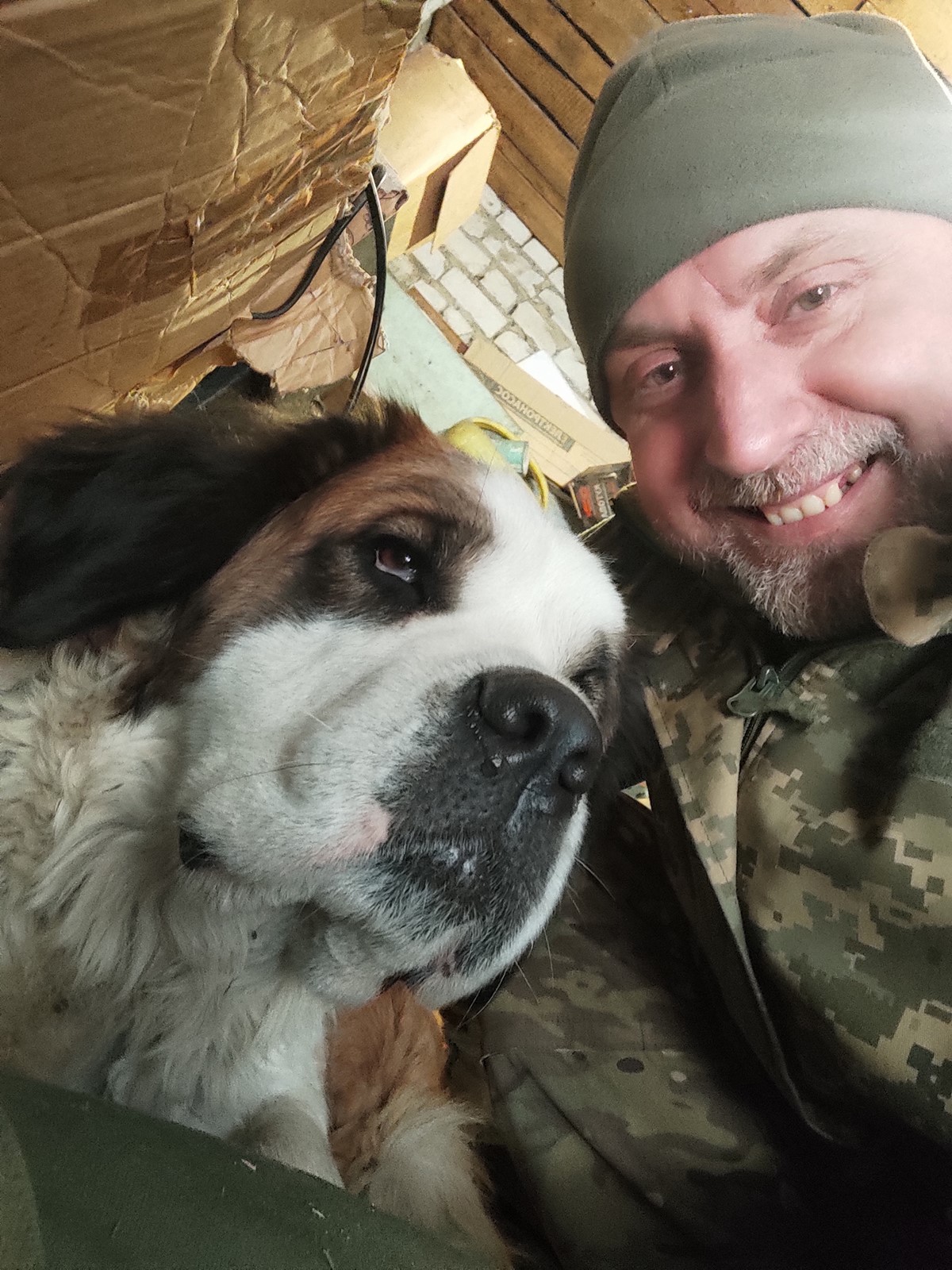
But gathering data on the front line was more difficult. That work was led by Ihor Dykyy, a zoologist at the Ivan Franko National University of Lviv. Dykyy served on the front line — near the city of Lyman in the Donetsk region, and later close to Kharkhiv near the border with Russia — for two years starting in 2022 as a volunteer with the Ukrainian armed forces.
“Many stray dogs lived with us in the village of Zarichne,” Dykyy remembered. “They were terrified by the hostilities; some suffered from shell shock. One small dog had a broken leg that hadn’t healed properly, leaving it with a permanent limp. Another was blind in one eye, having lost it in an explosion.”
Dykyy and his fellow soldiers “fed all of them, gave them shelter and provided medical care whenever possible,” he said.
Although the research focused on domestic dogs, many were no longer under the care of their owners, and were living as strays.
“From the beginning of the war, we saw a very sad situation with pets in Ukraine,” said Mariia Martsiv, who was the paper’s lead author and is a zoologist at the University of Lviv. “Some people took their pets with them, but some were simply left at train stations or left behind in the occupied territories.”
Most of the team’s findings suggested that dogs on the front line, in a remarkably short period of time, had become more like wild dog species, such as wolves, coyotes or dingoes.
 PREVIOUS ARTICLE

