


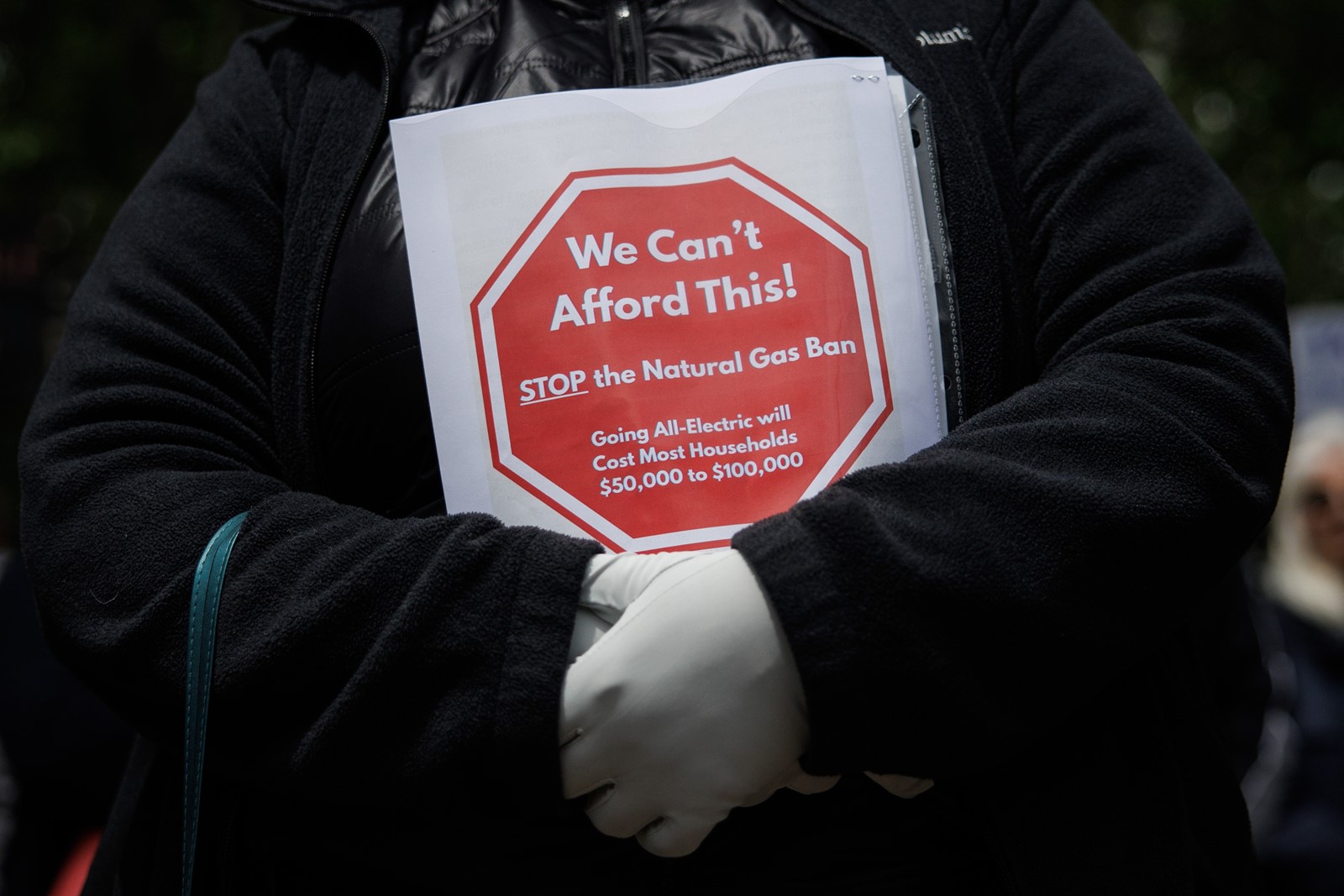


When is a ban on gas-powered water heaters not a ban on gas-powered water heaters? When it has to be delayed by a year and half the affected population is exempt.
This is the predicament the Bay Area Air Quality Management District found itself in when it voted earlier this month to postpone until 2028 its ban on new gas-powered water heaters which had been set to begin in January.
According to the now-delayed proposal, if your gas-powered water heater reached the end of its life, you’d have to replace it with an electric one, which would cost twice as much.
The district looked around and, with the help of some objections from the public, realized that we are currently in the throes of an affordability crisis and changed course.
The delay is part of an amendment to the district’s water heater rule, which also includes exemptions for low-income property owners, space-constrained properties and “electrical challenges,” adding up to about half of “replacement events.” (Not for renters, though — they might have costs passed on to them by landlords.)
So is the board just kicking the can down the road?
That’s what it looks like to me, but Benicia Mayor Steve Young, who abstained from the amendment vote, doesn’t think so.
“There are still a lot of unresolved issues that hopefully over the next 12 months we’ll be able to figure out,” he said.
These issues involve practical concerns like electrical grid capacity, which is great, but it’s hard to see how the affordability factor will be resolved in just a year. I’m pretty sure that’s not how cost of living crises work.
Young added that the extra year could give people whose gas-powered water heaters are about to expire the opportunity to get another gas-powered water heater, which should last them another 15 years.
But if the board’s answer to the people’s inability to pay for new electric water heaters is to tell half of them that they don’t have to get one if they can’t afford it — and to give people a window to get another gas-powered water heater — doesn’t that defeat the purpose of a mandate?
There was a good reason for the ban. Gas-powered water heaters are a big source of nitrogen oxide, which contributes to smog and is linked to dozens of deaths and thousands of asthma cases every year.
That sounds bad. Really bad.
So are we saying that if you can’t afford this much healthier and more environmentally friendly upgrade, you don’t need to worry about the safety concerns?
I’d be happy to save the $3,500, but I’d also be pretty nervous around my gas-powered heater that may be trying to slowly poison me and my family.
Here’s an idea: If a board is going to mandate that people replace their failing gas-powered water heaters with safer electric ones, it should pay for it. If it can’t (and it doesn’t look like it can), the government should step in.
Not with a complex web of region-dependent rebate stacking and incentives that requires a PhD in economics to figure out.
Not with a slew of sales tax measures that increase the cost of living.
And not with tax credits that don’t help pay for anything right now.
No, if an appliance is necessary, the government should just give it to you. That, or it should automatically know which rebates you qualify for, fill out the paperwork on your behalf — and still just give it to you.
This is a tall order, obviously, which is why Mayor Young opposed the mandatory aspect of the ban. He thinks the switch to electric should be voluntary and come with incentives and encouragement to do the right thing.
But that doesn’t sound like much of a ban.
This feels like a very Bay Area problem.
We’re full of great ideas — idealistic, well-intentioned initiatives that turn out to be completely impractical to implement.
Remember when Berkeley tried to ban natural gas hookups? And when that failed, the city asked voters to approve a huge tax on natural gas for buildings of a certain size? (Voters said “no thanks.”) California’s 100% zero-emission vehicles by 2035 mandate was a statewide plan, but it was arguably inspired by the failure of a Bay Area assemblymember’s bill. (Trump made sure it suffered the same fate.)
At the same time, it’s big swings like these that make the Bay Area a national leader in protecting the environment. That’s how we got mandatory composting and the plastic bag ban. (Though I think we, the people, should be paid that 10 cents every time we don’t use a bag, instead of the other way around.)
So it can be disheartening when Bay Area ambition comes packaged in clumsy, unaffordable bans by agencies, ostensibly put together to avoid legislative failure.
Does that mean we deserve government handouts? You better believe it does. Give us those electric water heaters. Incentivize us. That might take some of the sting out of a sales tax increase.
In the meantime, Young and the district will meet again in December, when the mayor hopes to take a vote on revoking the ban.
Also on the agenda? The mandatory replacement of gas-powered furnaces with electric ones (they cost around $20,000), which was set to begin in 2029. Young says they’re looking to delay that ban for another year too.
The lesson here appears to be that if we’re going to run around banning things, we need to find a better way to actually implement those bans.
I realize this isn’t much of a solution. I clearly don’t have the answers. But I’m not the one making you get a $7,000 water heater.
Nick Bhasin is the deputy opinion editor of Bay Area News Group. He can be reached at nbhasin@bayareanewsgroup.com.
 PREVIOUS ARTICLE

