


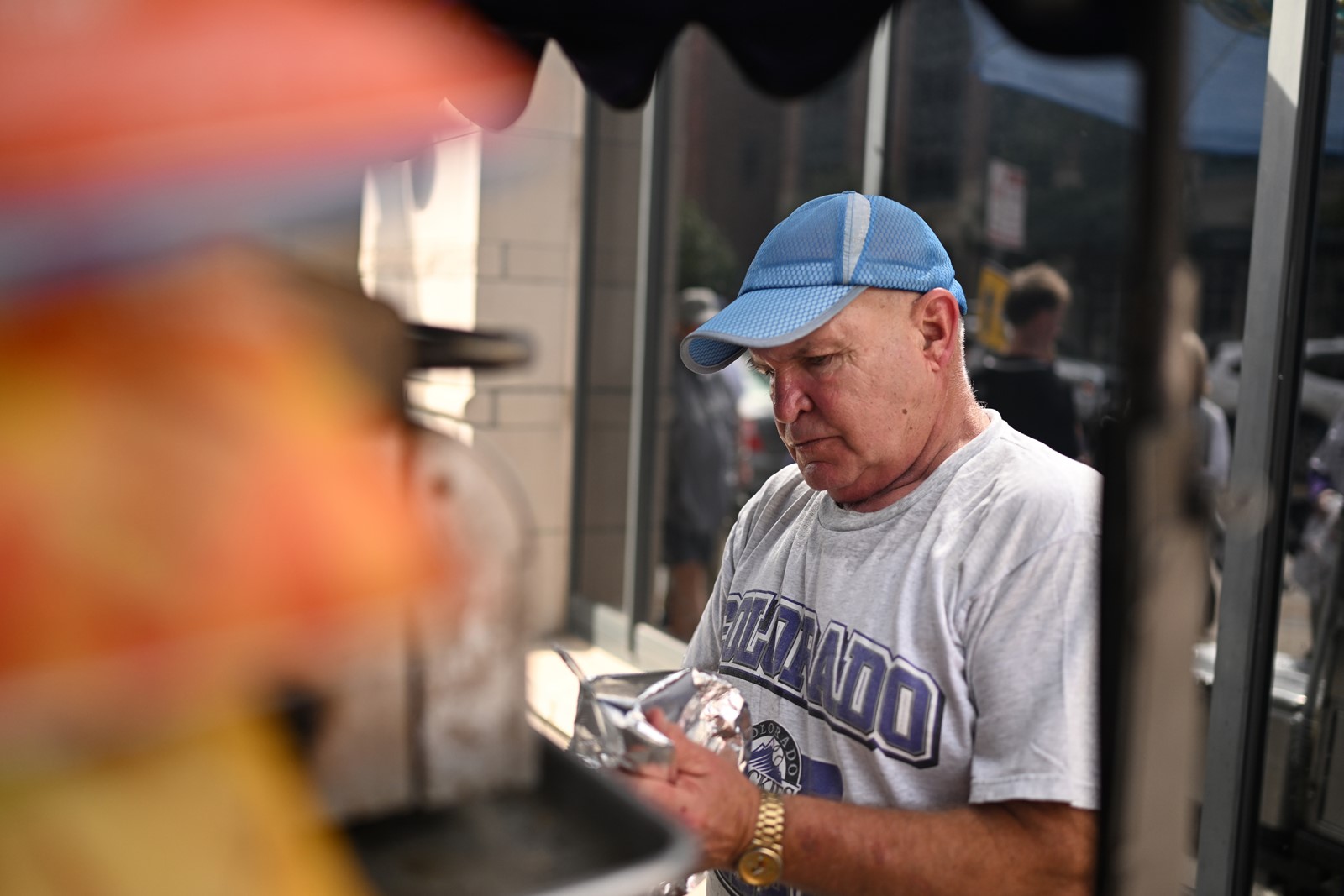


To sell sausages, Joel Watkins walked away from a lucrative career in finance and ignored his inner circle, too.
Decades later, Watkins would do it all over again. The man behind the Diamond Dogs cart, which has been outside Coors Field since the stadium opened in 1995, retired on Thursday. It marked the end of an unlikely, storied run that saw Watkins’ setup at 19th and Wynkoop become an essential part of the Rockies game day experience.
After running his cart on nights and weekends for the first eight years of Coors Field’s existence, Watkins quit his job in payroll for Comcast in 2003 to run his cart full-time. That decision came the year after the opening of the Union Station light rail stop, and Watkins gambled that the foot traffic from the station to the ballpark would be a boon for his business.
“My closest friends told me they would never speak to me again when I made the leap,” Watkins recalled with a laugh. “Even my mother said that, and that I was crazy for giving up my (white-collar) career to do this.
“But I hated my job. And I loved selling hot dogs. I’m a very spontaneous person, and I just decided I would rather be happy.”
Diamond Dogs began its tenure outside Coors Field at the northeast corner of 19th and Wynkoop. Then, a few years before McGregor Square was built, Watkins moved to his present location at the southwest corner of the intersection.At those cross-streets for the last 31 years, Watkins became a different person than he was when he worked in finance — and one who emerged as a fan favorite for his engaging personality, reasonable prices and beer-soaked sausages.
“I really actually changed when I went full-time with the cart,” Watkins said. “My greatest memories running the stand are from when the Rockies went to the World Series in 2007. But the greatest thing now is I get to retire happily and feel like I actually accomplished something. All my best friends I’ve met at the hot dog cart.”
Relationship-driven business
On Thursday, Watkins’ final day at the office was filled with the usual grill smoke, plus an extra helping of emotion. The 65-year-old’s health is good, but his body is tired of the grind that comes with running the stand.
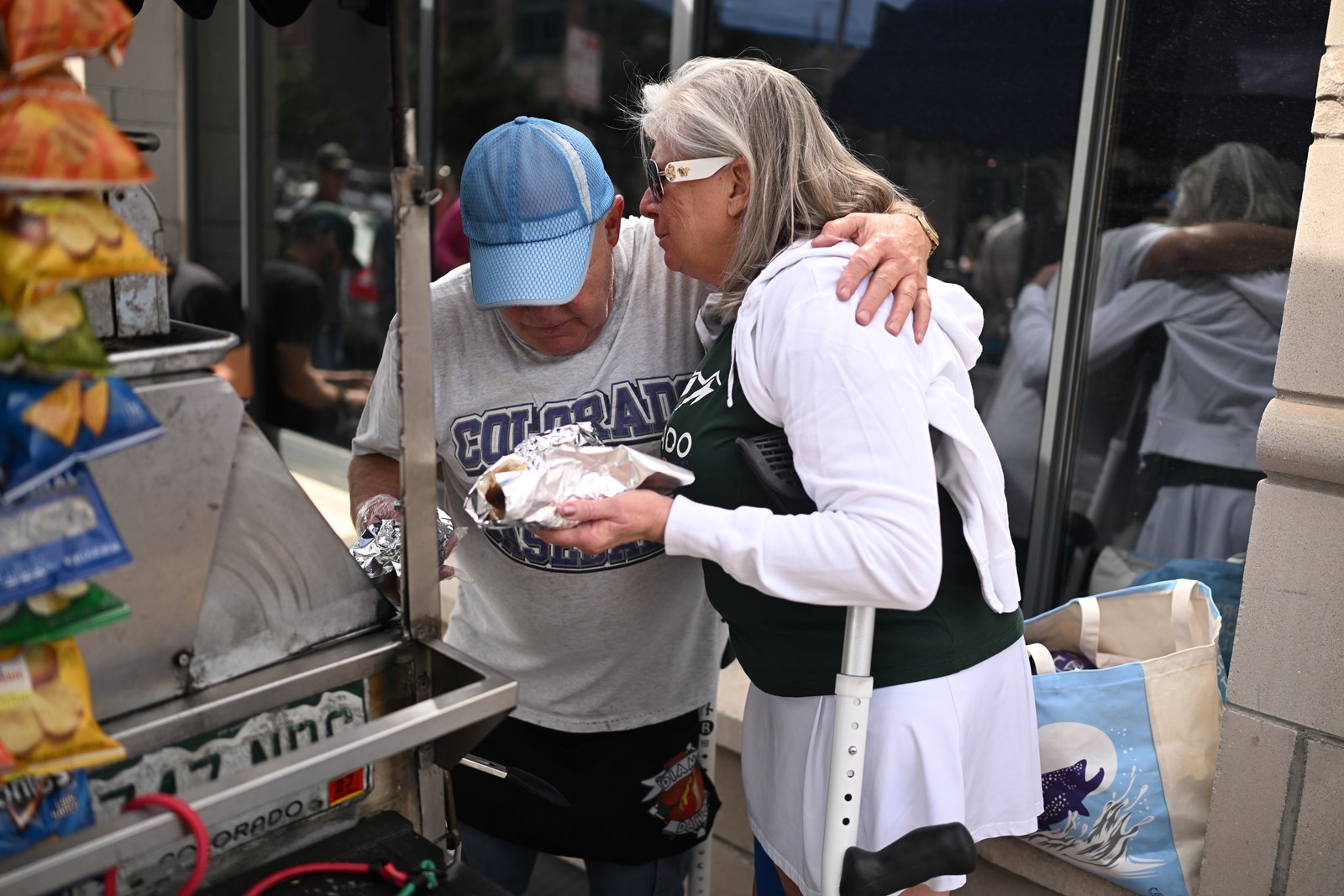
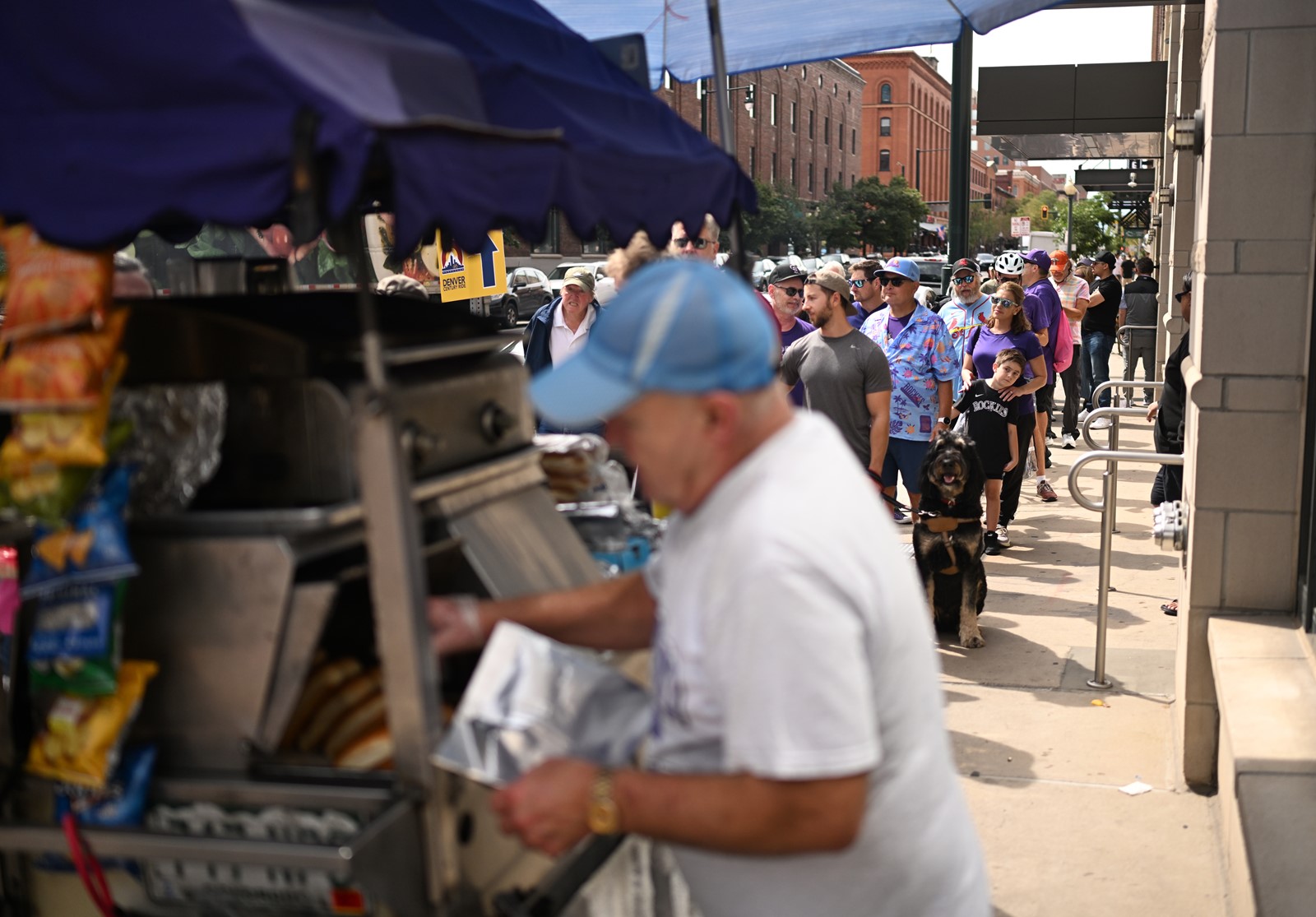
A long line extending from his cart snaked down the sidewalk, at times stretching nearly the entire block, as a never-ending onslaught of hundreds of his loyal customers placed their final orders and offered hugs and congratulations. People dropped off cards, and some signed a bat he had propped against his cart.
Watkins’ assistant Mark Vogl — who skipped high school for the day for the Rockies’ home finale to see his boss off — took orders faster than Watkins could grill. By an hour before first pitch, Watkins ran out of brats. One customer pantomimed juggling hot dogs. Former Rockies outfielder and current TV analyst Ryan Spilborghs dropped by for a fist-bump. The Rockies brought him a bag filled with presents, and local businesses on Wynkoop Street sent representatives to also give him retirement gifts. One fan gave Watkins a framed poem she wrote about him.
“He’s an institution,” said Margaret Diubaldo, a longtime customer who wasn’t attending Thursday’s game but came to get a hot dog anyway. “People knew he was retiring. Just look at the line and reactions today. It tells you everything you need to know.”
On and on it went, as Watkins hustled to keep up with demand while also having conversations with the many who wanted to say their goodbyes. Watkins estimates he’s served an average of 320 customers per game over the years; multiply that number by 82 home games over 31 seasons, and the tally is 813,400 — not counting the many years he’s also served the lunchtime crowd working next to the United States Post Office at 20th and Champa.
So it’s fair to assess that Watkins has served well over 1 million customers since 1995. There is no Hot Dog Reference to compare Watkins against other vendors nationally, but it’s reasonable to assume he’s retiring at a Hall of Fame level. Hence why Watkins, whose work was honored via a “Joel Watkins Day” proclamation by then then-Denver Mayor Michael Hancock in 2014, reveled in the last hours of his life’s calling on Thursday.
It’s been a calling that’s priced for the working-class fan. From the beginning to the end, Diamond Dogs’ prices have seen minimal increases, even as LoDo transformed from a neglected warehouse district into an upscale area with bougie restaurants. In 1995, it was $1.50 for a hot dog and $3.50 for a brat; now it’s $3 for a hot dog and $6 for a brat.
But it’s not affordability that made him part of the LoDo fabric.
“At this point, I don’t think people really care what the price is,” says longtime customer and friend Nancy Henning. “They just want to get their dogs from Joel.”
Watkins, a super-recognizer, has an uncanny ability to remember thousands of his customers’ names in addition to their backstories, jobs and recent life events. That personal touch fueled the loyalty of his customer base, with returning fans constantly referring new ones to his stand, a perpetual cycle that has made his cart the most popular food stand in LoDo. No other establishment has the game-day line that Watkins does.
“He’s always like, ‘Hey that’s so-and-so, and you know she does this and she does that, and you know that couple over there, they’re the ones that have the kid that does that, and that other person, he does this for a living,’” said Hector Lobo, Watkins’ longtime friend who also spent time working the cart with him. “I’m like, ‘How do you remember all this?!’
“But that just speaks to his attentiveness to the people he’s serving. And that’s because at the end of the day, it’s not just a business to him. He genuinely cares about those interactions. Obviously he’s making money on the stand, but it’s all about the people and relationships for him.”
Not only did Watkins befriend many of his customers, but he said those same customers “taught me how to run the cart.”
“Over the years, they made a lot of different suggestions that really helped me,” said Watkins, who in the early days of the cart had to hire a cook because he was so inexperienced about mass-cooking hot dogs.
“It was ideas like steaming the buns. Like getting the grill, which I used to not have. Like having jalapeños as a topper. Like immersing the dogs in beer before putting them on the grill. Those were all details that really helped me elevate the taste and create consistently happy customers.
Hall of Fame first baseman Todd Helton and outfielder Carlos González were two notable Rockies players who frequented Diamond Dogs. But beyond ballplayers, his cart was routinely visited by people from all walks of life: rich businessmen, middle-class families and the homeless. Police officers, local restaurant workers and many Rockies and Aramark employees who made a habit of stopping by on their way into the ballpark.
Amid all that, longtime customer and close friend Matt Vogl says Watkins was at the epicenter of “a hub of baseball gossip within a really unique hot-dog economy.”
“He trades food to the Denver Chophouse for stuff,” Vogl said. “He trades ushers for sunscreen. He gives food to the guys who run the parking lot and they give him free parking so he can go into the games, late in the game after he closes the stand. And because his food is so good and he’s such a staple down there, he always gets free tickets from customers. His dogs and brats are currency on that street corner.”
LoDo’s incoming void
Watkins is from Sand Springs, Okla., where he developed an early love of hot dogs from frequent trips to the local hot dog restaurant that his uncle owned. His actual first name is spelled Joyl, not Joel, but it was misspelled so many times throughout the years — including on the mayor’s proclamation — that he now largely goes by the adjusted spelling.
Along the way to the local cultural ascension of Diamond Dogs, Matt Vogl notes Watkins “never played by anyone’s rules but his own — and it always worked out for him.”
Such as the time when he scooped an absconded bee colony off the wall of the post office and into his cooler one day at lunch. He took the colony home, where he set it up in an old doghouse in his backyard. There, the hive thrived and started making honey, which Watkins eventually sold to Wynkoop Brewery for use in beer.
That was emblematic of the side-hustle mindset that Watkins had over the last two-plus decades, as he got in the real estate game to supplement his Diamond Dogs income. Today, he owns four rentals in Denver and one in Oklahoma. That rental income is part of his retirement plan.
“I spent probably 20 years paying mortgages and investing money, and then finally, I’ve done pretty good,” Watkins said. “I’m proud of what I’ve been able to accomplish (in real estate) so that I could live out my dream with Diamond Dogs.”
On Thursday, as the last of the rush petered out around first pitch, Watkins removed the blue cap from his head and stared at the sky. He smiled. Everything was sold out. His vocation was fulfilled. All that’s left is to hang out with the scores of friends that the hot dogs, brats, tongs and sheets of aluminum foil earned him.
Next year, whenever the season starts following a potential lockout, Rockies diehards will feel the void left by Watkins’ absent cart on that 25-square-foot stretch of sidewalk. Another vendor might set up in the same spot. But no one will ever take Watkins’ place in Coors Field lore.
“Even if another vendor comes in there, it’ll just be hot dogs, it’ll just be peanuts — nothing more,” Vogl said. “Yeah, the food (at Diamond Dogs) is great. But what made it special was Joel. He was a man of the people. He was the hot dog vendor that became a LoDo icon.”
 PREVIOUS ARTICLE
