


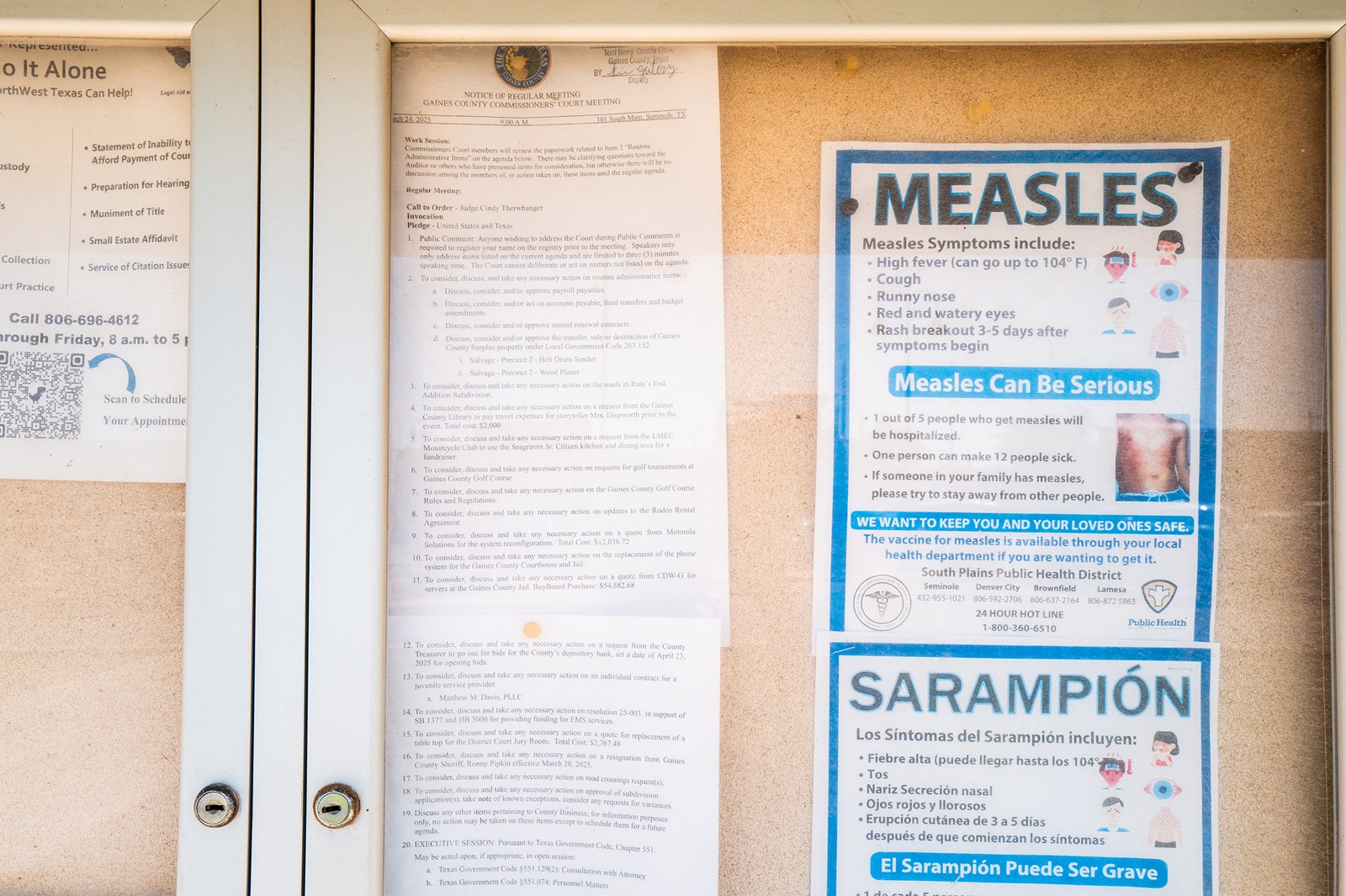


California in 2026 has already seen its highest number of annual measles cases in seven years, health officials said, amid an ongoing resurgence of a notoriously infectious disease once considered effectively eliminated in the United States.
The looming new domestic beachhead for the disease comes as vaccination rates have tumbled nationwide in recent years — in some areas falling well below the herd immunity threshold experts say is necessary to keep it from spreading.
“There are pockets of vulnerability, like in communities, that can really lead to outbreaks going wild,” said Dr. Peter Chin-Hong, a UC San Francisco infectious diseases expert.
So far this year, there have been at least 40 confirmed measles cases in California. That’s well above the 25 recorded in all of 2025, according to Dr. Eric Sergienko, chief of the state Department of Public Health’s communicable disease control division. It’s also already the state’s highest single-year tally since 2019, when there were 73.
The latest measles case was announced Wednesday: an infant from San Francisco who was too young to be vaccinated and picked up the virus during an international trip.
It was San Francisco’s first measles case since 2019. (The infant’s family was all vaccinated.)
The spread of the highly infectious virus is largely occurring among unvaccinated individuals, particularly children and younger adults, state health data show. Of the first 39 measles cases reported this year in California, 95% were among people who were unvaccinated or had an unknown immunization status, and 85% were in individuals under age 20, Sergienko said in a briefing to health professionals this week.
The measles vaccine — usually referred to as MMR, as it also conveys protection against two other once-common childhood illnesses, mumps and rubella — is considered to be 97% effective at preventing illness after getting the recommended two doses, and 93% effective after a single shot.
There is a small chance that vaccinated people can still get measles, though they tend to have milder illness, according to the U.S. Centers for Disease Control and Prevention.
It was only a generation ago, in 2000, when the U.S. declared that ongoing transmission of measles had been eliminated — a public health success credited to a robust immunization effort following the disease’s resurgence from 1989 to 1991.
But some experts now fear the U.S. is in danger of allowing the virus to regain a foothold. Nationwide, there have been at least 1,714 confirmed measles cases so far this year, nearing the total of 2,287 reported in all of 2025, according to the CDC.
The number of cases recorded in 2025 was the highest single-year tally since 1991. An overwhelming majority of them, 90%, were linked to an outbreak.
Out of every 10,000 people who get measles, 500 children are statistically likely to get pneumonia, and up to 30 of them could die, Sergienko said.
Three measles deaths were reported nationally last year — two among unvaccinated school-age children in Texas and one in an unvaccinated adult in New Mexico.
Los Angeles County in September reported the death of a school-age child from a complication of measles. The child had been infected as an infant when they were too young to be vaccinated, and years later developed subacute sclerosing panencephalitis, or SSPE, a fatal disease that targets the brain.
Children typically receive their first MMR dose when they are 12 to 15 months old and the second when they are 4 to 6 years old, according to the CDC.
Babies age 6 months to 11 months and traveling internationally should get a dose, but should still get the standard two-dose series after their first birthday, the CDC says.
There have been three outbreaks fueling the spread of measles in California so far this year: one in Riverside County, involving three people infected in a single family; one in Shasta County, infecting nine people among a church group; and an ongoing outbreak in Sacramento County and neighboring Placer County, Sergienko said.
The outbreak in the Sacramento Valley was first identified in February, when officials reported that an unvaccinated toddler contracted measles after returning from South Carolina — where an outbreak centered in Spartanburg County has been linked to about 1,000 cases, health officials said. It is considered one of the largest outbreaks in the U.S. in more than 30 years.
 PREVIOUS ARTICLE
