


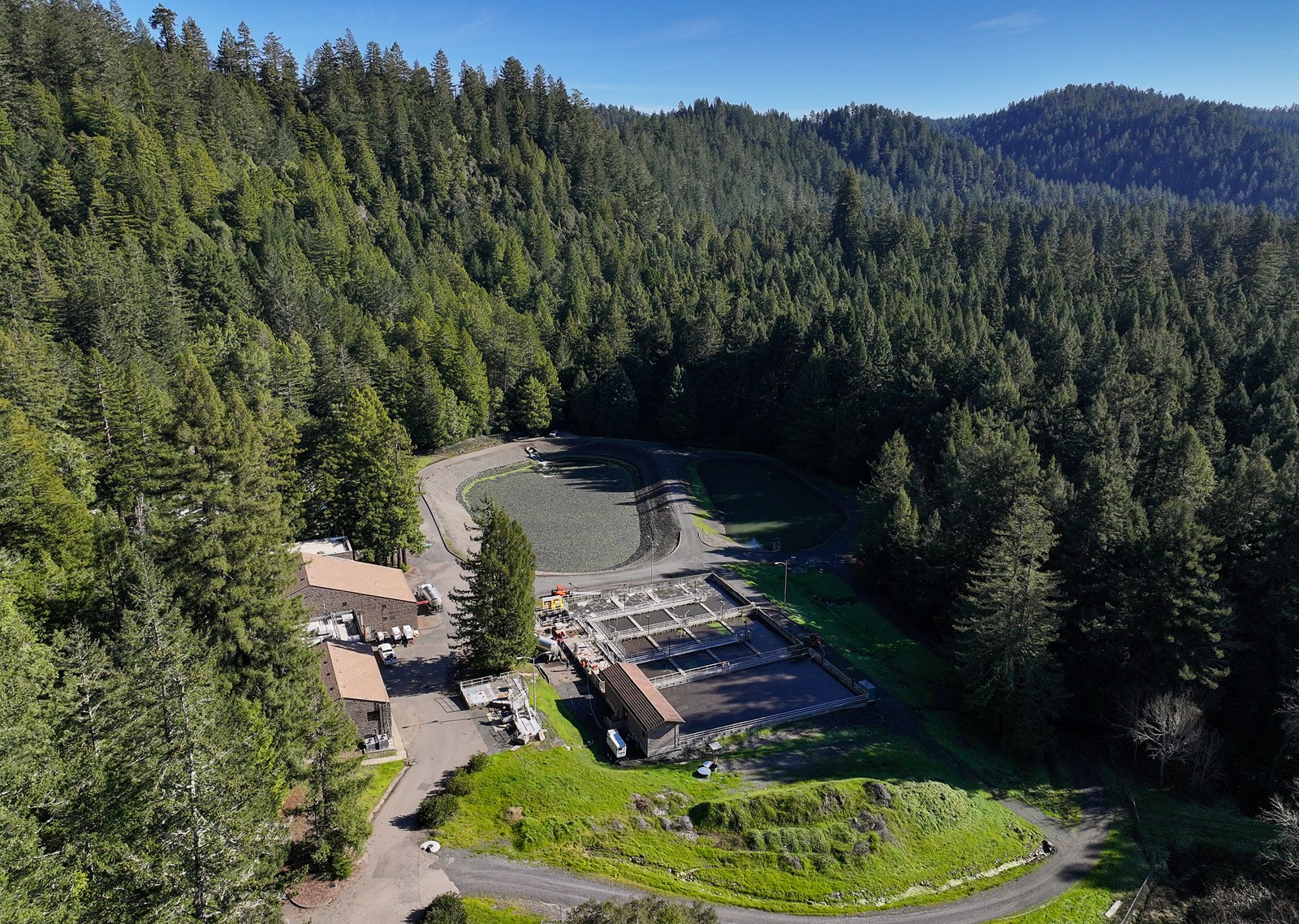


With an approaching El Niño that could unleash heavy rains across the region, and on the heels of a recent state settlement following a massive January spill, Sonoma Water officials are taking steps to make a troubled Guerneville wastewater system more resilient to future weather impacts.
Workers at the Russian River County Sanitation District have been analyzing potential vulnerabilities in the system, identifying places susceptible to water intrusion and have begun securing manhole covers in flood-prone areas.
The work is outlined in an agreement the sanitation district and Sonoma Water, which operates the district, reached in August with state water regulators to settle violations tied to the discharge of roughly 5 million gallons of wastewater into the Russian River.
The spill began Jan. 6 and came at the tail end of a series of atmospheric rivers that drenched the area and saturated the ground, causing wastewater at the district’s Neeley Road treatment plant to overflow, the largest such spill in more than 40 years.
It prompted the closure of beaches along the river and a 40-mile stretch of the Sonoma Coast. It drew scrutiny from the North Coast Regional Water Quality Control Board and a local watchdog and prompted renewed calls for repairs to the aging system.
Sonoma Water spokesperson Stuart Tiffen said staffers have been working collaboratively with the regional board since then to address operational procedures at the plant, better prepare for incoming storms and identify infrastructure needs.
Additional monitoring efforts and corrective measures are expected to be implemented over the next year as part of the agreement, which was finalized Aug. 17 and announced by the regional board Aug. 25.
The work is expected to reduce the risk of future spills.
Tiffen, in an email, said local water officials are “taking this responsibility seriously and will continue to work closely with the Regional Board moving forward.”
Longer-term, infrastructure improvements funded by a $47.8 million state grant Sonoma Water received earlier this year to support the sanitation district will go toward modernizing and making the system more resilient. That funding is not being tapped to carry out work directly related to the spill or settlement, Tiffen said.
No fines were levied as part of the settlement, though the regional board could pursue additional enforcement action if stipulations in the order aren’t met.
Though the January rains didn’t cause mass flooding across the Russian River region — the river crested about two feet under the minor flood stage — the small wastewater system which serves 3,300 parcels between Rio Nido to Vacation Beach in Guerneville became overwhelmed.
Several inches of rain, elevated river levels and saturated ground conditions led to increased flows and infiltration of groundwater into the system, according to regional water board records.
Stormwater also is believed to have directly entered parts of the system through unbolted or unsecured manholes, the documents show.
Water levels on the morning of Jan. 6 overtopped the walls of the main basin, leading untreated sewage to flow out and merge with ponded stormwater at the site. An emergency storage pond overflowed later that day.
The system, according to the enforcement order, is designed to treat a peak wet weather flow of 3.5 million gallons per day, while the emergency pond is equipped to handle an additional 1 million gallons during heavy rains.
Sonoma Water, in reports to the regional water board, estimated daily flows exceeded 4 million gallons.
Effluent drained about a quarter-mile south through a wooded area to the Russian River and continued for about 48 hours, discharging an updated total of about 4.94 million gallons of wastewater, “creating a condition of pollution and nuisance and posing a threat to public health and the environment,” according to the enforcement order.
The regional water board, based in Santa Rosa and responsible for monitoring and safeguarding the health of the region’s water supplies, investigated the incident and issued Sonoma Water and the sanitation district a notice Feb. 11 that found four violations, including illegal discharge of waste into the Russian River and violation of the Clean Water Act.
In issuing its August enforcement order, the regional board said abatement was necessary to address conditions in the system that could result in future discharges, which create an “imminent threat” to local waterways.
Tiffen said wastewater officials have been working to upgrade standard operating procedures for closing off wastewater valves in low-lying sections of the collection system.
Sonoma Water, in reports submitted to the regional board after the spill, determined operators were unable to close an isolation valve, which seals off a portion of the sewer main and prevents water intrusion, because the operational threshold that would trigger a valve closure wasn’t reached before a nearby creek quickly rose and receded. The thresholds also didn’t properly account for uncertain river level forecasts.
Staffers also have been working to secure manhole covers in flood-prone areas where stormwater entered the system, Tiffen said.
Tiffen said Sonoma Water submitted a flow monitoring plan to the regional water board outlining plans to analyze flows during dry and wet weather, particularly in low-lying and flood-prone areas, by the Sept. 1 deadline as required by the settlement.
Sonoma Water within the next month must install flow meters in locations identified in the plan to help identify vulnerable areas in the system.
By Oct. 1, the agency must submit a corrective action plan outlining short-term abatement measures, operational changes, including improved storm preparation and staff training, revamped emergency response measures that include procedures for deploying portable pumps and temporary storage, and infrastructure improvements intended to prevent future spills.
Officials also must outline efforts to assess flood-susceptible manholes and steps to prevent covers from shifting or popping out.
Final manhole assessments are due Feb. 1 — months into what’s expected to be a heavy if not historically stormy winter — while a final inflow and infiltration study is due Oct. 1, 2027.
Claudia Villacorta, assistant executive officer of the regional water board, said in the board’s announcement that abatement efforts outlined in the settlement will help prevent another spill.
“This agreement delivers immediate safeguards for the Russian River while building greater resilience for future storm seasons,” she said. “By improving pre-storm preparations, securing infrastructure vulnerable to flooding and expanding monitoring, the district and Sonoma Water are taking important steps to prevent another spill.”
Regional water board officials did not immediately respond to a request for comment.
 PREVIOUS ARTICLE

