




U.S. Air Force veteran Jimmy LeBath found the Veterans Campground on Big Marine Lake during an internet search in 2012.
He’s been visiting the northern Washington County camp ever since.
“I was looking for a place where veterans could go, a place where they have boats and fishing,” said LeBath, 67, of St. Paul. “I came out and saw how it was, and I put myself on the wait list.”
LeBath, a retired cable TV installer and copy machine repairman, rented one of the camp’s cabins for four years until he finally got to the top of the RV wait list. Now he lives at the Veterans Campground from April 15 to Oct. 15. He keeps his pontoon docked at the camp and goes fishing every day at 4 p.m.
“My favorite things are the fishing and the people,” he said. “I’m trying to catch the walleye. I haven’t caught one yet, but a lot of sunfish and bass. I catch and throw ’em back. I just don’t like to clean ’em.”
LeBath, who served in the Air Force from 1986 to 1990, said the camp is a place where veterans can relax and unwind. “For me, it’s the camaraderie,” LeBath said. “We help each other. Not just in the camp, but outside the camp. Because our lives intertwined so much, we’re almost like a family here.”
100 years of R&R
Formerly known as Disabled Veterans Rest Camp, the 75-acre Veterans Campground is a nonprofit organization that provides rest and recreation to members of the military and their families. A record 126,000 visitors came to the camp in 2025, and camp officials expect to surpass that number this year.The camp, which is celebrating its 100th anniversary this summer, was built on land formerly owned by Isaac Staples, a prominent 19th-century Stillwater lumber baron and industrialist. It was part of a massive 3,500-acre stock and dairy farm in May Township around Big Marine Lake that supplied his lumber camps.
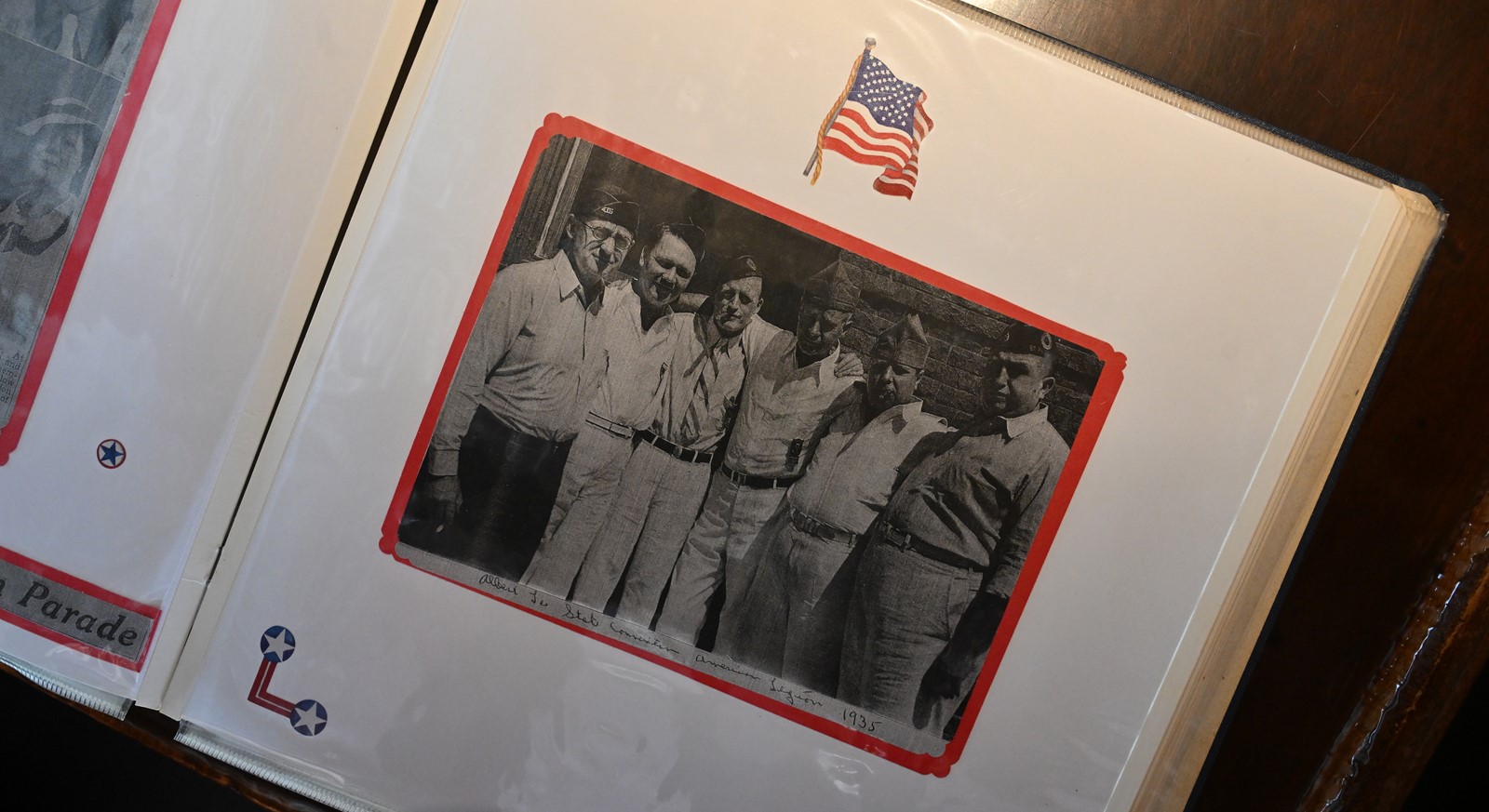
In 1926, Mrs. Ethel Staples, who had married into the family, gave part of the land to the Disabled Veterans of Ramsey County to become a sanctuary for convalescing World War I veterans suffering from physical injuries and shell shock.
“Today we know it as PTSD,” said campground manager Ken Larson. “They could come up and get a little R&R.”
The camp has grown in popularity: from 3,000 annual visitors in 2008 to more than 126,000 visitors in 2025, Larson said, and it attracts veterans from all 50 states.
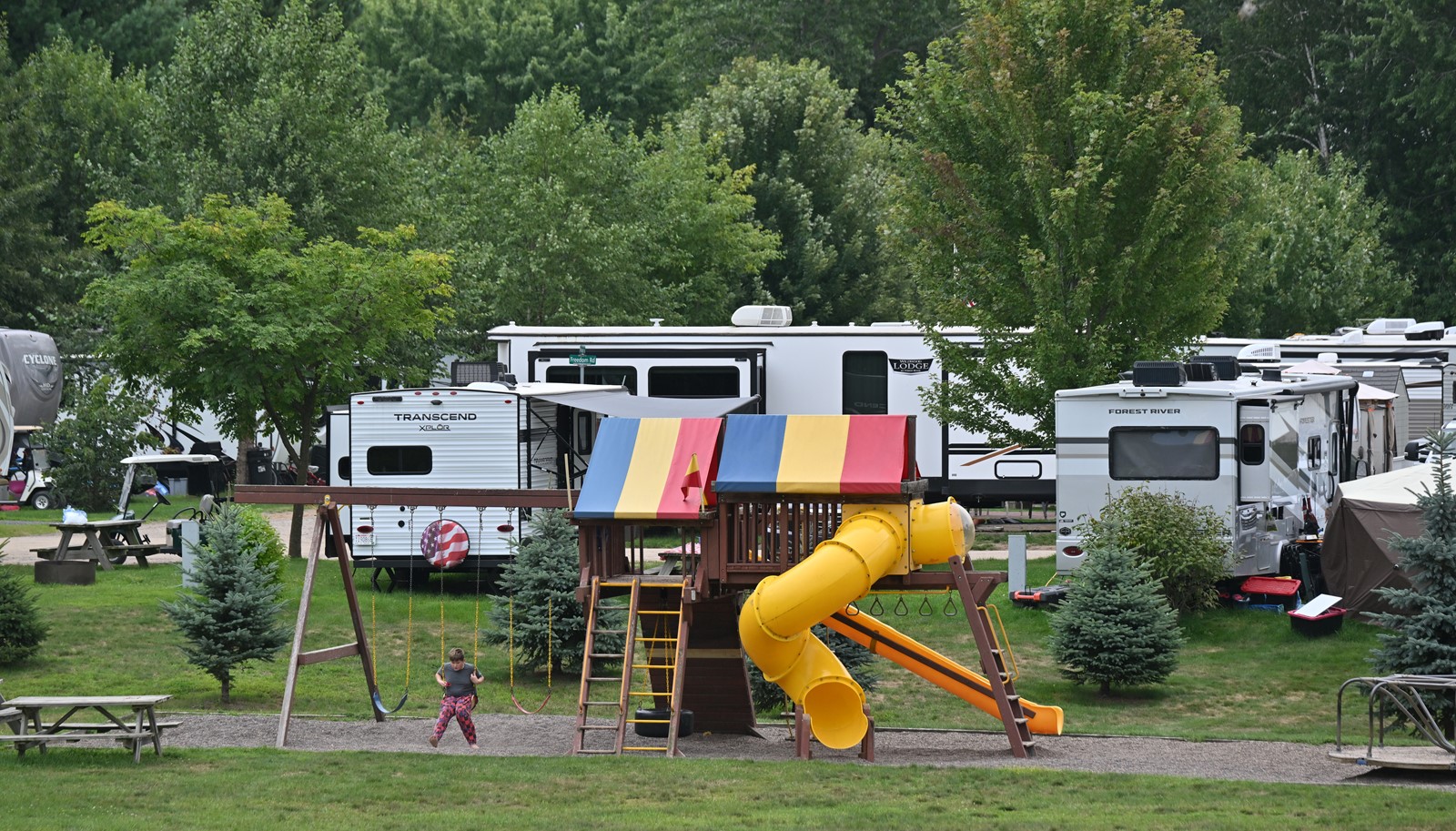
The campground features 197 RV sites and 24 cabins; 12 of the cabins are open year-round. There also are 15 tent sites, which feature electricity. The camp has six pontoons for rent in the summer and four ice-fishing houses for rent in the wintertime, or campers can bring their own, Larson said.
Other amenities: two playgrounds, horseshoe pits, trails, a fishing pier, a swimming beach, a gazebo, a snack shack and a bar.
It’s a big change from 1926, when the first floor of the Staples farmhouse was transformed into a large dormitory-style building with a kitchen area, dining room, bar and recreation room on the main level.
The upstairs level was filled with cots — 24 to 30 of them — so veterans could spend a night or a weekend or a weeklong vacation, Larson said.
“They could stay for as long as they wanted, and then when they were ready to integrate back to civilian life, they could go,” he said. “That’s why, when I first saw a photo of this place, I said, ‘Oh, boy. There is a place in my heart for this place now.’ ”
An article in the Stillwater Daily Gazette, published on May 8, 1922, stated that several groups were working to raise money to build the Disabled Veterans Rest Camp, which would be located on the “shores of one of the finest lakes in Minnesota.”
“In addition to Ramsey and Washington Counties, there are 13 other counties in the southern part of the state that will be entitled to send disabled veterans to this home,” the article states. “Hennepin and several other counties have already established a home of this character on Big Island, Lake Minnetonka, and it is now in operation.”
Doctors and nurses would come to the Disabled Veterans Rest Camp and care for the veterans, and, in the 1930s, a series of cabins were built to house them, according to Larson.
Still developing
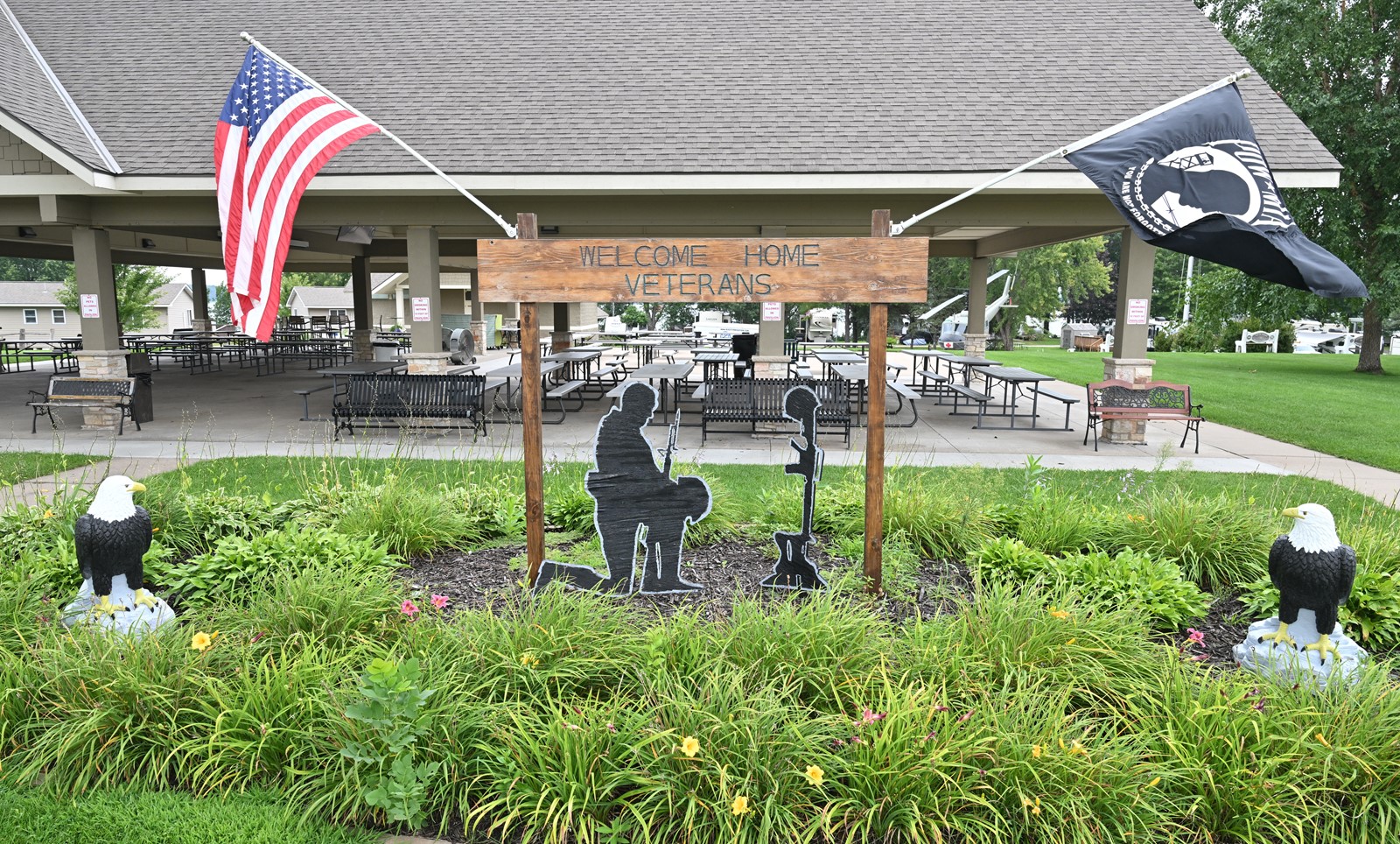
The original convalescent facility was demolished in the 1980s, and a pavilion was built — mostly with volunteer labor — on the site in 2007. It’s now used for everything from wedding receptions to potluck dinners, said Larson, a Minnesota National Guard veteran who’s been going to the camp for 48 years.
“I started going up right when I joined boot camp for the Army National Guard at the downtown St. Paul Airport,” Larson said. “I started hanging around in the area; my second cousin owned the Shady Birch Resort on Big Marine. The vets camp was a well-kept secret. I always say it was a diamond in the rough.”
A few years ago, Washington County sold 2.4 acres from its Big Marine Park Reserve in Scandia to the Veterans Rest Camp so camp officials could create additional RV spaces on the north end of camp. The parcel sold to the Veterans Campground was separated from the rest of the county park by a wetland, so it only made sense to sell it, Larson told the Pioneer Press in 2021.
Camp officials are hoping to purchase additional land in the area for future expansion in the next five to 10 years, Larson said.
The camp recently installed a Vietnam War-era Huey helicopter in an area that will feature personalized pavers and plaques.
“It was supposed to be down by the bridges down there, but this turned out to be the final resting spot,” Larson said, referring to a spot between the lake and the pavilion and the flagpole.
One of the campers “found this guy down in Texas that worked on Hueys, and he had one sitting in his yard that he wanted to get rid of,” Larson said. “We have ironworkers helping us mount it up here on the pedestal and everything. Our goal is to have it done by October.”
Veterans talking to veterans
Vietnam veteran Chuck Cronquist served in the U.S. Navy from 1966 to 1969 on the USS Frontier. Cronquist, 80, of Cottage Grove, grew up in St. Paul’s Midway neighborhood and graduated from Central High School in 1965.
“I was going to get drafted. I didn’t want to get drafted, so I went ahead and enlisted,” he said. “Being drafted meant you had to go in whatever they wanted you to, and I wanted to go into the Navy.”
Why the Navy?
“Well, I wanted to go into the Marines like my dad, and my dad said, ‘No, you’re not. You’re not going to wallow in mud like I did. You’re going to go in the Navy and sleep in a bunk, and eat a good dinner,’ so that was my decision.”
Cronquist, who worked as a machinist in the pre-press and press rooms at West Publishing in Eagan, started coming to Veterans Campground 28 years ago with Bill Anderson, his father-in-law and a World War II veteran.
“We came up here for two years prior to me getting into the camp, and stayed in the old cabins,” he said. “We went fishing and water skiing and stuff like that. We had a nice boat.”
The men stopped coming for a couple of years when Cronquist’s mother-in-law became ill, he said, but Cronquist later returned with his boat and walked up on the shoreline and ran into the camp manager at that time. “We started talking, and I rented a cabin for 10 days for $120,” he said.
Eventually, he was able to rent a slot for his 38-foot Salem camper. He and his wife, Betty, now spend the summers in a lakeside 42-foot Salem camper that features a wooden deck, gazebo and flower garden.
“It’s very important for vets to come up here,” said Cronquist, who is always the last veteran to leave when the campground closes for the season on Oct. 15. “They can actually sit down at a fireplace and talk about their time in the service where they don’t want to talk about it outside of the camp. We’re all equal here.”
There are no group therapy sessions or therapists on site, Larson said.
“I think the best therapy is veterans talking to other veterans,” Larson said. “It gets them out of their heads. I try to keep people going in a positive direction. Because everybody always remembers that negative stuff. You got to get your thought process straight, look forward, look in the future, and let’s keep looking forward.
“The camaraderie and everything, it just clears out your head when you talk about stuff,” he said. “We all try to help each other out to get past our moments, and we want to make sure the families are strong and keep on moving forward. That’s a crucial thing.”
Larson said he is working on getting younger veterans to come to the Veterans Campground.
“I’m trying to mentor the younger generation to come in and give me a hand, and have them get a hold of this,” he said. “I’ll tell them, ‘You guys are the future. Unfortunately, I’m losing a lot of the Vietnam vets that helped me grow this place, so now the Persian Gulf War, Afghanistan, Iraqi, Iran war, and everything, you guys got to be on top, you got to watch my back and make sure this camp never goes anywhere because we got to keep this dream going up here.”
 PREVIOUS ARTICLE
