


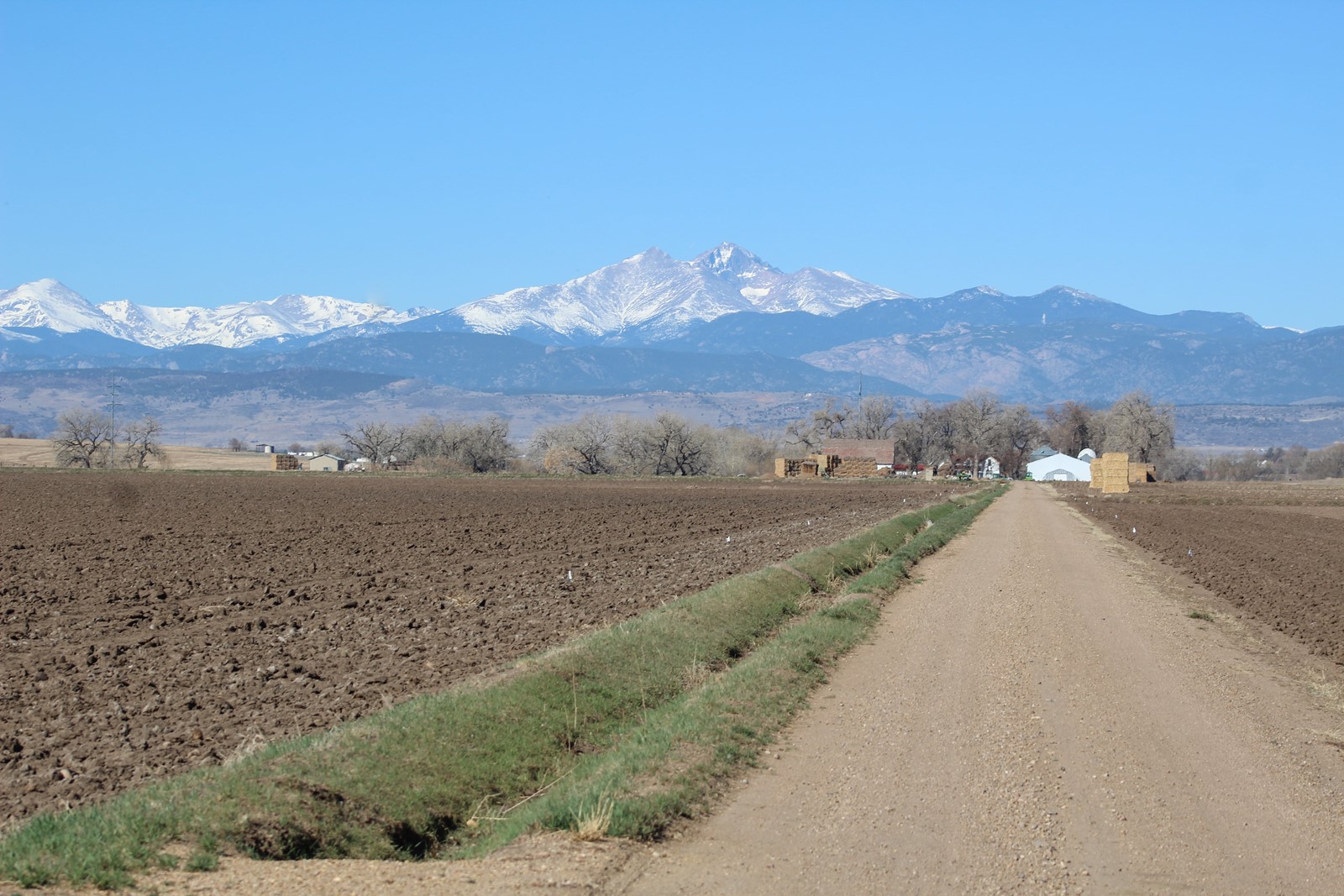


Since 2021, the town of Berthoud has invested millions of dollars to preserve land along the Little Thompson River corridor through a mix of land purchases and conservation easements.
On Monday, town officials laid out the results of that effort — and what could come next — during a town hall meeting that drew about 90 residents, many of whom questioned whether the town is doing enough to protect the river as development pressures mount.
“This is a topic that is near and dear to all of us,” Town Administrator Chris Kirk said. “There’s a lot of history here and a lot of work that’s been done — but also a lot of work still to do.”
In fact, Berthoud’s push to preserve local open spaces stretches back at least three decades, Kirk said, and was bolstered by a voter-approved 1% sales tax in the late 1990s that, among other things, helped fund land conservation.
Picking up that thread, Mayor William Karspeck, who made a brief appearance at Monday’s meeting, praised the town board of that era and told the crowd that Berthoud has long “punched above its weight” when it comes to preserving open space.
The town’s preservation efforts accelerated in 2021, following the adoption of the town’s comprehensive plan and subsequent open space and trails master plans, which identified the Little Thompson River corridor as a priority for conservation.
Since then, Berthoud has acquired or helped conserve hundreds of acres along the river, working in partnership with Larimer County and organizations such as Colorado Open Lands. Those efforts include the purchase of the 105-acre Schaal Farm, as well as the 138-acre Befus farm and conservation of the 226-acre Lewis Heritage Farm, which is now owned and operated by the Colorado FFA Foundation.
The town also is working to secure additional properties along the corridor, including a portion of the Wilson Farm, with the goal of creating a largely uninterrupted corridor of riverfront open space and working agricultural land from U.S. 287 to Interstate 25 and beyond, Kirk said.
But preservation, Kirk said, does not necessarily mean limiting all future use. Long-term plans for the corridor could include trails and other low-impact recreational amenities, although those concepts remain in the early stages.
He also told the crowd that development is coming to Berthoud whether they like it or not, underscoring what he described as the town’s central challenge: accommodating growth while protecting its rural feel and agricultural heritage.
“The town is going to continue to draw investment,” he said, noting that landowners still have opportunities to develop their property.
As the presentation shifted to public comment, the tone in the room changed, with several residents questioning whether the town’s current approach goes far enough to protect the river and its surrounding habitat.
Concerns centered on the limits of agricultural preservation as a conservation tool, with some residents arguing that working farmland alone may not provide sufficient protection for wildlife or sensitive riparian areas.
Others pointed to proposed developments near the corridor — including the River Trails project, a 106-acre residential development just north of the Little Thompson — as evidence that existing safeguards may not be strong enough.
Still, the questions revealed a central tension facing Berthoud: how to accommodate growth while preserving one of its most defining natural features.
“It’s really kind of the last undeveloped river corridor on the north Front Range, west of I-25,” Kirk said. “While there may be development in that area, we want to protect the priority areas adjacent to the river as best we can for future generations.”
 PREVIOUS ARTICLE

