


Bears
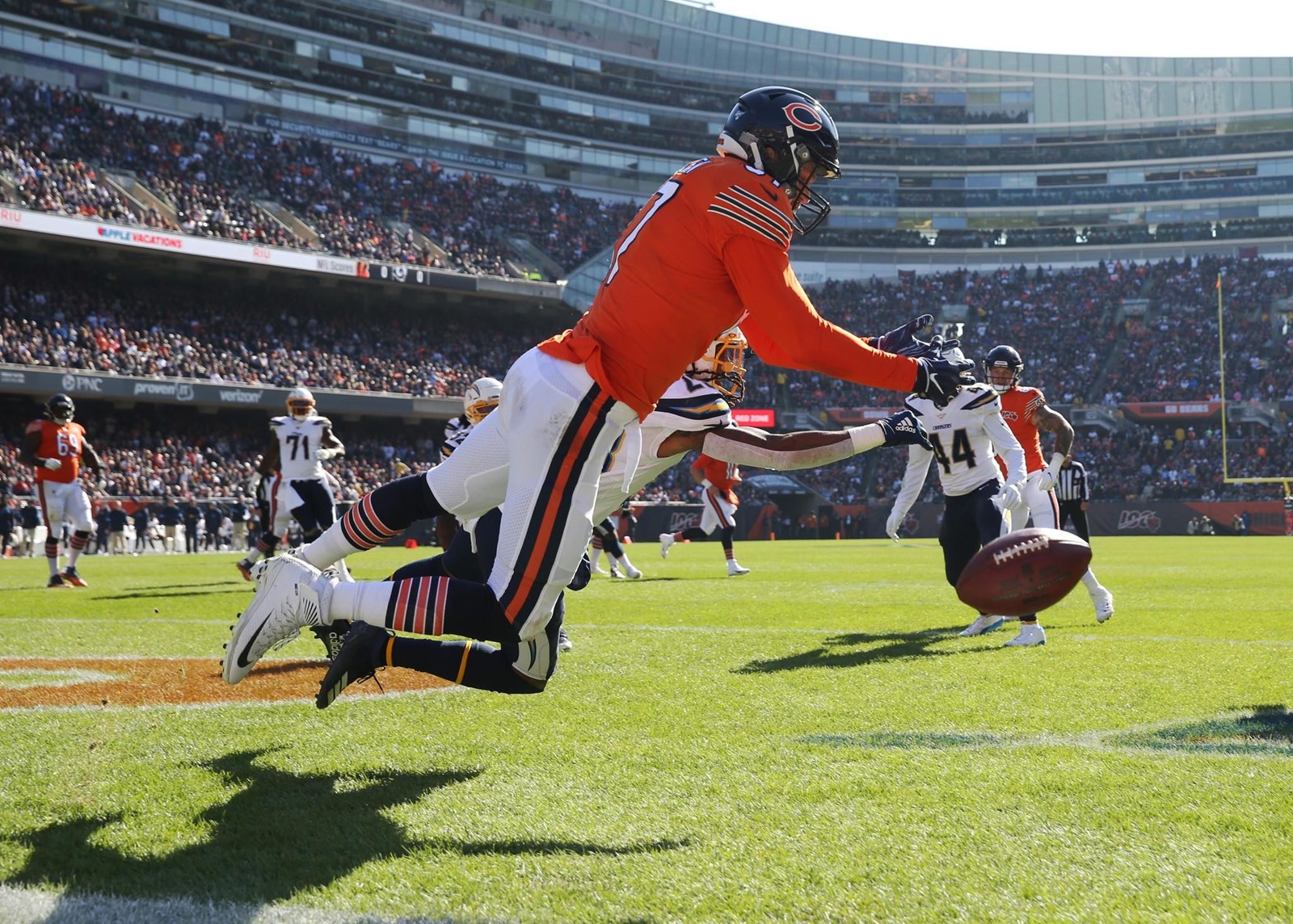


Coach Matt Nagy’s team produced season highs in total yards (388), first downs (26), total plays (77), rushing yards (162), time of possession (38:00) and red-zone opportunities (4).
But their two turnovers (while protecting a fourth-quarter lead) also tied a season high, which, along with a new level of
Here’s a look at the last issue after rewatching the Fox telecast via the NFL GamePass subscription service.
The Bears’ calamitous red-zone performance in the first half resulted from a combination of questionable play-calling, a dearth of play-making ability and blocking miscues.
Don’t get too distracted by Nagy’s decision to kneel with 43 seconds left instead of attempting a play that might gain yards. Sure, it’s on a list of reasons the Bears lost, but it’s not in the top three.
The Bears wouldn’t have needed a last-second field goal if they had scored a touchdown on any of the three red-zone opportunities in which they failed to do so. Instead, they didn’t cross the goal line on 12 (!) goal-to-go snaps in the first half.
There’s a lot to break down here.
One of the 12 snaps was a spike to kill the clock at the end of the first half. Of the 11 snaps on which the Bears tried to advance the ball, seven were passes and four were runs.
On five of Mitch Trubisky’s seven dropbacks, Nagy dialed up a play that either predetermined or simplified Trubisky’s decision where to throw the ball. The coach was trying to help his quarterback by limiting the potential for incorrect reads and decisions, which have hurt him in scoring range this season (for example, a goal-line interception against the Redskins in Week 3).
The forward toss and tunnel screen to Cordarrelle Patterson were predetermined throws involving horizontal play direction. Blocking design and execution didn’t work.
Trubisky nearly was intercepted on a second-and-goal throw to Trey Burton on which he rolled right as the Bears flooded that half of the field. In this example, Nagy cut the field in half for his quarterback with the play design.
Two other examples stood out, and Nagy addressed them Monday.
One was the defensive pass-interference penalty against the Chargers on third-and-goal from the 3 in that sequence to end the half. As Trubisky rolled right, Allen Robinson was the only eligible receiver who ran past the line of scrimmage. Everyone else stayed in to protect the quarterback. You rarely see that in the NFL — a one-receiver passing concept.
Robinson ran a double move — with time to be very deliberate with his breaks — and drew pass interference on what was, in my opinion, an uncatchable pass. The Bears gladly took the positive play.
Nagy explained the rare one-receiver concept, saying it has been in the playbook since last season: “You just space it out. You get a one-on-one throw where you feel like your player is better than theirs, and it ended up working for us, got us a free first down.”
The fifth simplified/predetermined read for Trubisky was a slant to tight end Adam Shaheen on the left while four receivers were bunched to the right. This one confounded me and, based on Nagy’s cryptic response to a question about it, we can infer the coach didn’t feel good about it either.
I see two points of contention on this one, both centered on having the 6-foot-6 Shaheen run a slant instead of a fade against 6-2 cornerback Michael Davis.
First, the Bears tried a slant to Allen Robinson on the left on a goal-to-go play earlier in the second quarter, and defensive lineman Sylvester Williams slightly tipped it. In other words, the Chargers defensive line was alert to quick throws at the goal line and knew to get their hands up. That’s exactly what happened on the slant to Shaheen.
Second, Shaheen’s footwork did nothing to separate from Davis on the slant. He doesn’t possess the suddenness of, let’s say, Robinson. That’s not his strength. And it showed in how Davis drove on the route and was close enough in coverage to break it up if the ball had gotten through.
Shaheen’s strength is using his body to go up and get high throws. So why didn’t Trubisky throw him a fade instead?
“Right,” Nagy said. “It’s a good question. Good question.”
His answer was open to interpretation. Should Trubisky have checked to something different? Did someone check out of the fade? Was there a miscommunication? All we can say for sure is the play didn’t work, one more misfire on the heap of missed opportunities.
Moving on, let’s zero in on the six goal-to-go snaps that ended the half and drew loud boos from the home crowd.
David Montgomery runs for no gain. Nose tackle Damion Square got low and inside right guard Rashaad Coward, ironically aided when right tackle Bobby Massie blocked down on him. Square was knocked down but still gummed up the play when he fell at Montgomery’s feet.
Bears called a timeout.
The tunnel screen to Patterson didn’t work. Michael Davis, who was manned up with Patterson outside, wasn’t blocked and made the tackle. Nagy likes Patterson’s strength as a ball carrier in short yardage and near the goal line, but he needs blocking help.
Not only was Davis unblocked, but left tackle Charles Leno’s cut block attempt on edge rusher Melvin Ingram did not affect Ingram, who quickly kicked out and got his hands on Patterson. Linebacker Thomas Davis also wasn’t blocked in pursuit of Patterson.
The Bears didn’t execute the play quickly or sharply enough for Patterson to get upfield, and they were stuffed on a throw that didn’t travel past the goal line.
Bears called their last timeout.
The defensive pass-interference penalty on the one-man route by Robinson. The replay shows Chargers coach Anthony Lynn pleading with an official that Trubisky’s pass was uncatchable, but that fell on deaf ears.
The slant to Shaheen that was batted down at the line.
This is where Nagy opened himself to criticism about how he managed the clock. He called a running play with no timeouts.
“I wanted to run it there,” Nagy said Monday. “I was OK with the time. We knew we were going to clock it (on third down). We already had that planned. But the play call is the one I wish I would have changed and called a different run there.”
So Nagy decided before second down he would rather run one play and spike it than two passes. That’s where I’m hung up. He
Nagy was asked Monday about how his predetermination to run on second down and clock it on third down cost them the productive snap they could’ve attempted by throwing on second and third down.
“That’s a very valid point, without a doubt,” he said. “But we just felt like at that point and time with where we were with the plays that we had and some of the plays we had already used, we felt like that was something we wanted to go with. Yeah, that’s a valid point.”
Was it another indication that Trubisky
Spike. Boos galore. A low point for this offense and one that arguably cost them a victory Sunday.
 PREVIOUS ARTICLE
