




Editor’s note: An incomplete version of this article was published Sunday on Page E1. Here is the article in its entirety.
Phil Manzanera was 15 years old when he announced he wanted to become a rock guitarist and join a band.
“My mother, the nice Colombian lady, knew about cumbia, salsa and boleros, but not rock and roll,” Manzanera said during a telephone call from his home in England. “She was just like, ‘What’s that?’ ”
But his brother knew a guy who had just joined a band and maybe he could help Manzanera achieve his goal. That guy was David Gilmour and the band was Pink Floyd. (More on him in a bit.)
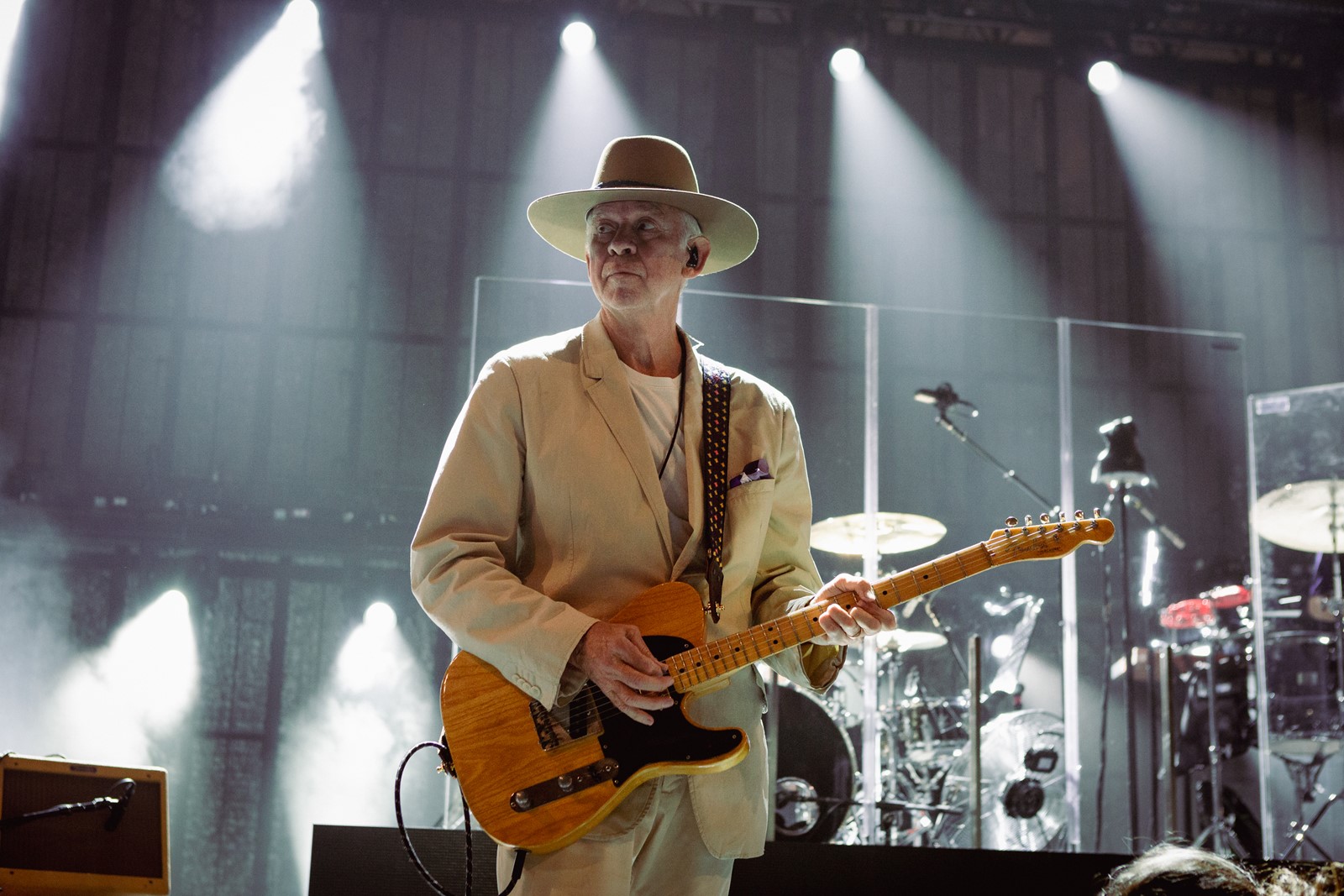
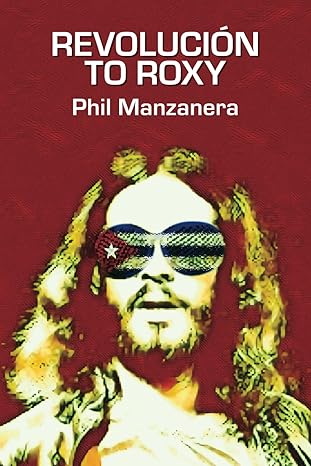
Manzanera, 75, has so many great anecdotes from his decades in the business — playing guitar for Roxy Music and later working with all sorts of big names, including Gilmour — he collected them in his new autobiography, “Revolución To Roxy.” He’ll visit the Quinlan Room in Minneapolis May 20 for an on-stage interview about the book with DJ Mary Lucia. He’ll also play a few songs from his extensive catalog during the event, dubbed “An Evening of Words and Music with Roxy Music’s Phil Manzanera.”
In addition to sharing tales from his day job, the Rock and Roll Hall of Famer also dives deep into his family history, including his early days when his family lived in Hawaii, Venezuela, Colombia and Cuba. The book also features more than 100 photographs, from intimate family shots to backstage snaps from around the world.
Here’s what Manzanera had to say about his past, present and future.
On what prompted him to write the book: “Basically, I have a lot of these stories I’ve been telling journalists over the years and I have a couple of friends who work for the BBC who said I should write a book. (But I thought), I’m not very good at writing, how am I going to do this? Anyway, I ended up doing one chapter and it took me about three months.
“I thought, why am I doing this? I try to make sense of what happened over the last 50 years. We were doing a farewell Roxy tour. And I’ve also got, like, 60 cousins in Colombia. There’s an interesting personal history narrative there. I’ve also got this other desire to find out about where I came from, why I’m a musician. It’s the kind of thing you do when you get older. What are we doing here? What’s this all about, you know? So it started me off on a journey of discovery and I found out more and more things about my family and my parents. That’s why the book starts in 1492 and ends in 2022, the last farewell show with Roxy.”
On meeting David Gilmour: “I was 15 and I didn’t know how to become a professional musician. My brother knew him, so we went to his apartment to ask him. He had just started recording (Pink Floyd’s second album) ‘A Saucerful of Secrets.’ He was my neighbor. It was just some quirk of fate that I met him.”
On his mother taking out a loan to buy his guitar when he joined Roxy Music in 1972: “Annoyingly, they insisted that I buy a white Fender (Stratocaster). I had a Gibson 335, but they didn’t like that image. So, a different guitar, a new beginning.”
On developing his signature guitar sound: “When I was 17 or 18 I decided, even though I was in a prog rock band at the time playing complicated music, I didn’t want to learn too much technique. I wanted to concentrate on sounds and atmospheres. Some of the bands I loved when I was growing up — early Pink Floyd, the more experimental side of the Beatles, Hendrix — had these weird, amazing sort of sounds they created with trickery in the studio. What interests me is textures and sounds, painting a picture with abstract stuff. Luckily, I found Roxy and particularly Brian (Eno), who was a fellow traveler in that kind of area.”
On his relationship with Eno: “I used to bump into him at avant garde concerts in London before I joined Roxy. I like that sort of conceptual, minimalist type of playing. I also liked the fact that he considered himself a non-musician, although, quite frankly, he was just a different kind of musician. He loved exploring and improvising. “Every single record I’ve done has got Brian on it somewhere, even if it’s just him remixing a track or putting some weirdness on it. We always got on very well. He’s just a great guy.”
On his relationship with Roxy Music lead singer Bryan Ferry: “Well, Bryan is a different kettle of fish. He’s like the archetypal movie star from the ’40s or ’50s. He’s got this weird kind of voice, but he’s a pretty cool guy and I always got on very well with him, too. It was difficult to sort of balance (Eno and Ferry), but I did continue working with both of them for a long time. I’ve continued right up until now.
“We have a deluxe box set of the second Roxy album coming out in September. I speak with (saxophonist) Andy Mackay and (drummer) Paul Thompson. The thing that unites us all is music. It’s like a weird, dysfunctional family. Sometimes you fall out, then you forget why you fell out, then you get in touch and start working together again.”
On meeting Bob Dylan via a 1991 guitar festival in Spain: “It was intimidating. It’s Bob Dylan. It’s like it’s difficult to explain. This is a guy who has such an influence and to be sitting in a room opposite him talking about stuff, it was like a mind explosion.”
On having one of his riffs sampled on the Kanye West and Jay-Z song “No Church in the Wild”: “The sample had nothing to do with me. But the record company and the publishers negotiated a fantastic deal where I got a third of the publishing and a third of the mechanical. The song won a Grammy, it was in films, it played during the Super Bowl, it was in car ads. It was even in the trailer for ‘Gladiator II.’ And it was just a riff that I did on one of my solo albums. I think I was watching TV one night before going to the studio when I came up with it. Then 25 years later, someone up there said you’ve been bumping along a bit, now take that. There you go. I made more money from that track than I did in Roxy.
“What’s great is that you become a musician because you love music. It’s not about the fame. You hope you can make a living doing it, but then every now again, something amazing happens to prove to you to just keep on doing what you’re doing and making music for the right reasons.”
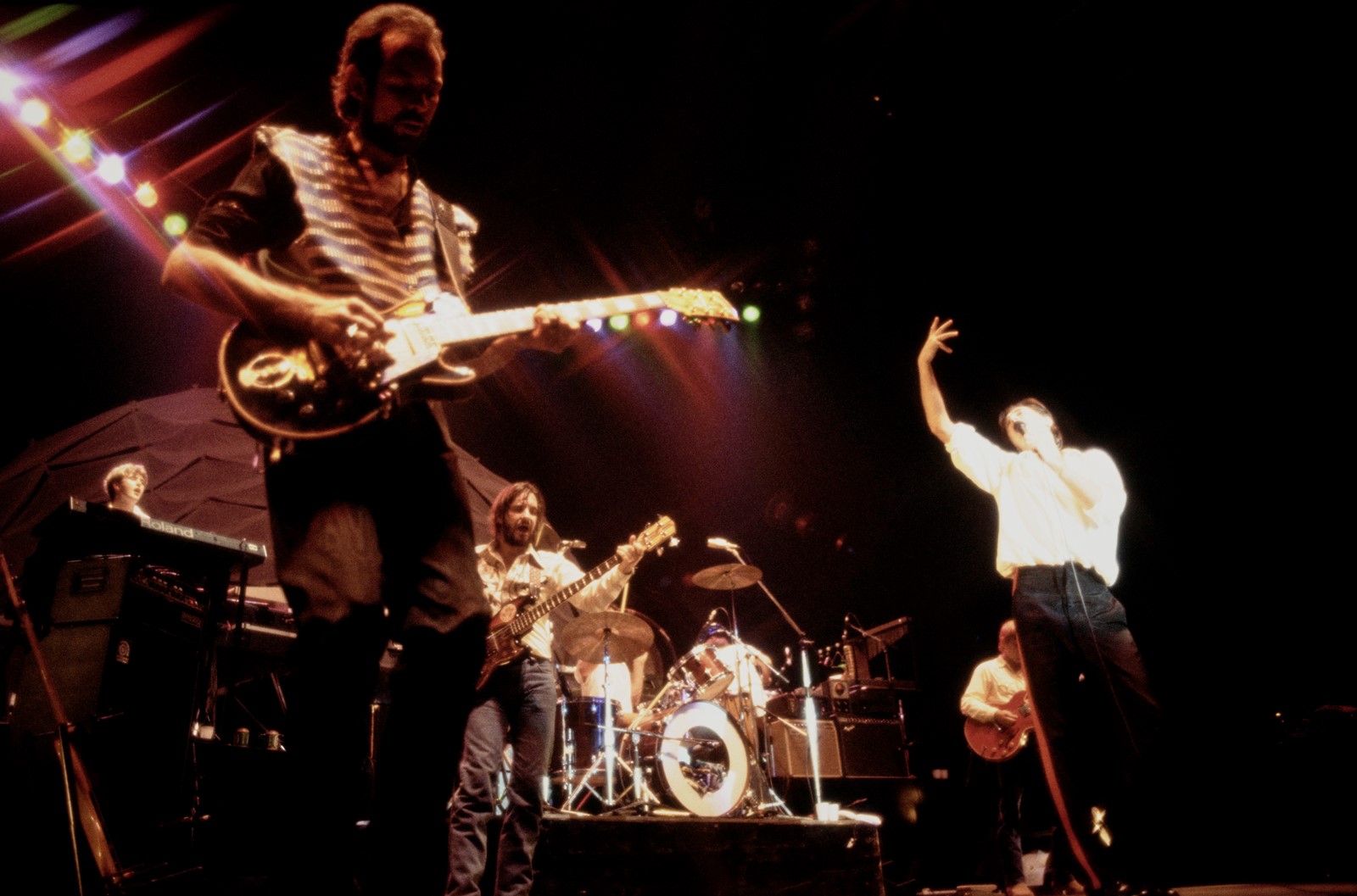
On whether or not Roxy Music is done: “Well, Roxy Music playing live is done. It’s becoming more and more difficult as everyone gets older. We said the 2022 tour was our farewell tour. I think we acquitted ourselves well, but it was time to say let’s not just keep going for the sake of it. So we continue to bring out these retrospective things, and we bring out our own albums, and but not as Roxy.
“I’m hoping there will be an ‘Avalon’ box set, as there are couple of tracks that no one’s ever heard. We’re all committed to the Roxy legacy and making our legacy a good one.”
 PREVIOUS ARTICLE

