


Houses designed by Frank Lloyd Wright, Keck & Keck among architecturally significant properties


With easy access to championship golf courses via the Illinois Central rail line from Chicago, Flossmoor started out as a resort town of sorts.
“The development of Flossmoor Country Club at the turn of the century brought wealthy investors into the area to develop summer cottages and permanent residences,” said resident Scott Ford. “Prominent architects followed.”
But Ford and Myron Graham realized how little was known outside the area about Flossmoor’s historic neighborhoods and architecturally significant buildings when they sat on the village’s community relations commission some time ago.
One of those architects was none other than the famed Frank Lloyd Wright, who designed the Nichols house at 1136 Brassie Ave. for Frederick Nichols, who was the superintendent of the Bitter Root Valley Irrigation Company, according to the Frank Lloyd Wright Trust.
The house was built in 1906 and features a long trellis that extends over the front entrance.
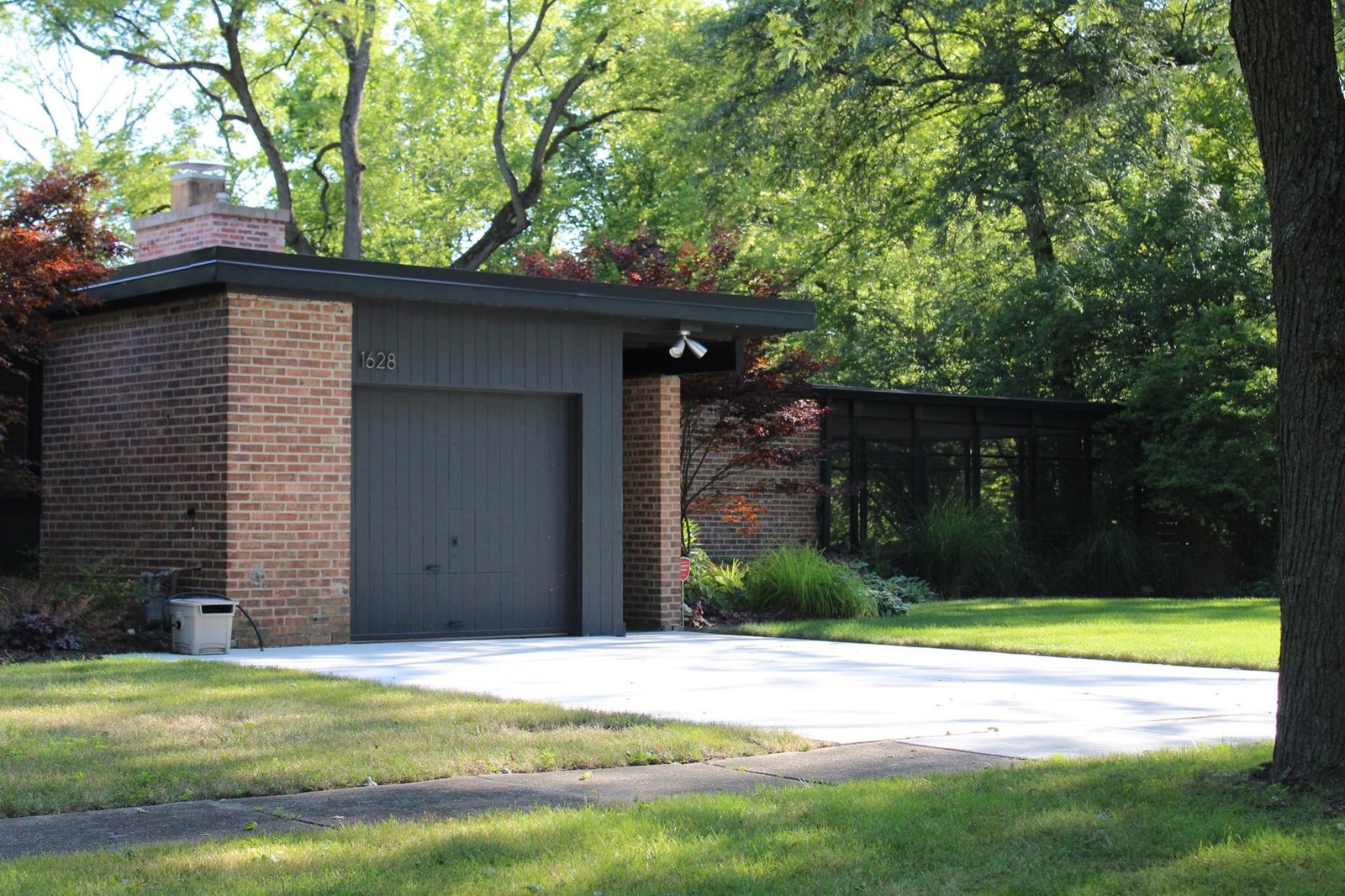
Another architecturally significant home is the midcentury modernist ranch designed by noted architect brothers William and George Fred Keck at 1628 Sylvan Court.
“Flossmoor continued with strict zoning, and some of the earliest building codes in the Chicagoland area throughout the ’20s and ’30s,” Ford said. “Excellent examples of English Tudor, Georgian, Spanish and American colonials were developed throughout the village.”
Ford and Graham started collecting information about Flossmoor’s architectural wealth and brought their findings to village officials, including assistant village manager Allison Matson. Soon after, a plan was developed to survey and catalog the village’s historic homes after researching similar programs in other communities.
“We thought we should be marketing this,” Matson said. “But we wanted to document proof. We didn’t want to just say we have these homes without being able to back it up.”
Village officials commissioned the historic housing inventory and enlisted a licensed architect who specializes in preservation.
The Carlisle Group also was called in to drive through neighborhoods with village staff to hand-pick the streets and areas they thought had the best concentrations of architecturally significant homes.
Those neighborhoods included Old Flossmoor, Flossmoor Park, parts of Heather Hill, Flossmoor Estates and Sylvan Court.
Ford and Graham also launched the Flossmoor History Project at
The volunteers fanned across the neighborhoods, mostly taking photos of the homes so the architect can later determine their style and significance.
The project started in the fall, but Ford hopes to have all the photos of the about 1,000 homes completed by June.
“We’ll then be collecting images of blueprints, info on the original architect and any other significant info residents have about their home,” he said.
Matson said organizers have created an online form for residents to share some of the stories about their homes.
“A lot of the work has already been done in the past,” she said.
Matson said residents are excited about the project and many have been giving positive feedback on Facebook, with some saying they have original blueprints.
Once the homes are documented, she said, there will be opportunities in the future for residents to receive government grants to restore or renovate their historic home.
Some neighborhoods may even qualify to be listed on the National Register of Historic Places, organizers said.
“Flossmoor is a unique place,” Ford said. “It’s rare to find this kind architecture tucked away in a little-known suburb. This will objectively document that significance and serve as a base for future homeowners to enjoy and preserve their properties.”
 PREVIOUS ARTICLE
