


Netanyahu calls for
a holiday shutdown
as infections mount
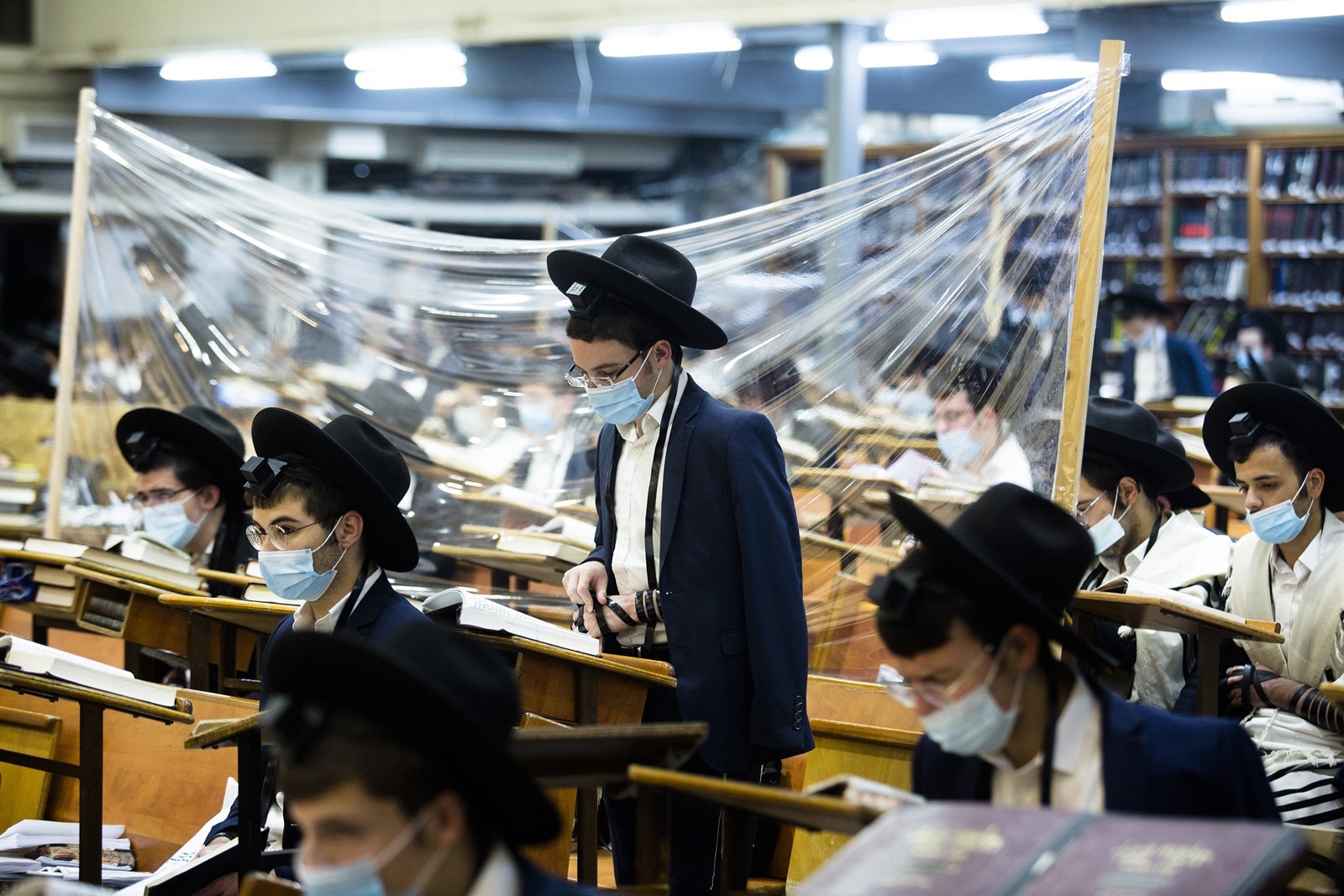


Beginning Friday, the start of the Jewish High Holiday season, schools, restaurants, malls and hotels will shut down, among other businesses, and Israelis will face restrictions on movement and on gatherings.
“Our goal is to stop the increase (in cases) and lower morbidity,” Netanyahu said in a nationally broadcast statement. “I know that these steps come at a difficult price for all of us. This is not the holiday we are used to.”
The tightening of measures marks the second time Israel is being plunged into a lockdown, after a lengthy shutdown in the spring. That lockdown is credited with having brought down what were much lower infection numbers, but it wreaked havoc on the country’s economy, sending unemployment skyrocketing.
The lockdown will remain in place for at least three weeks, at which point officials may relax measures if numbers are seen declining. Israelis typically hold large family gatherings and pack synagogues during the fast of Yom Kippur later this month, settings that officials feared could trigger outbreaks.
A sticking point in government deliberations over the lockdown was what prayers would look like during the holidays.
While the details on prayer during the lockdown were not nailed down in the government decision, limits on religious gatherings are expected. That prompted Israeli Housing Minister Yaakov Litzman, who represents ultra-Orthodox Jews, to resign from the government Sunday.
To date, Israel has had more than 153,000 infections and more than 1,100 deaths. Given its population of 9 million, the country has one of the world’s worst outbreaks. It is seeing more than 4,000 daily cases of the virus.
The Finance Ministry has estimated the new restrictions will cost the economy $5.5 billion, and a relief program is to be presented by Thursday.
The restrictions are to take effect on the eve of the Jewish New Year, and the restrictions will continue throughout the season of Jewish holidays, to the outrage of many ultra-Orthodox.
Some businesses trying to recover from the first lockdown in the spring say they’ll be forced to close unless the government offers immediate and substantial relief. Some are threatening to keep their stores open.
Tens of thousands of ultra-Orthodox are also expected to defy the lockdown, gathering for mass holiday prayers in overcrowded conditions, the Haaretz newspaper reported.
Other Israelis say they won’t abide by the new orders because the government has politicized its health decisions. Last week, under pressure from ultra-Orthodox lawmakers who said their communities were being demonized, it retreated from a decision to quarantine areas with big outbreaks.
Cases began surging after the reopening of schools in May, and Netanyahu began warning back in late June of another possible lockdown. Large gatherings for life-cycle milestones and for religious study have fostered the virus’s spread, now centered mainly in ultra-Orthodox and Arab areas of the country.
Israel earned praise for its initial handling of the coronavirus outbreak, moving quickly to seal the country’s borders and appearing to bring infections under control. It has since been criticized for opening businesses and schools too quickly.
Much of that criticism has been aimed at Netanyahu, who has faced a public outcry over his handling of the crisis and has seen thousands of protesters descend on his Jerusalem residence every week. While lauded for his decisive response following the spring outbreak, Netanyahu appeared distracted by politics and personal matters, including his trial for corruption allegations, as infections rose over the summer.
At the news conference Sunday announcing the lockdown, Netanyahu defended his response, saying Israel’s economy had emerged from the first lockdown in a better state than many other developed nations and that while cases were high, the country’s coronavirus mortality numbers were lower than other countries with similar outbreaks.
The country’s power-sharing government, made up of two rival parties who joined forces in a stated aim to combat the virus, has also been chided for the new outbreak. The government has been accused of mismanagement, failing to properly address both the health and economic crises wrought by the virus and leading the country to its second lockdown.
Some government ministers have pointed fingers at what they’ve called an undisciplined public, who they have accused of violating restrictions against public gatherings and mask wearing.
 PREVIOUS ARTICLE
