


4 dead as Category 5 hurricane churns across Puerto Rico on likely path toward Florida
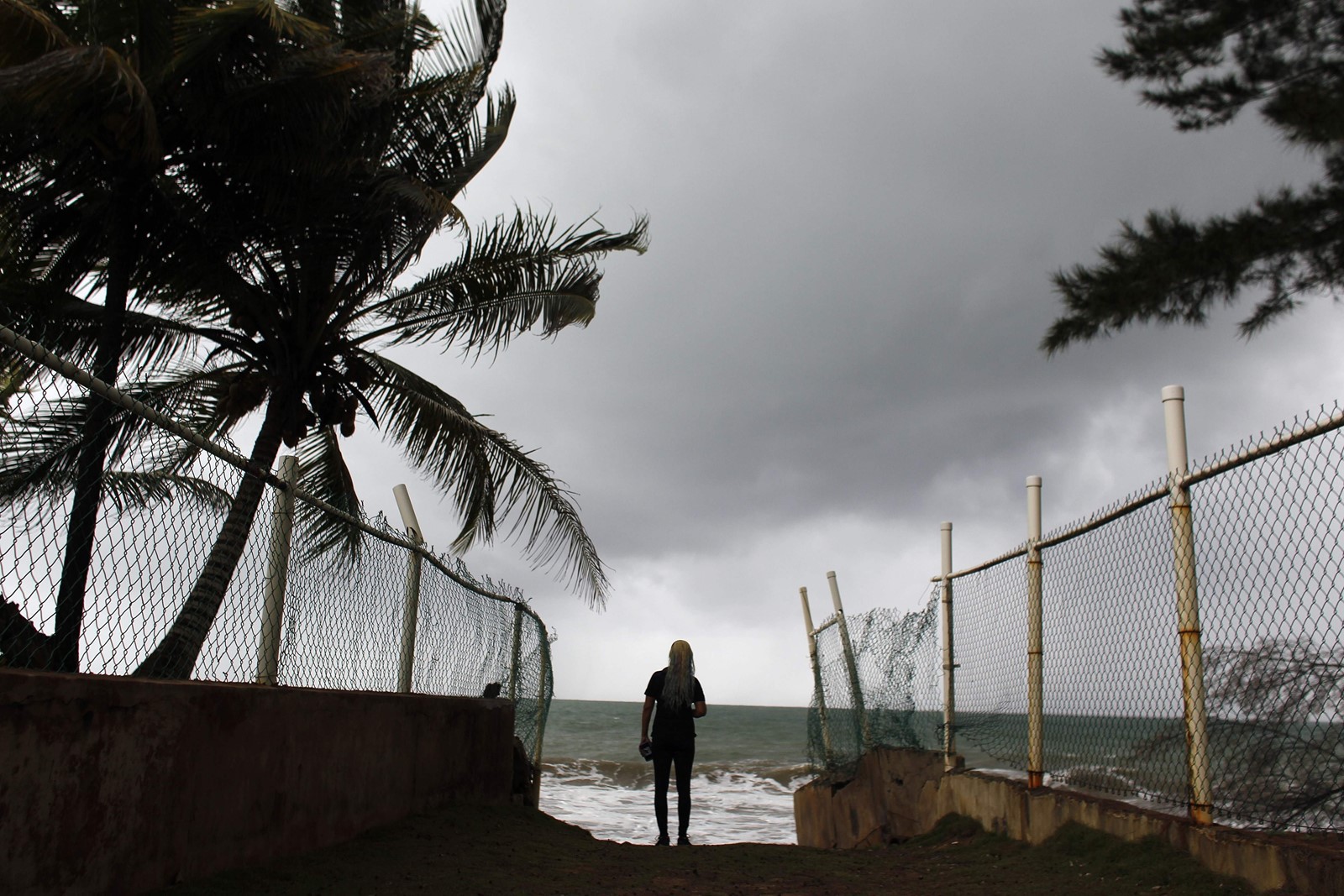


Hurricane Irma, one of the most powerful Atlantic hurricanes, churned across Puerto Rico, with the U.S. mainland in its sights, likely over the weekend.
Amid an overnight assault of battering waves and 185-mph winds, two deaths were reported in French island territories, a third in Anguilla, a British territory, and a fourth in Barbuda, part of a tiny nation.
In Florida, Gov. Rick Scott implored constituents to obey calls to flee the storm’s path.
“I cannot stress this enough — do not ignore evacuation orders,” Scott said at a news briefing as the storm began lashing Puerto Rico with rain, still on track for the U.S. mainland. “If you’re told to evacuate, don’t wait — get out quickly.”
In warning of the dangers, the governor invoked Hurricane Andrew, which devastated Florida a quarter of a century ago, causing massive destruction and killing nearly 50 people in the state.
“I want everybody to understand the importance of this — this is bigger than Andrew,” Scott told ABC News.
President Donald Trump declared states of emergency in Florida, Puerto Rico and the U.S. Virgin Islands. Florida began activating its National Guard, with 7,000 members told to report for duty Friday.
In Fort Myers, in coastal southwestern Florida, Stephanie Matteson waited in line at a gas station, where she said she had been for 25 minutes.
“I swear, it’s like everyone is in a hurry to get this thing over with — like, ‘Just come on, Irma, and then leave us alone,’ ” said Matteson, 47. She experienced Hurricane Wilma in 2005, “but Irma’s got more punch, from what they’re saying.”
There was a run on supplies, including bananas and batteries. Anthony Bonner, a bread company distributor, predicted that the 28 racks of bread he was delivering to a picked-over Walmart in Coral Cove, outside Fort Myers, would go fast.
“It’s kind of like I’m the candy man wherever I show up,” he said. “Bread and water are always the first to go. Stand here for 15 minutes — all of this will be gone.”
A state of emergency was declared for all 67 Florida counties; on Wednesday, South Carolina followed suit, with Gov. Henry McMaster urging the public to not leave storm preparations to the last moment.
As he did while Hurricane Harvey pounded Texas late last month, Trump unleashed tweets about the storm’s strength. “Hurricane looks like the largest ever recorded in the Atlantic!” he wrote Wednesday morning on Twitter.
The president also said his “team” was ready in Florida.
The National Hurricane Center said the storm was one of the five most powerful Atlantic hurricanes in the last 80 years and the strongest Atlantic storm on record outside the Gulf of Mexico and the Caribbean Sea.
Satellite imagery of the enormous storm inspired fear and awe.
The Hurricane Center in Miami described a vast swirling mass, with hurricane-force winds extending 50 miles from the storm’s center.
Before dawn Wednesday, the tiny Caribbean nation of Antigua and Barbuda was pummeled by wind and rain as the Category 5 storm passed almost directly above the islands, tearing off roofs, uprooting trees and triggering floods.
At first, Prime Minister Gaston Browne tweeted thanks that his nation had been spared the worst. But then came grim word of almost all houses on Barbuda destroyed, and a death.
Irma also roared through the French island territories of St. Martin and St. Barthelemy, battering them with wind and water that smashed buildings and toppled trees. It was there that two deaths were reported.
Dutch authorities were keeping an anxious eye on St. Maarten, a Netherlands territory that shares an island with St. Martin, after the storm disrupted communications and caused heavy damage.
In the early afternoon, the eye passed over the British Virgin Islands with winds gusting at 110 mph, the National Hurricane Center reported.
Neuhaus is a special correspondent. Staff writer Laura King reported from Washington.
 PREVIOUS ARTICLE
