


ANALYSIS
If Congress doesn’t act, fallout could last to ’18 elections
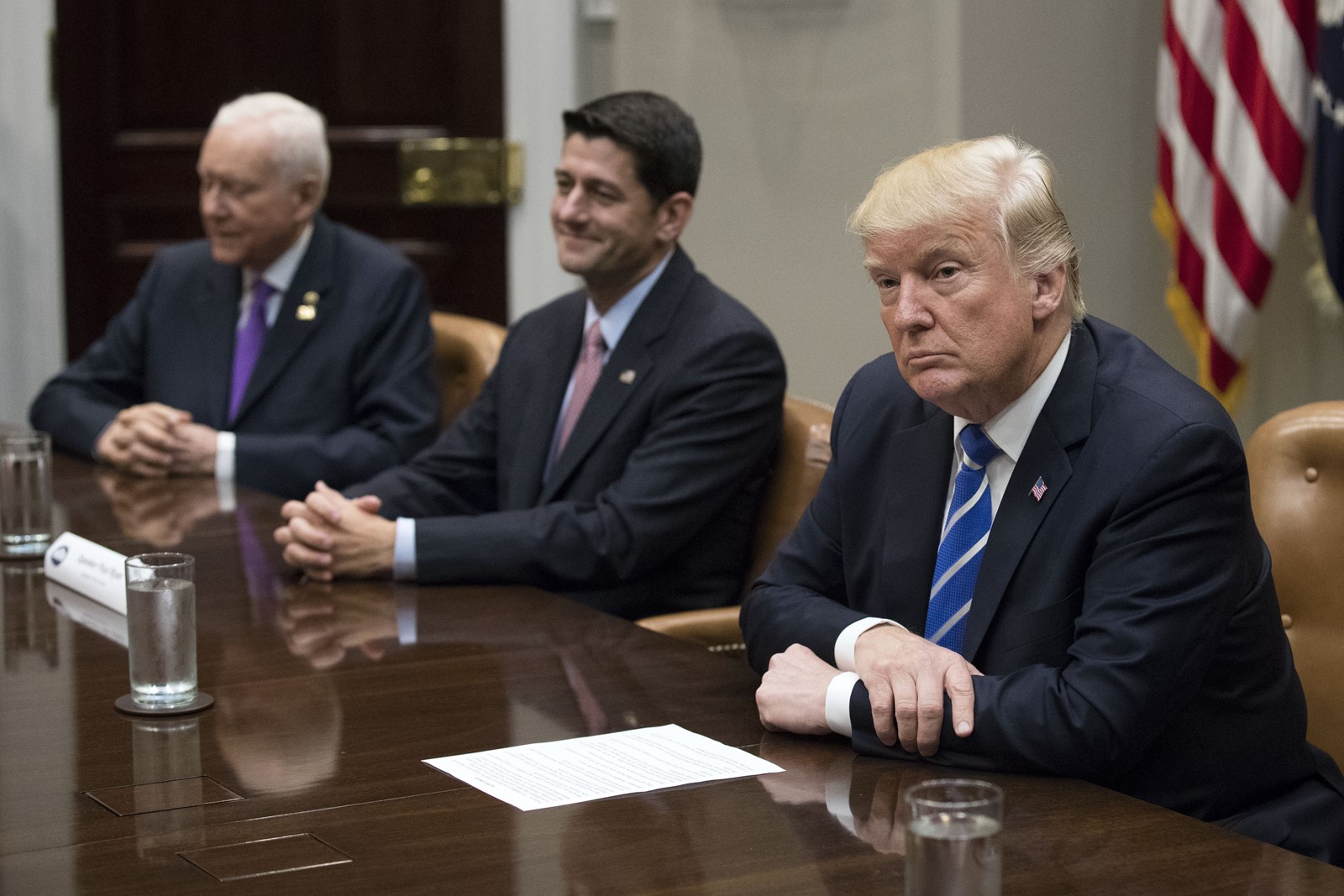


The terms Trump set out give Republicans in Congress six months to pass a measure to protect those currently covered by the Deferred Action for Childhood Arrivals program, known as DACA, which was enacted under executive authority by President Barack Obama.
But Congress has been unable for years to come up with immigration reforms, in large part because of divisions within Republican ranks, which sank immigration reform efforts under Presidents Obama and George W. Bush.
The worst case scenario for many GOP lawmakers: If Congress stalls again, next year’s midterm election campaigns could be accompanied by thousands of young people each week being fired from their jobs or kicked out of school, and, ultimately, by some being deported to countries they have not seen since they were toddlers.
Some Republican strategists fear that revoking DACA could repeat on a national scale the damage Republicans in California incurred by supporting Proposition 187. That 1994 measure aimed at immigrants in the country without permission turned the California party from one that was competitive, and often victorious, in statewide elections to nearly an afterthought, disdained not only by Latinos but many moderate white voters.
Countering those fears are warnings by other Republicans that legislation to renew DACA would be the biggest grant of amnesty to a group of immigrants since the Ronald Reagan administration. Passage of a legalization bill by a Republican Congress would deeply alienate many conservatives, they argued. Already, some were critical of Trump for not canceling the program outright.
The divisions within the GOP could be seen in the immediate aftermath of the administration’s announcement. Among Democratic lawmakers, the condemnation was swift and near universal. Many Republicans, by contrast, tried to avoid comment, and those who did talk offered widely divided reactions.
House Speaker Paul Ryan, R-Wis., said that he hoped both houses of Congress would act to assure that “those who have done nothing wrong can still contribute as a valued part of this great country.”
Sen. Tom Cotton, R-Ark., on the other hand, insisted that any break for DACA recipients should be coupled with a bill he has proposed, with White House backing, that would reduce the number of immigrants allowed to enter the country legally.
The central argument that has long been advanced by supporters of DACA — that people brought to the U.S. as children should not be blamed for their parents’ actions — has won broad support from the public. An NBC News/Survey Monkey poll released last week, for example, found that 64 percent of Americans supported the protections.
Even Trump’s most loyal voters were sympathetic: Among white working class voters — those who propelled Trump’s important victories in the upper Midwest — 56 percent supported the DACA program.
Some laboring to elect Republicans said they hoped for a quick congressional judgment in favor of DACA recipients, feeling that could rescue their party from a backlash.
“The Republicans running Congress have an opportunity to come through,” said veteran Republican strategist Rob Stutzman. “If they fail, and those who have grown up in this country as Americans are forced to go back to countries they don’t know, that will be a catastrophically bad moment for the GOP.”
California is the template that Republicans like Stutzman are desperate to avoid. In 1990, in his first run for governor, Pete Wilson won 35 percent of the Latino vote. Four years later, he ran for re-election while touting Prop. 187, which would have stripped most state government benefits from those in the country illegally. He won 22 percent of the Latino vote.
More than that, the campaign prompted legions of Latinos to register to vote — the overwhelming majority of them as Democrats.
At the presidential level, Republicans have gained little ground among Latinos in recent elections.
 PREVIOUS ARTICLE

