


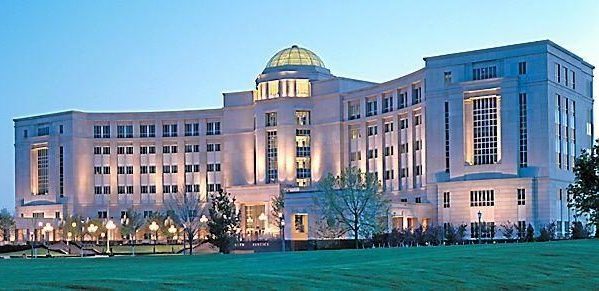


The Michigan Supreme Court denied the Macomb County Restaurant, Bar and Banquet Association’s application to appeal a lower court’s dismissal of its lawsuit over the state COVID-19 restrictions.
The high court affirmed that the State Court of Appeals last Friday in tossing cases that alleged the state engaged in an illegal “taking” of property when it issued heightened regulations on bars, restaurants and banquet centers during the pandemic, which started in early 2020 and lasted for over a year.
The justices referred to its rulings last August denying leave to appeal in two other similar lawsuits brought by plaintiffs Mount Clemens Recreational Bowl and Gym 24/7 Fitness in Alma. In those cases, the high court upheld the appeals court in two 2022 precedent-setting decisions that the plaintiffs did not suffer a illegal “takings” by the government from Gov. Gretchen Whitmer’s executive orders in 2020 and 2021.
“We are not persuaded that the questions presented should be reviewed by this Court,” the court wrote in its brief order.
State and federal courts throughout the nation have mostly ruled against plaintiffs in lawsuits over COVID-19 restrictions. Federal courts have denied due-process claims.
Justice David Viviano, a minority Republican-nominated justice, was the lone dissenter on the seven-member panel, insisting the case should be heard.
“I continue to believe that in an appropriate case, we should clarify whether the government’s temporary closure of businesses during the COVID-19 pandemic constituted a regulatory taking,” wrote Viviano, a Sterling Heights resident and former Macomb County judge.
Prior rulings also have said the association does not have standing, but Viviano says it also isn’t clear whether there are instances in which an association could represent individual members. He notes “federal courts and some state courts have held that associations generally lack standing to assert claims for monetary damages on behalf of their members. But it does not appear that any binding opinion in Michigan has ever adopted this rule.
“Plaintiff has made a persuasive argument that its interest as an association is sufficient for that purpose,” he wrote. “This is a jurisprudentially significant issue that I believe warrants our careful consideration.”
Last January, attorney Justin Majewski, representing Rec Bowl in Mount Clemens, K.M.I. Inc. and Mirage Catering in Clinton Township, and Philip Ellison, representing theGym 24/7 Fitness, argued in front of justices.
Majewski asserted they must consider or order the Court of Claims to consider the three factors as outlined in a landmark 1978 U.S. Supreme Court, Penn Central Transportation Co. v. the city of New York in deciding whether a taking has occurred.
Meanwhile, state Solicitor General Ann Sherman argued on behalf of Gov. Gretchen Whitmer and her administration that the cases were properly dismissed because the executive orders were implemented during a “grave threat to public health,” and officials acted “out of necessity to protect against a grave threat to public health.”
The ruling can be traced back to 2022 when the appeals court ruled in the Gym 24/7 Fitness case.
“The Gym was not deprived of all economically productive or beneficial use of its property as a result of the Governor’s EOs; there was no regulatory categorical taking of the Gym’s property,” an appeals panel wrote. “The closure of fitness centers for six months was temporary and considerably shorter in duration than the 32-month period involved in (a prior case).
In addition, “There is no allegation or evidence that the Gym suffered a total loss or the complete elimination or obliteration of value by operation of the EOs,” the court wrote, as the Gym only asserted that the orders “had ‘very nearly’ destroyed the property as a whole. The property clearly still had value, even if no revenue or profit was generated during the closure. And any lost value relative to the real and personal property was likely recovered as soon as the temporary prohibition was lifted.”
Regarding the factors in the Penn Central case, the court wrote the deciding issue was, “The character of the government’s action was compelling in that the aim of the EOs was to stop the spread of COVID19, which our Supreme Court described in another ruling as ‘one of the most threatening public-health crises of modern times,’ resulting in ‘significant numbers of persons suffering serious illness or death.’”
Viviano and Justice Richard Bernstein dissented in the denial of a high-court appeal in the gym case, writing: “By denying leave to appeal, the majority leaves unresolved novel and important questions regarding federal and state takings jurisprudence. Can the temporary impairment of business operations be a categorical taking if there are no reasonable alternative uses of the business property during the period in which its intended and normal use is prohibited? And, if not, can the prohibition of the normal business operations nonetheless constitute a taking under the multifactor test established by the United States Supreme Court and employed by our courts?”
 PREVIOUS ARTICLE
