


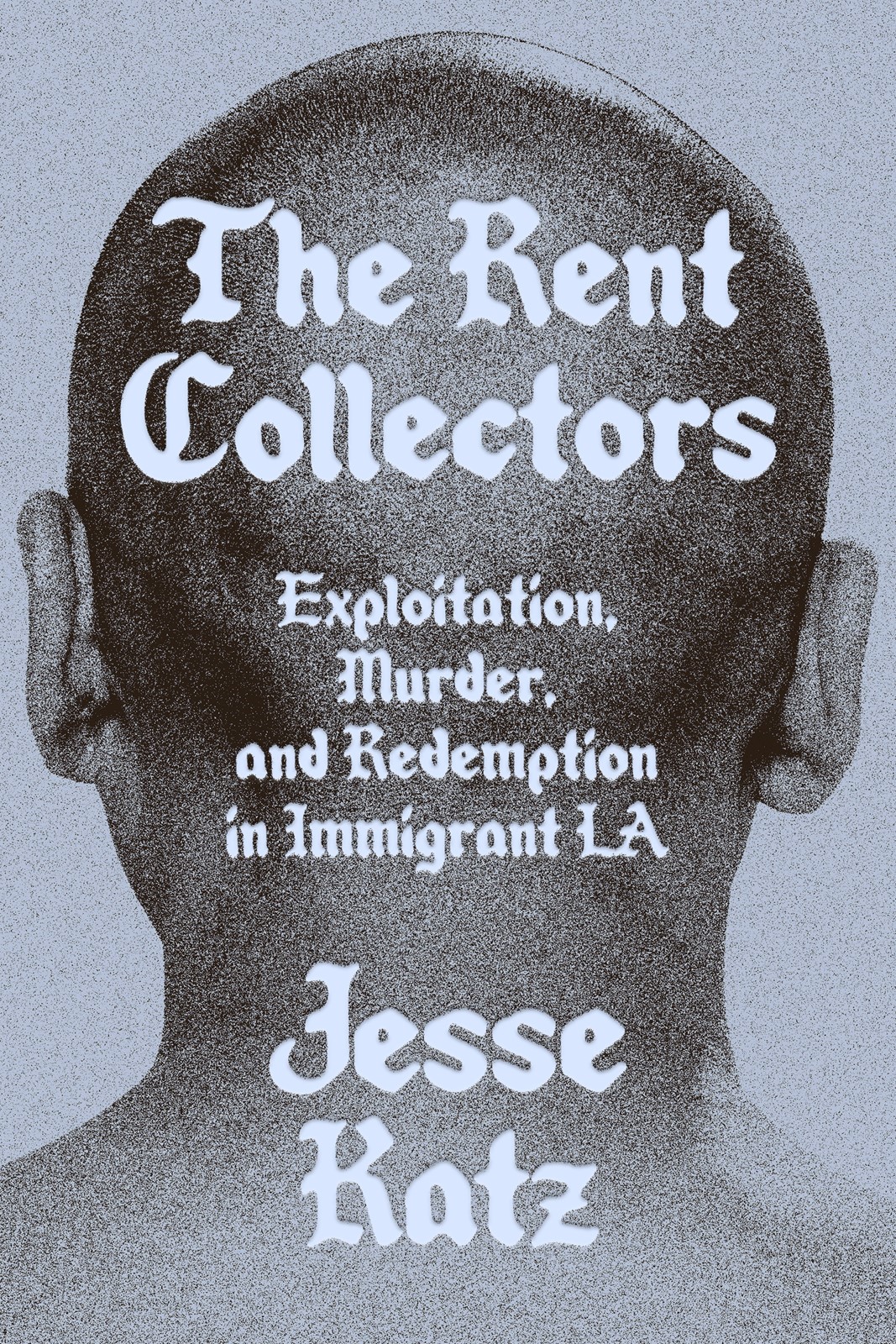
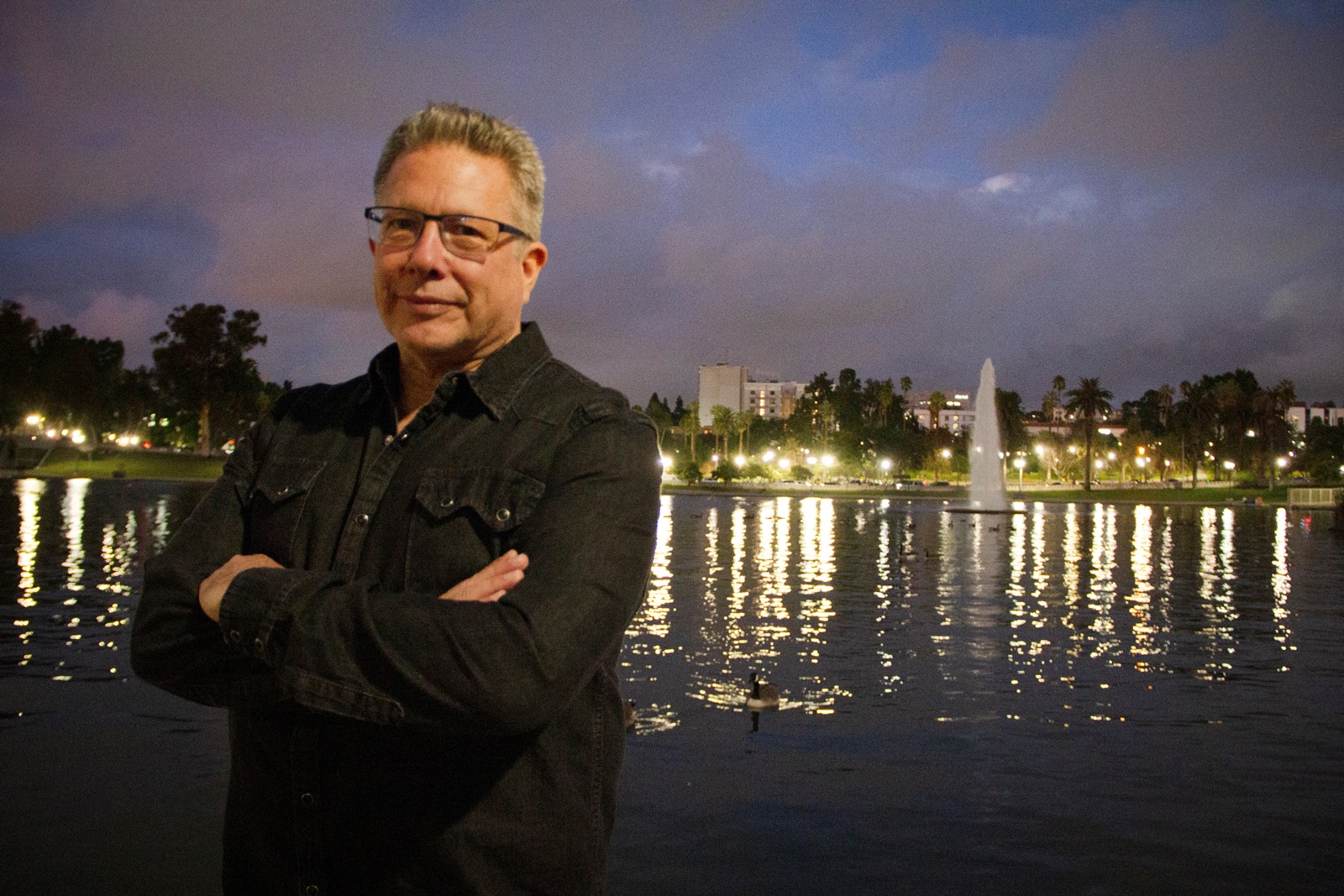


“In some ways, I’ve been preparing to write this book almost my whole adult life,” Jesse Katz says about “The Rent Collectors: Exploitation, Murder, and Redemption in Immigrant L.A.,” his nonfiction book published in July by Astra House.
It makes sense. Katz has spent nearly four decades in Los Angeles, much of it covering crime and gangs for the Los Angeles Times. “The Rent Collectors” follows the aftermath of a gang-related crime that shocked a city already accustomed to acts of violence.
Katz’s book follows Giovanni Macedo, an L.A. native who searched for belonging in the Columbia Lil Cycos, part of the 18th Street gang alliance. In 2007, the then-18-year-old Macedo was ordered to shoot and kill a street vendor in the MacArthur Park neighborhood; the vendor, Francisco Clemente, had refused to pay the gang protection money, or “rent.”
Macedo fired five rounds at Clemente, who survived the attack. But one bullet hit and killed an infant, Luis Angel Garcia. As punishment for botching the hit, members of the gang tried to kill Macedo in Mexico, but the young man survived. In 2010, Macedo was convicted of voluntary manslaughter and attempted murder, and sentenced to more than 50 years in prison.
Katz interviewed Macedo extensively for the book. “Could you feel something for him, even as you’re feeling something for his victims at the same time?” Katz says via Zoom from his home in L.A. “How do you reconcile those different feelings? To me, that makes for a fascinating subject to explore and hopefully an illuminating tale to read.”
This conversation has been condensed and edited for length and clarity.
Q How familiar with MacArthur Park were you when you first moved to L.A.?
A I didn’t know anything about L.A. when I arrived here in 1985. The first story I ever wrote about MacArthur Park was in 1987; it was a story about how people celebrate Easter in L.A. I saw these guys playing chess in MacArthur Park, which at the time really was kind of apocalyptic. It was just filled with hundreds of people using and selling crack, turning tricks. It was a really difficult place, but here are these chess players, and it turned out that they were masters. They were ranked in the U.S. Chess Federation. The contrast of them making these elegant moves on the chessboard amid this incredible messiness around them really piqued my imagination. That planted a seed early on that really never left about the importance of MacArthur Park, its geography, history, culture and what it came to represent.
Q How did you come across Giovanni Macedo’s story?
A I wasn’t covering gangs in a concerted way at that time, but I do remember when the incident happened. In 2011, I moved to MacArthur Park, and found a loft that’s right at the edge of the park itself that looked out onto the entire ecosystem that would later become “The Rent Collectors.” So I’m looking out on the parkland; I’m looking out at the lake; I’m seeing bodies pulled out of the lake. When I wake up in the morning, the streets are just churning with hand-to-hand commerce, and I am looking out on the turf that happens to be Giovanni’s gang. I started doing some stories about the neighborhood. I wrote a piece about street vending for the American Prospect in 2012, and that was the year that Giovanni testified in a federal RICO trial in a Los Angeles court. I read about his testimony, and I remembered that the sad truth of this story is that a newborn infant is killed inadvertently but horrifically.
What I didn’t know was that Giovanni had then paid the price for this, that his own gang had turned against him and lured him to Mexico and strangled him and thrown him off a cliff and left him for dead, and that he survived this. Because he bungled his mission so badly and it led to all these other consequences, it somewhat ironically became an opportunity to explore who he really was, and how this ecosystem had shaped him, and maybe even try to mine for whatever humanity was inside of him.
Q Was it difficult to get him to open up about everything that happened?
A He was very forthcoming. I didn’t know anybody who knew him. I just looked him up on the inmate locator and sent him a letter that said, “You don’t know me and I don’t know you.” I had really squandered years waiting to write that letter, because I didn’t know who he was inside, what kind of response I was going to get. But my need to know about him happened to be matched by his need to want to share his story with someone.
He wrote me back right away. In my letter to him, I said, “I’m going to go out on a limb, and I’m going to guess that you’re not the same person today that you were at that point 11 years ago. I’m going to imagine that you’ve grown up, and I believe that none of us should be defined by our mistakes.” He wrote back to me, and I felt like my life changed at that moment. His letter moved me to tears, and he described waking up on that cliff after he’d been betrayed and disposed of by his own homies, and having his eyes opened that he had bought into this mirage of what the gang meant.
He realized that that was all an illusion in some ways. He said to me, “If somebody else can have their eyes opened by what I’ve been through, if some other person can avoid my mistakes, then my life is an open book.” He wrote that to me in 2018. Did he know what it meant to tell me that his life was an open book? I’m not sure. But he has never wavered from that principle. He has always chosen truth over secrets. He has never tried to sugarcoat anything. He’s never tried to excuse what he’s done. He’s never asked me to leave something out of the story. It takes incredible courage and integrity to open yourself up that way.
Q Have you been in communication with Giovanni over the past few months, before your book was published?
A Giovanni and I have developed what I would describe as a very close relationship. He inserted me into his life and his family’s life. When I first met him, he hadn’t had a visit from a family member for a decade. He was really alone. There was something about my interest in him that really gave him encouragement and gave him somebody to be accountable to.
He’d been disconnected from family members. He didn’t really know his biological father’s background or the circumstances of his death. He didn’t really know what his mom had been through, emigrating from El Salvador on the eve of civil war and being smuggled across the border in the trunk of a car. All of this was new to him. So my inquiry was filling in a lot of gaps in his knowledge, and my quest to turn some of those facts into his story, and build a narrative about who he is and what has shaped him and who he wants to become, that’s also kind of a story that Giovanni’s going to need to tell himself. That’s a story that he has to present to the parole board if he’s ever to earn a second chance.
I’ve been visiting him in person basically every month since we met. We talk on the phone. About a year ago he was issued a tablet, which allows him to text and do video calls, which is terrific, so we’re in constant contact through his tablet. I’ve used those methods of communication to do some of my fact-checking with him and to give him insight into what I’m writing.
 PREVIOUS ARTICLE
