


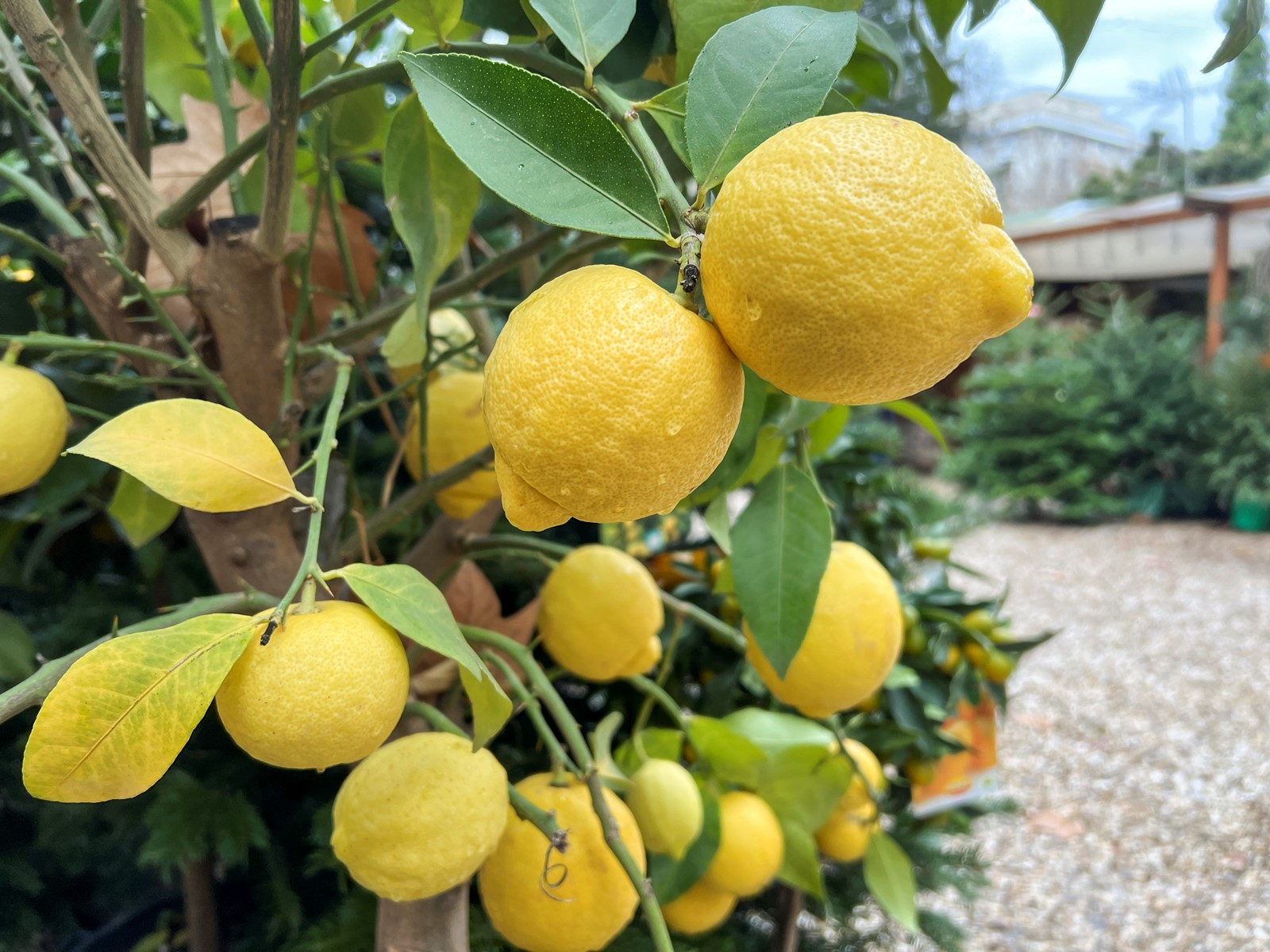


1 Fruit trees: Now through winter and into early spring is when Eureka lemons are ready for harvest. You will find a few Eureka lemons on the tree at any time of the year, but you want to pick them when they are still somewhat soft because they will harden if left for too long on the tree. Keep in mind that lemons, like other citrus, do not ripen after being picked. In fact, citrus fruit immediately begin to deteriorate upon being detached from the tree but, if refrigerated, can maintain freshness for a month or longer, depending on variety.
2 Vegetables: Sow kale seeds. I know, kale is disagreeable to a lot of people. Yet there are varieties with distinctive tastes and colors that make them worth a try. Chinese kale has the flavor of broccoli, which, like kale, is a member of the cabbage family. Red Russian is widely regarded as the mildest, even sweetest, kale variety, while Redbor is the most colorful variety, with leaves in purple, crimson and burgundy. Winterbor is a giant blue-green kale that reaches 3 feet in height.
3 Herbs: Even though they may not germinate until spring, you can plant dill seeds now. They are tiny, so just drop them on the soil surface and cover with 1/2 inch of good garden soil or compost. If you do succession planting, meaning a dozen seeds every few weeks, you will have a crop of dill, which is an annual plant, from spring through next winter. Once seeds germinate, they produce harvestable leaves in as little as two weeks. Dill is an annual that lives for three to four months. The most pungent leaves are produced just before flowers are, and you can prevent flowers from developing by pinching off their buds. However, if you allow flowers to bloom and seeds to form, you can allow seeds to drop for another crop or harvest them for culinary purposes. Of course, you can plant dill seeds indoors at any time in bright light, although some sort of grow light will be needed for winter germination.
4 Ornamentals: One of the most carefree perennial winter bloomers is Australian fuchsia, or winter bells. Australian fuchsia flowers are flared tubes of white, red or pink. This plant can be grown under the same conditions as California natives and is generally frost-hardy. Correa pulchella variety Pink Eye is a favorite selection. For best results, acidify soil with gypsum prior to planting and apply gypsum twice a year as a topical amendment to the soil surface.
5 More fruit trees: Once the leaves have fallen from your deciduous trees, you can prevent borers from attacking them by painting exposed trunks, large branches and limbs with interior latex paint — preferably off-white matte — diluted half and half with water. Do this annually for borer protection, especially on older trees.
— Joshua Siskin
 PREVIOUS ARTICLE