


Council approves new PUD regulations
Amended regulations affect new developments only
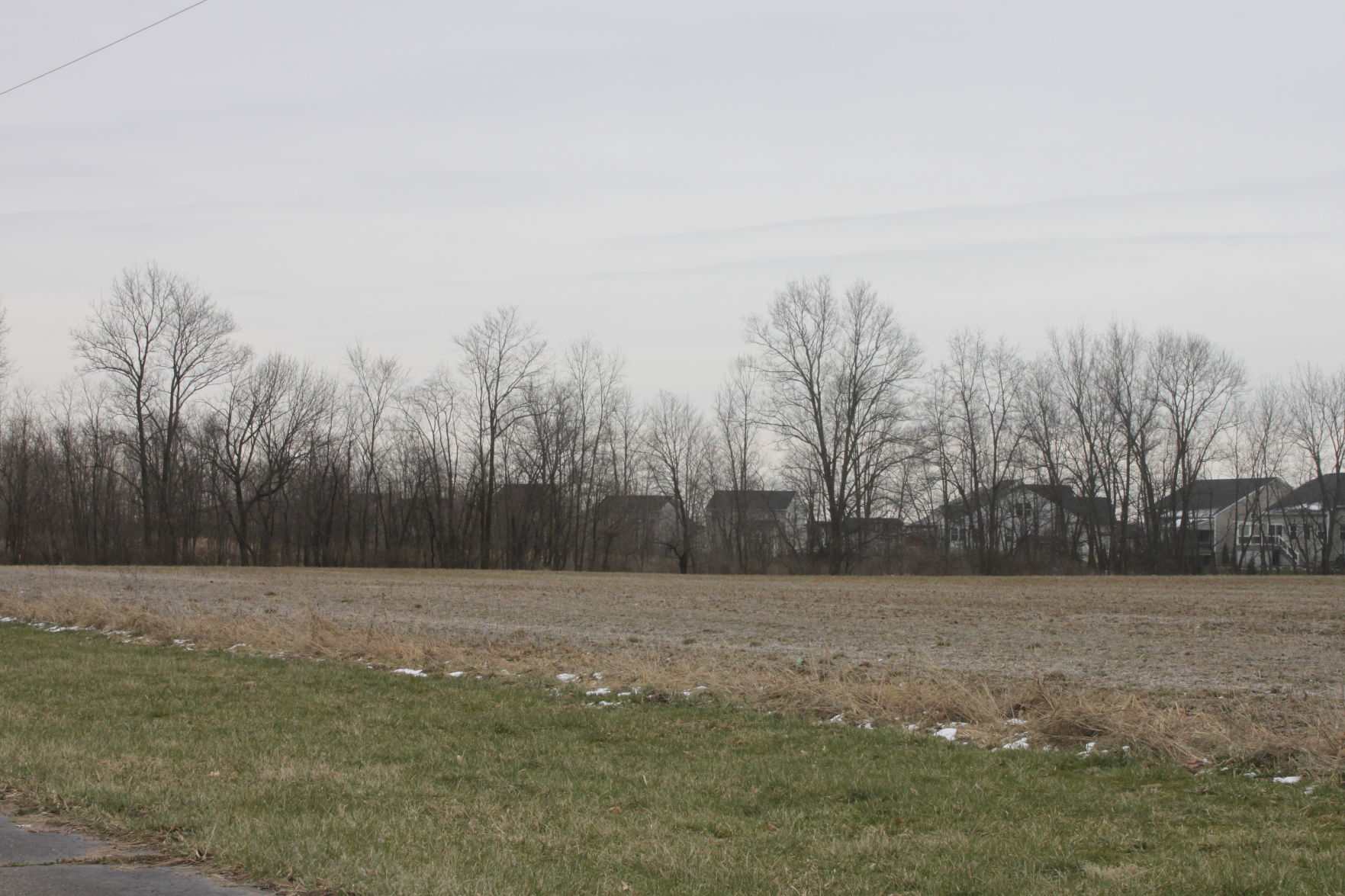
Newly approved regulations for PUDs would effect future developments within the city, but not existing developments or developments in progress such as the PUD planned on the Blooming Acres property. Photo by EMILY CANNING-DEAN


WADSWORTH – Any future planned unit developments within the city will be subject to a new set of rules.
Council approved legislation 5-1 March 7 amending the city’s zoning code when it comes to PUDs. Councilor Ralph Copley cast the lone dissenting vote.
A PUD is a technique used to provide flexibility for new construction in a community. It could, for example, allow for a clustering of residential units in a residential development to provide for a bigger plot of green space.
“I have some concerns about lot sizes and the separation distance between houses,” Copley said. “From a safety standpoint thinking about something like a fire I think you want a larger distance between units.”
Copley said he thinks there are some good things within the new regulations, but added he thinks the city needed to take a closer look at the regulations.
“I don’t think we’ve done enough,” he said. “I’ve talked to residents who live in Tiberon Trace and the issues they have had there with things like the walking trails. I don’t want to see this happen to another development.”
Tiberon Trace and other existing PUDs are not subject to the new regulations – those apply to future PUDs only.
Councilor Bob Titus said he think some good compromises were made on the new PUD regulations.
“The minimum lot sizes are bigger with these new regulations,” Titus said. “Maybe not as big as some think they should be, but I have been assured we can go back and revamp the regulations again in the future, but this is a starting place. We have a lot of developers coming in and we don’t want to have to fall back on the old PUD regulations.”
Under the new regulations, PUDs can be either permitted uses or conditionally permitted uses. Only conditionally permitted uses require public hearings. PUDs are allowed in areas zoned low-density residential, R1 residential and R2 residential. PUDs are no longer an option in districts zoned R3 or R4 residential.
Changes include design standards for open space areas within the development. It also includes language requiring developers to complete open or recreational areas within a certain amount of time as well as a requirement for a maintenance plan of these areas.
The changes also eliminate a requirement for a club house or indoor recreation area within the PUD.
Also under the new regulations, the number of units within a PUD cannot exceed the number of units allowed within a standard residential development.
Council approved legislation 5-1 March 7 amending the city’s zoning code when it comes to PUDs. Councilor Ralph Copley cast the lone dissenting vote.
A PUD is a technique used to provide flexibility for new construction in a community. It could, for example, allow for a clustering of residential units in a residential development to provide for a bigger plot of green space.
“I have some concerns about lot sizes and the separation distance between houses,” Copley said. “From a safety standpoint thinking about something like a fire I think you want a larger distance between units.”
Copley said he thinks there are some good things within the new regulations, but added he thinks the city needed to take a closer look at the regulations.
“I don’t think we’ve done enough,” he said. “I’ve talked to residents who live in Tiberon Trace and the issues they have had there with things like the walking trails. I don’t want to see this happen to another development.”
Tiberon Trace and other existing PUDs are not subject to the new regulations – those apply to future PUDs only.
Councilor Bob Titus said he think some good compromises were made on the new PUD regulations.
“The minimum lot sizes are bigger with these new regulations,” Titus said. “Maybe not as big as some think they should be, but I have been assured we can go back and revamp the regulations again in the future, but this is a starting place. We have a lot of developers coming in and we don’t want to have to fall back on the old PUD regulations.”
Under the new regulations, PUDs can be either permitted uses or conditionally permitted uses. Only conditionally permitted uses require public hearings. PUDs are allowed in areas zoned low-density residential, R1 residential and R2 residential. PUDs are no longer an option in districts zoned R3 or R4 residential.
Changes include design standards for open space areas within the development. It also includes language requiring developers to complete open or recreational areas within a certain amount of time as well as a requirement for a maintenance plan of these areas.
The changes also eliminate a requirement for a club house or indoor recreation area within the PUD.
Also under the new regulations, the number of units within a PUD cannot exceed the number of units allowed within a standard residential development.