


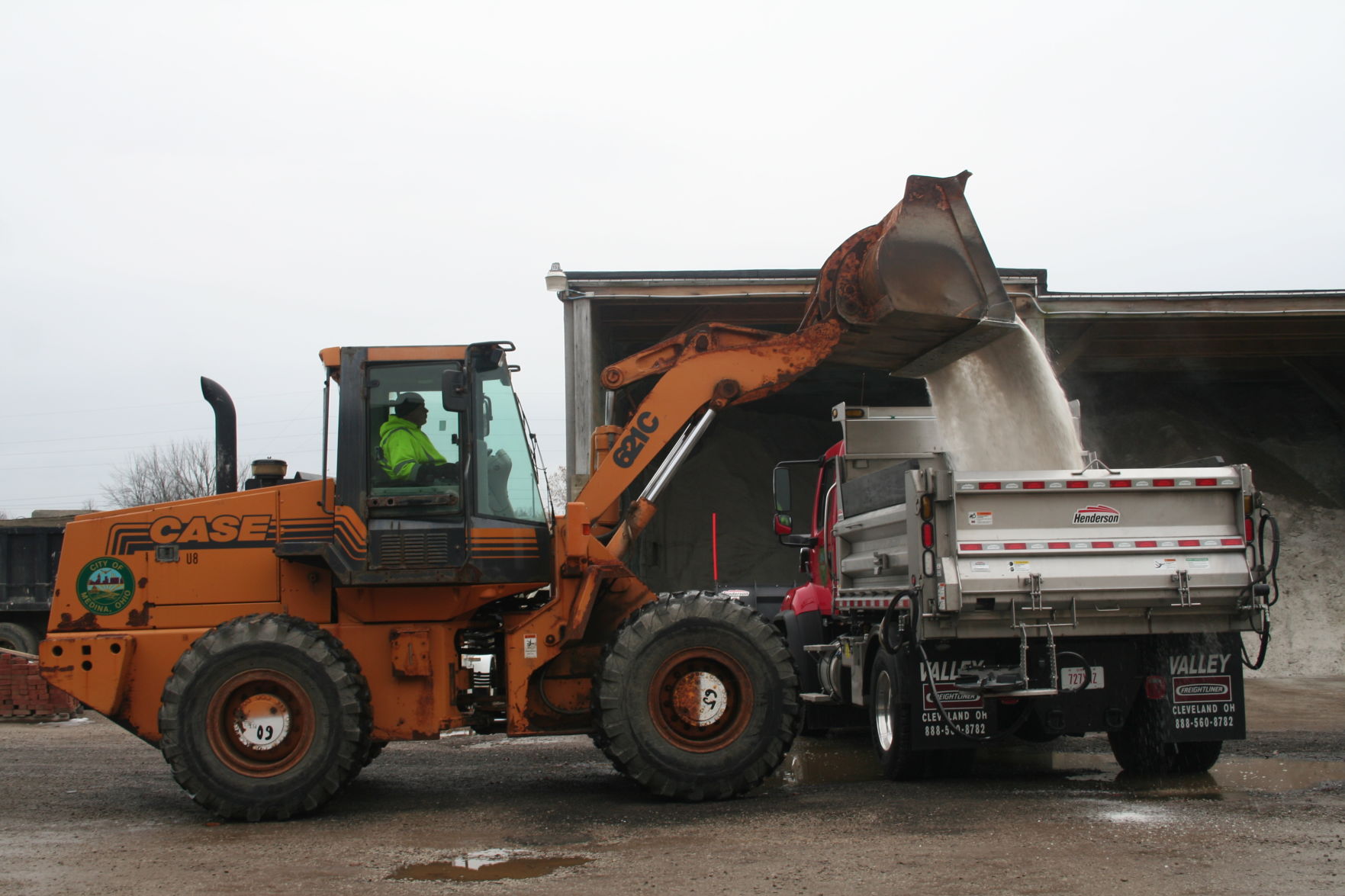


MEDINA – Although the late arrival of wintry weather has allowed the city plenty of time to prepare its fleet of trucks for salting and snow plowing, the late falling of the leaves has made it difficult for the city’s leaf collection service.
Service Director Nino Piccoli said the relatively mild winter last year significantly reduced costs by from the year before due to fewer driver overtime hours, lower truck maintenance costs and reduced salt purchases.
However, the city is contracted to buy a minimum amount of salt each year — last season, crews only used around 3,100 of the 4,800 tons of salt it was obligated to purchase. Due to so little salt being used, the city had to pay around $20,000 to have Cargill, the salt company, hold the remaining salt due to lack of storage space in the city, said Piccoli, costing around $300,000 in total.
Due to the extra supply, the city has lowered its purchase this year to around 3,000 tons, with the estimated cost at around $59 a ton, about the same as last year, Piccoli said.
“We’re ready,” Piccoli said. “We’re hearing there’s going to be a lot more precipitation than last year; until it comes you don’t know.”
The first winter event was Nov. 19 when about 3 1/2 inches fell and three drivers were sent out to clear the roads, Piccoli said.
The day before, record high temperatures were reported.
The mild weather that lasted through mid-November led to leaves staying on trees, causing the city to delay the start of its leaf collection program, Piccoli said. As of the week of Thanksgiving, leaves were still on trees in many locations.
However, the remaining snow led the city to suspend the program the week before Thanksgiving because the moisture from the snow clogs up the machinery on the vacuum truck used for collection.
“If there’s leaves and there’s no snow or ice, we can pick up,” said Piccoli, adding crews usually can continue collection until around the first week of December.
The service department has nine large plow trucks, with one purchased this year. Drivers, who work 12-hour shifts and can work as many as 15 hours, cover the roads on six different routes covering 200 lane miles in 12.5 square miles, as the driver must cover both sides of the road, Piccoli said.
Each route takes between three and four hours depending on conditions and whether the route involves plowing and salting or just salting, he said.