


The Buzz Around Town
with Editor Kevin McManus
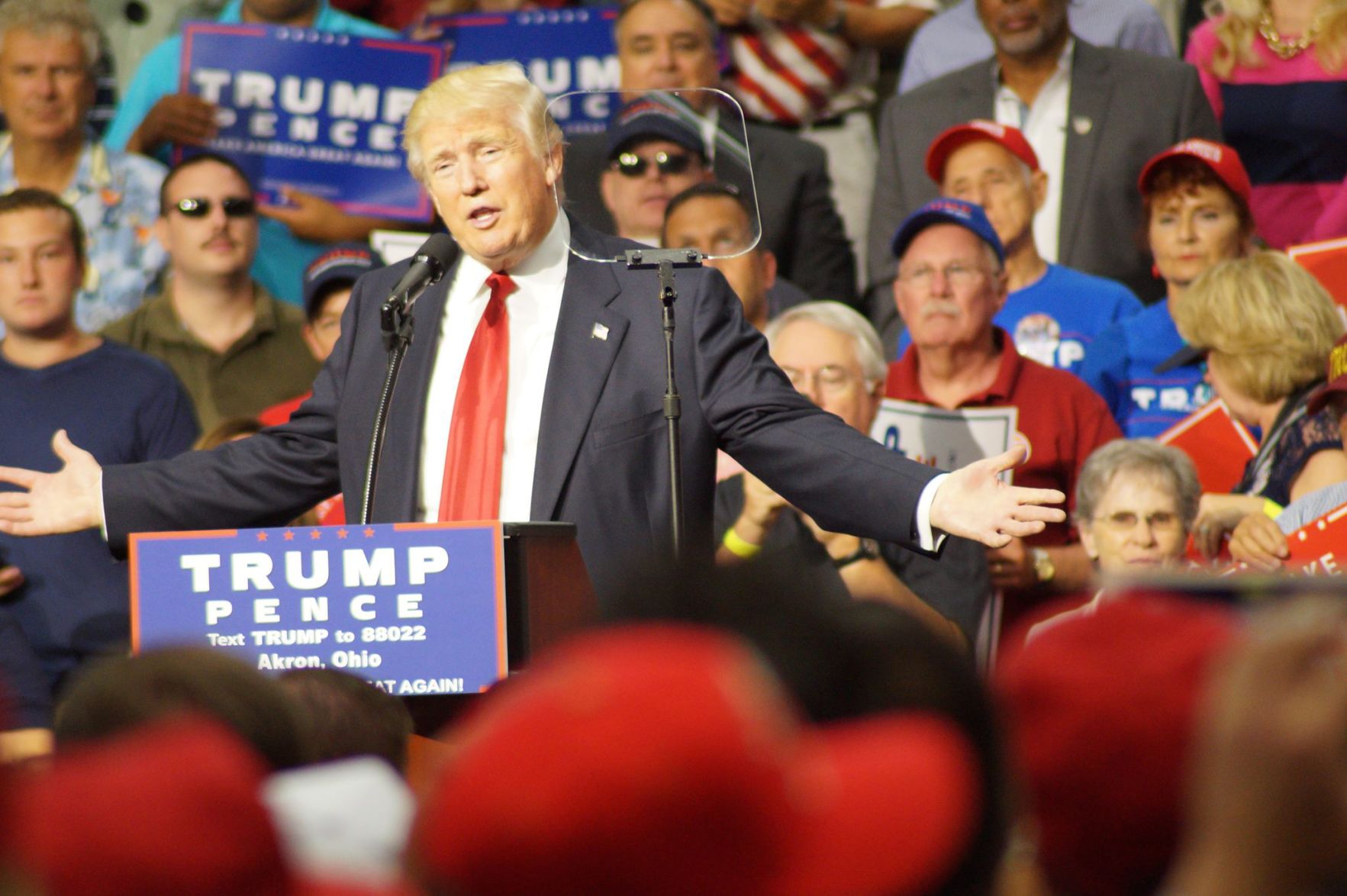
President-elect Donald Trump is pictured speaking at a rally in Akron back in August. File photo



I was a fifth-grader when my dad first took me with him to vote at a church around the corner from our house when he got home from work one rainy November evening.
In an effort to expose me to the political process at a formative age – and Dad just being a fun dad – we crowded into the booth and closed the curtain. He lifted up the ballot and pointed to the very top: George W. Bush vs. Al Gore.
“What do ya think? This guy, or this guy?” Dad asked me nonchalantly, if only to make me feel included in the nation’s grand decision that evening, like I might actually have some influence on his vote.
“Umm, that guy!” I pointed to Bush as an excited 11-year-old who didn’t know an ass from a trunk. I probably just recognized the name.
“All right, sir,” Dad responded, taking the ballot back to its surface above my eye level and loudly punching in the vote manually.
I’m not sure who he actually cast for, but he asked me the same question for every ballot issue, from president all the way down to county coroner. It was a fun moment that made me feel like my feedback mattered, like voting itself mattered.
Even to this day as a cynical reporter who’s primarily covered local government processes for years now, I believe voting does matter – but maybe we’ve just been doing it wrong.
Of course, my “first” election would be the one that changed the perception of presidential races to follow. It was the first time in 112 years the eventual winner, Bush, failed to win the popular vote, sparking the dawn of modern voting apathy.
Fast forward to 2016 when nearly 47 percent of voters, according to the U.S. Election Project, didn’t cast theirs for a presidential candidate in a race where, again, the winner failed to win the popular vote, albeit by a very close margin.
When a presidential race with serious consequences has been reduced to the cesspool-like integrity of a reality TV show, a lot of viewers, naturally, are just going to tune out, which makes the process of voting itself somewhat irrelevant. I believe that’s what happened here.
You can blame the rise of social media and their huge influence on an election; blame the candidate choices; blame how it was broadcast by the national media; blame the confusing electoral college; blame pollsters and projections.
Tragically, the real blame is on the nearly 47 percent of registered voters who were desensitized enough to not care.
Apathy trumped this time around – and that is just a damn shame, regardless of who won.
While many Americans are struggling to understand how Donald Trump – a reality TV star and business mogul with no political experience who has courted attitudes of xenophobia, sexism and violence since his campaign’s start – became the president-elect in an upset as big as any, it comes down to the 231,556,622 people who did not vote for a presidential candidate.
It’s possible it may have been due to disgust with the brash and heated campaigns presented by both sides during the last year-plus. That, unfortunately, is understandable, but still not excusable.
The perception is that the system has failed the American people. Widely, the belief of voting is that “it doesn’t matter,” especially for groups often marginalized by our society. It’s also prevalent among the vast millenial generation, many of which were apt to not vote at all after their dream candidate, Bernie “free stuff for everyone” Sanders, fell off the map.
In contrast, though, the emphasis and care placed on the executive branch as the end-all-be-all maker and breaker of everything American is absolutely absurd.
For those who do vote, most care way more about the presidential race than they should. It’s a highly-publicized, sexy office, the face of the nation – but it is just one branch out of three at the federal level.
What many fail to realize is if you want to see true change, you have to start paying attention to what is going on in your own neighborhood – your city councilors or township trustees, your county commissioners, your state legislators, your congressional representatives, your senators, then the presidency.
Society has it backwards. The small stuff matters more than we want to realize.
It’s easy to overlook the processes of your local government offices. They’re kind of boring; believe me, I cover them religiously. But until you have an understanding of what the state of your community is, which affects you most directly, how can you possibly make an informed decision on what goes on in the higher-up offices?
My advice is this: pay attention starting from the bottom up, be informed and engaged, get outraged if you have to. Care about what’s happening in your community and what affects you and yours if you have a vested interest in the White House. It’s as simple as reading your local news and asking yourself, “Will the presidential election affect me more than this?”
Caring too much about the presidential election over what is happening to public life close to home is like sitting at your kid’s peewee football game, but missing the entire thing because you were staring at your phone adjusting your fantasy football lineup.
You will always miss out on what matters most when you overlook what is right in front of you.
After all, so they say, all politics is local.
Save your receipts
The Medina Post’s second Eat, Drink, Shop Medina promotion is in full swing, so remember to save your receipts from anything purchased in the 44256 zip code during the month of November.
Your receipts can then be stamped in exchange for raffle tickets for prizes at The Post Newspapers office (5164 Normandy Park Drive) from 11 a.m. to 5 p.m. Nov. 28 through Dec. 2; or at Honey Bee Bakery (23 Public Square) from 5-7 p.m. Nov. 29 through Dec. 1.
The prize drawings will be Saturday, Dec. 3 from 2-4 p.m. at the Medina Community Recreation Center (855 Weymouth Road). At the main event, shoppers will be able to place their tickets into prize drawings of their choice from 2-3 p.m., with the drawings to follow at 3 sharp.
Read more on page 3.
In an effort to expose me to the political process at a formative age – and Dad just being a fun dad – we crowded into the booth and closed the curtain. He lifted up the ballot and pointed to the very top: George W. Bush vs. Al Gore.
“What do ya think? This guy, or this guy?” Dad asked me nonchalantly, if only to make me feel included in the nation’s grand decision that evening, like I might actually have some influence on his vote.
“Umm, that guy!” I pointed to Bush as an excited 11-year-old who didn’t know an ass from a trunk. I probably just recognized the name.
“All right, sir,” Dad responded, taking the ballot back to its surface above my eye level and loudly punching in the vote manually.
I’m not sure who he actually cast for, but he asked me the same question for every ballot issue, from president all the way down to county coroner. It was a fun moment that made me feel like my feedback mattered, like voting itself mattered.
Even to this day as a cynical reporter who’s primarily covered local government processes for years now, I believe voting does matter – but maybe we’ve just been doing it wrong.
Of course, my “first” election would be the one that changed the perception of presidential races to follow. It was the first time in 112 years the eventual winner, Bush, failed to win the popular vote, sparking the dawn of modern voting apathy.
Fast forward to 2016 when nearly 47 percent of voters, according to the U.S. Election Project, didn’t cast theirs for a presidential candidate in a race where, again, the winner failed to win the popular vote, albeit by a very close margin.
When a presidential race with serious consequences has been reduced to the cesspool-like integrity of a reality TV show, a lot of viewers, naturally, are just going to tune out, which makes the process of voting itself somewhat irrelevant. I believe that’s what happened here.
You can blame the rise of social media and their huge influence on an election; blame the candidate choices; blame how it was broadcast by the national media; blame the confusing electoral college; blame pollsters and projections.
Tragically, the real blame is on the nearly 47 percent of registered voters who were desensitized enough to not care.
Apathy trumped this time around – and that is just a damn shame, regardless of who won.
While many Americans are struggling to understand how Donald Trump – a reality TV star and business mogul with no political experience who has courted attitudes of xenophobia, sexism and violence since his campaign’s start – became the president-elect in an upset as big as any, it comes down to the 231,556,622 people who did not vote for a presidential candidate.
It’s possible it may have been due to disgust with the brash and heated campaigns presented by both sides during the last year-plus. That, unfortunately, is understandable, but still not excusable.
The perception is that the system has failed the American people. Widely, the belief of voting is that “it doesn’t matter,” especially for groups often marginalized by our society. It’s also prevalent among the vast millenial generation, many of which were apt to not vote at all after their dream candidate, Bernie “free stuff for everyone” Sanders, fell off the map.
In contrast, though, the emphasis and care placed on the executive branch as the end-all-be-all maker and breaker of everything American is absolutely absurd.
For those who do vote, most care way more about the presidential race than they should. It’s a highly-publicized, sexy office, the face of the nation – but it is just one branch out of three at the federal level.
What many fail to realize is if you want to see true change, you have to start paying attention to what is going on in your own neighborhood – your city councilors or township trustees, your county commissioners, your state legislators, your congressional representatives, your senators, then the presidency.
Society has it backwards. The small stuff matters more than we want to realize.
It’s easy to overlook the processes of your local government offices. They’re kind of boring; believe me, I cover them religiously. But until you have an understanding of what the state of your community is, which affects you most directly, how can you possibly make an informed decision on what goes on in the higher-up offices?
My advice is this: pay attention starting from the bottom up, be informed and engaged, get outraged if you have to. Care about what’s happening in your community and what affects you and yours if you have a vested interest in the White House. It’s as simple as reading your local news and asking yourself, “Will the presidential election affect me more than this?”
Caring too much about the presidential election over what is happening to public life close to home is like sitting at your kid’s peewee football game, but missing the entire thing because you were staring at your phone adjusting your fantasy football lineup.
You will always miss out on what matters most when you overlook what is right in front of you.
After all, so they say, all politics is local.
Save your receipts
The Medina Post’s second Eat, Drink, Shop Medina promotion is in full swing, so remember to save your receipts from anything purchased in the 44256 zip code during the month of November.
Your receipts can then be stamped in exchange for raffle tickets for prizes at The Post Newspapers office (5164 Normandy Park Drive) from 11 a.m. to 5 p.m. Nov. 28 through Dec. 2; or at Honey Bee Bakery (23 Public Square) from 5-7 p.m. Nov. 29 through Dec. 1.
The prize drawings will be Saturday, Dec. 3 from 2-4 p.m. at the Medina Community Recreation Center (855 Weymouth Road). At the main event, shoppers will be able to place their tickets into prize drawings of their choice from 2-3 p.m., with the drawings to follow at 3 sharp.
Read more on page 3.