


Proposed changes to pay to participate policy released
Staffing needs, priorities brought for consideration
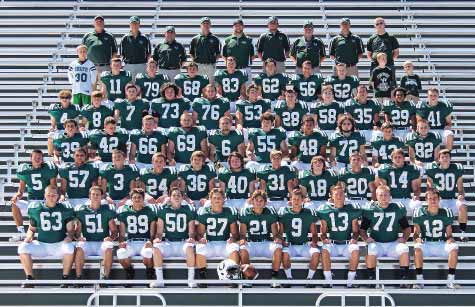
The goal is to have the new pay to participate policy in effect for the fall sports season, including football. Photo by KEVIN MCMANUS


WESTFIELD TWP. – A committee headed by Athletic Director Craig Walkup proposed a new pay to participate policy for school activities to the Cloverleaf School Board during its March 21 meeting.
The committee proposed a one-time annual fee of $150 each for high school and $75 for middle school students that would cover both athletics and marching band. A sheet given to board members used amounts of $250 and $150 to give a comparison of finances.
Currently, the fee is $250 for each activity (including band) in high school and $125 at the middle school; Walkup said about 18 percent of middle and high school students are currently involved in a least one school sport, a fairly low rate.
According to a survey conducted online, 75 percent of respondents said they thought it likely participation would increase if the fees were lowered.
“We felt like the one-time fee would be best,” Walkup said.
However, even if participation increases, which is the goal, Superintendent Daryl Kubilus said this would lead to decreased fee revenue, causing the district to further supplement athletics using the general fund. He provided a sheet that gave some “worst case scenarios,” but thought the losses would be less due to more participation bringing in more fees.
Kubilus said 194 high school students participated in high school sports this year, bringing in a total of $122,500, which included multi-sport players. If this rate was reduced to a flat fee of $250 and participation remained the same, this rate would decline to $82,750. If a flat fee of $150 per activity was approved, the rate would be $73,500 and to $49,650 if it was a one-time fee. The fee decline would be lower for middle school as their rates are half that of the high school.
A total of 115 of the 194 high school students who are enrolled in one sport signed up for a second sport this year.
“We have reason to believe we have more two-sport athletes and we’d have more three-sport athletes,” Kubilus said.
This year, $151,625 was raised in fees for middle and high school activities; if this was reduced to a one-time $250 fee, it would go to $104,500. If the fee went to $150 per activity, a total of $90,975 would be generated; if it was $150 one-time, a total of $62,700 would be collected. In the worst case, there would be around a $100,000 shortfall that would have to be made up somehow, Kublius said. The proposed athletic budget for the 2017-18 school is around $175,000 not including supplemental contracts for coaches.
One point of data missing was the amount of students who signed up for both a sport and marching band. If band fees were reduced, Kubilus estimated the fee would decline from $25,000 to $15,000 with an enrollment of 100 students.
Board member Jeff Schreiber said he thought a one-time fee wouldn’t have much affect on participation as most students are only in one activity and this would only help the small minority interested in doing something else.
“I care more about the fraction of students doing one activity,” he said.
Board member Bill Schmock said he thought lower fees could not only increase participation, but also community interest in athletics, which he has found lacking in some cases.
Board member Jane Rych said she thought any changes should affect as many students as possible and thought those only doing one activity should also benefit.
Board member Jason Myers said he was concerned how the district would address the funding shortfall, as more participation would only provide a fraction of the needed fees.
Board members asked the committee to meet again before the board next meets April 10.
Staffing priorities
Kubilus said he and district administrators have made a list of the highest staffing priorities for the next year.
The biggest needs are hiring a school psychologist to oversee special education services and a high school special education teacher, who are both needed to ensure compliance with the law. Next is a full-time elementary school special education teacher, which is needed to help address workload concerns.
Kubilus said he was told by the middle school principal the middle-school concept could be reintroduced there with the addition of three full-time equivalent positions. Since the concept was given up five years ago for a traditional junior high format, test scores have declined.
Kubilus thinks the district could hire six full-time equivalent positions (including full- and part-time staffers) next year as of right now. Other staffing priorities include hiring gifted teachers, a staffer to write individualized education plans for special education students and a full-time person to help teachers use technology in classrooms.
The committee proposed a one-time annual fee of $150 each for high school and $75 for middle school students that would cover both athletics and marching band. A sheet given to board members used amounts of $250 and $150 to give a comparison of finances.
Currently, the fee is $250 for each activity (including band) in high school and $125 at the middle school; Walkup said about 18 percent of middle and high school students are currently involved in a least one school sport, a fairly low rate.
According to a survey conducted online, 75 percent of respondents said they thought it likely participation would increase if the fees were lowered.
“We felt like the one-time fee would be best,” Walkup said.
However, even if participation increases, which is the goal, Superintendent Daryl Kubilus said this would lead to decreased fee revenue, causing the district to further supplement athletics using the general fund. He provided a sheet that gave some “worst case scenarios,” but thought the losses would be less due to more participation bringing in more fees.
Kubilus said 194 high school students participated in high school sports this year, bringing in a total of $122,500, which included multi-sport players. If this rate was reduced to a flat fee of $250 and participation remained the same, this rate would decline to $82,750. If a flat fee of $150 per activity was approved, the rate would be $73,500 and to $49,650 if it was a one-time fee. The fee decline would be lower for middle school as their rates are half that of the high school.
A total of 115 of the 194 high school students who are enrolled in one sport signed up for a second sport this year.
“We have reason to believe we have more two-sport athletes and we’d have more three-sport athletes,” Kubilus said.
This year, $151,625 was raised in fees for middle and high school activities; if this was reduced to a one-time $250 fee, it would go to $104,500. If the fee went to $150 per activity, a total of $90,975 would be generated; if it was $150 one-time, a total of $62,700 would be collected. In the worst case, there would be around a $100,000 shortfall that would have to be made up somehow, Kublius said. The proposed athletic budget for the 2017-18 school is around $175,000 not including supplemental contracts for coaches.
One point of data missing was the amount of students who signed up for both a sport and marching band. If band fees were reduced, Kubilus estimated the fee would decline from $25,000 to $15,000 with an enrollment of 100 students.
Board member Jeff Schreiber said he thought a one-time fee wouldn’t have much affect on participation as most students are only in one activity and this would only help the small minority interested in doing something else.
“I care more about the fraction of students doing one activity,” he said.
Board member Bill Schmock said he thought lower fees could not only increase participation, but also community interest in athletics, which he has found lacking in some cases.
Board member Jane Rych said she thought any changes should affect as many students as possible and thought those only doing one activity should also benefit.
Board member Jason Myers said he was concerned how the district would address the funding shortfall, as more participation would only provide a fraction of the needed fees.
Board members asked the committee to meet again before the board next meets April 10.
Staffing priorities
Kubilus said he and district administrators have made a list of the highest staffing priorities for the next year.
The biggest needs are hiring a school psychologist to oversee special education services and a high school special education teacher, who are both needed to ensure compliance with the law. Next is a full-time elementary school special education teacher, which is needed to help address workload concerns.
Kubilus said he was told by the middle school principal the middle-school concept could be reintroduced there with the addition of three full-time equivalent positions. Since the concept was given up five years ago for a traditional junior high format, test scores have declined.
Kubilus thinks the district could hire six full-time equivalent positions (including full- and part-time staffers) next year as of right now. Other staffing priorities include hiring gifted teachers, a staffer to write individualized education plans for special education students and a full-time person to help teachers use technology in classrooms.