


Coming together to give
Blind Golf, Wounded warriors welcomed by American Legion
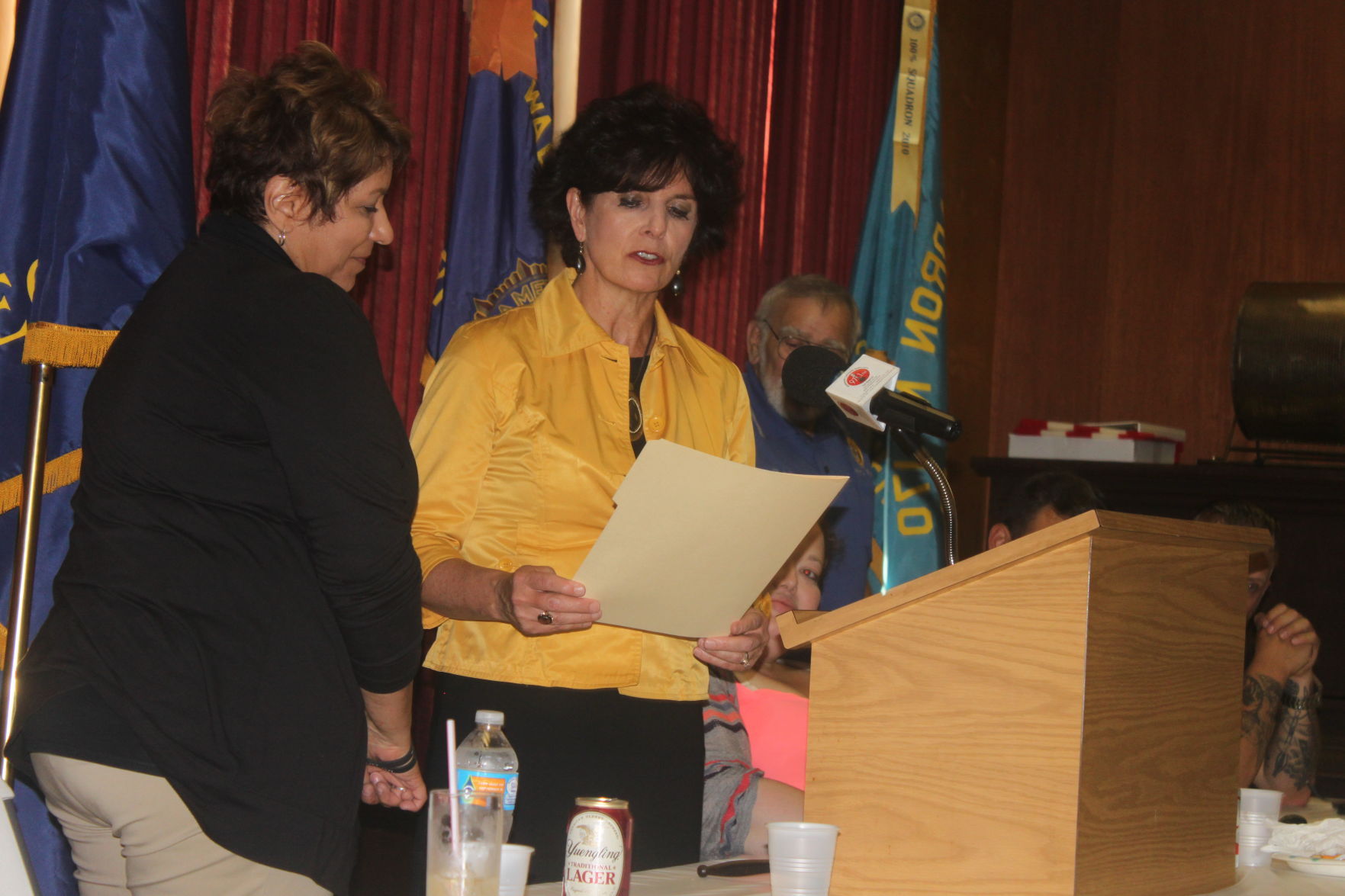
Mayor Robin Laubaugh (right) gives a special proclamation to Cindy Parsons of the Wounded Warrior Project. Parsons recently shared her story about being a caregiver to her son, Shane, who was badly injured in Iraq. Photo by EMILY CANNING-DEAN


WADSWORTH – Just as they have for the last several years, members of American Blind Golf, the Wounded Warrior Project and American Legion Post 170 came together in a special way in honor and service of others.
Blind golfers from all over the country and from as far away as western Canada traveled to the area late last month for the annual American Blind Golf Tournament at Ridge Top Golf Course. Also at the tournament were Stetson Elliot and Devin Schei of the Wounded Warrior Project. These two, along with others from WWP, have built a relationship with American Blind Golf and over the years their partnership has helped to raise more than $250,000 for Wounded Warriors and for American Blind Golf initiatives.
The American Legion hosted a special dinner for the blind golfers and wounded warriors June 22.
“We have had some incredible folks that have come into town to help us honor and celebrate the service of our veterans, particularly those injured in battle,” said Mark Arnold, co-director of American Blind Golf. “Still, one of the most incredible experiences of my life was meeting Devin and Stetson.”
Each year during the dinner and the golf tournament, a representative from WWP shares their story. This year Cindy Parsons, a caregiver for her son Shane, who was badly wounded in Iraq, told about her son’s journey toward healing and their relationship with WWP.
“Life can be brutal,” she said. “Your outlook can change your whole life. You can become bitter or you can become better.”
Parsons, a former nurse, was working a 12-hour shift on a Saturday morning when she received a call that would change her life. Shane, her only child, had been critically wounded in Iraq.
“I remember getting on that plane to meet him in Germany screaming in my mind ‘Shane, don’t you die,’” she said.
Things didn’t look good when Parsons arrived. Shane’s left leg had been immediately severed during the explosion with his other leg, arm and head severely damaged. His right leg eventually needed to be amputated as well. What scared Parsons the most was a tube protruding from Shane’s brain. She realized there was a good chance he wouldn’t survive.
Shane was barely lucid the first time members of WWP walked into his hospital room, but Parsons said this was a pivotal moment even if she didn’t know it yet.
“They came into his room and said, ‘Shane we are here for you and your mother. Anything you need let us know,’” she said. “They gave him a backpack filled with comfort items, but I didn’t understand the significance of that day.”
For two years, Shane required physical therapy and WWP was a constant presence at each location. But once Shane and his mother finally returned back home, Shane started slipping into depression.
But WWP reached out and Shane became involved in their independence program. A team worked with Shane Monday through Friday helping him to build self-confidence and learn to once again become independent.
Even though he had lost the ability to drive and suffered from both long term and short term memory loss, WWP members helped Shane to fulfill the dream of becoming a middle school football coach. Eventually he began enjoying other aspects of life, including going fishing and he even went skydiving.
“He did a somersault when he exited the plane,” Parsons said. “He has learned you can do anything just in a different way.”
Blind golfers from all over the country and from as far away as western Canada traveled to the area late last month for the annual American Blind Golf Tournament at Ridge Top Golf Course. Also at the tournament were Stetson Elliot and Devin Schei of the Wounded Warrior Project. These two, along with others from WWP, have built a relationship with American Blind Golf and over the years their partnership has helped to raise more than $250,000 for Wounded Warriors and for American Blind Golf initiatives.
The American Legion hosted a special dinner for the blind golfers and wounded warriors June 22.
“We have had some incredible folks that have come into town to help us honor and celebrate the service of our veterans, particularly those injured in battle,” said Mark Arnold, co-director of American Blind Golf. “Still, one of the most incredible experiences of my life was meeting Devin and Stetson.”
Each year during the dinner and the golf tournament, a representative from WWP shares their story. This year Cindy Parsons, a caregiver for her son Shane, who was badly wounded in Iraq, told about her son’s journey toward healing and their relationship with WWP.
“Life can be brutal,” she said. “Your outlook can change your whole life. You can become bitter or you can become better.”
Parsons, a former nurse, was working a 12-hour shift on a Saturday morning when she received a call that would change her life. Shane, her only child, had been critically wounded in Iraq.
“I remember getting on that plane to meet him in Germany screaming in my mind ‘Shane, don’t you die,’” she said.
Things didn’t look good when Parsons arrived. Shane’s left leg had been immediately severed during the explosion with his other leg, arm and head severely damaged. His right leg eventually needed to be amputated as well. What scared Parsons the most was a tube protruding from Shane’s brain. She realized there was a good chance he wouldn’t survive.
Shane was barely lucid the first time members of WWP walked into his hospital room, but Parsons said this was a pivotal moment even if she didn’t know it yet.
“They came into his room and said, ‘Shane we are here for you and your mother. Anything you need let us know,’” she said. “They gave him a backpack filled with comfort items, but I didn’t understand the significance of that day.”
For two years, Shane required physical therapy and WWP was a constant presence at each location. But once Shane and his mother finally returned back home, Shane started slipping into depression.
But WWP reached out and Shane became involved in their independence program. A team worked with Shane Monday through Friday helping him to build self-confidence and learn to once again become independent.
Even though he had lost the ability to drive and suffered from both long term and short term memory loss, WWP members helped Shane to fulfill the dream of becoming a middle school football coach. Eventually he began enjoying other aspects of life, including going fishing and he even went skydiving.
“He did a somersault when he exited the plane,” Parsons said. “He has learned you can do anything just in a different way.”