


Walls keep people out. . . and in
Before the strict border control of the past several decades, Mexicans used to cross back and forth the border — often legally — for temporary work. Once visas for such temporary work were curtailed and the normal circular flow of Mexicans became illegal, the Border Patrol grew exponentially. Ironically, though, researchers with Princeton University find that stricter border control actually increased the number of illegal immigrants residing in the United States. First, stricter border control didn’t really keep Mexicans out: “Entry probabilities were virtually constant through 1998, running at or just below 1.0, indicating that eventual entry during this time was a near certainty. Between 1999 and 2008, the probability of entry varied between .95 and .98 but obviously remained quite high.’’ Second, the increasing cost and danger of crossing made immigrants less willing to return to Mexico: “In response to the changed incentives, the probability of returning from a first trip fell sharply after the 1980s, going from a high of .48 in 1980 to zero in 2010.’’ Meanwhile, the drop-off in illegal crossings “observed over the past decade or so had little or nothing to do with border enforcement and everything to do with Mexico’s changing demography.’’ The researchers conclude that legalization/amnesty “would probably increase their rate of return migration.’’ In other words, it would fulfill Mitt Romney’s plan for self-deportation.
Massey, D. et al., “Why Border Enforcement Backfired,’’ American Journal of Sociology (March 2016).
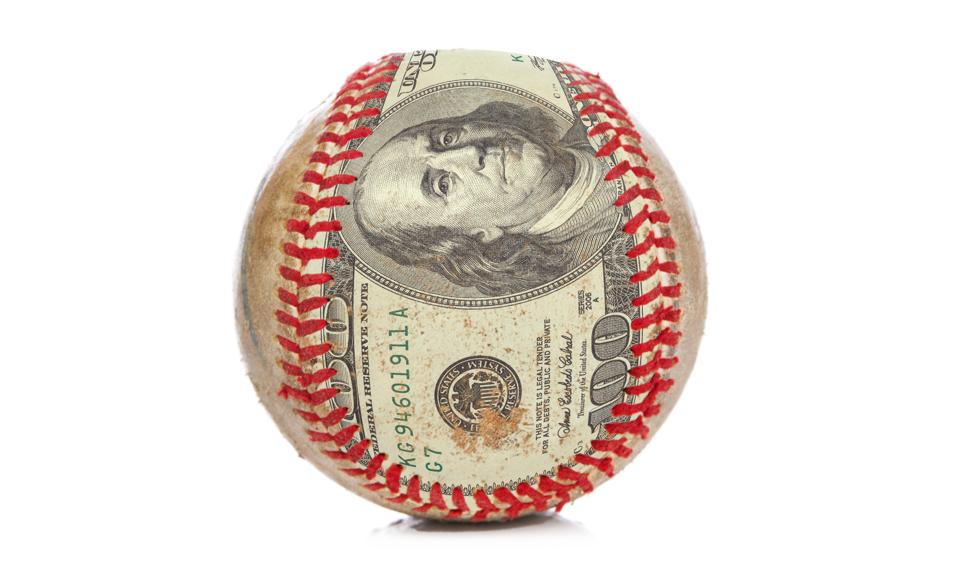
Most valuable players
With baseball season right around the corner, here’s an interesting Moneyball-ish stat. Star power — as measured by a player’s history of getting MVP or Cy Young votes — explains a significant amount of salary, game attendance, and winning, even controlling for player performance measures like on-base plus slugging percentage, wins above replacement, and earned run average. The analysis “suggests that many of the leading figures in the game are paid far in excess of their on-field performance.’’
Lewis, M. & Yoon, Y., “An Empirical Examination of the Development and Impact of Star Power in Major League Baseball,’’ Journal of Sports Economics (forthcoming).
A good cause to work
According to famed economist Milton Friedman, the only social responsibility of business is to make money. As many business executives would tell him, however, a business can also profit from being (or at least looking) socially responsible. A business school professor at Columbia University conducted experiments in two online labor marketplaces and found that workers who were given information about the hiring firm’s social responsibility were willing to do the job for significantly less money. This was especially true for high-value workers, who were largely willing to forgo their normal premium.
Burbano, V., “Social Responsibility Messages and Worker Wage Requirements: Field Experimental Evidence from Online Labor Marketplaces,’’ Organization Science (forthcoming).
Catholics and Protestants in foxholes
Max Weber, one of the founders of sociology, theorized in “The Protestant Ethic and the Spirit of Capitalism’’ that the Protestant work ethic and frugality were partly responsible for the development of capitalism in Northern Europe. A new study tests this idea in the context of World War I, finding that Germans born during the war grew up to be shorter if they were from Catholic families, compared to Protestant families, even controlling for socioeconomic status, family size, city size, and region. As the researchers explain: “Protestants seem to have coped better with economic challenges related to the undersupply of nutritional resources and consumption goods in general, food rationing, and the necessity to engage in illicit trading. For the birth period before the First World War and after the Treaty of Versailles we do not find differences in height between Protestants and Catholics.’’
Blum, M. & Strebel, M., “Max Weber and the First World War: Protestant and Catholic Living Standards in Germany, 1915–1919,’’ Journal of Institutional Economics (forthcoming).
Trade in people
If President Trump is going to make deals with all of our trading partners, it will probably help that he’s from New York City, the melting pot of the world. Finance professors found that corporations headquartered near communities of immigrants from a given country are more likely to trade and invest — and do so profitably — with that country. To make sure this correlation wasn’t spurious, the researchers also analyzed the trading patterns of corporations headquartered near where there used to be Japanese internment camps during World War II, since many who were relocated to these camps ended up living nearby after the war. Corporations in these areas trade more with Japan.
Cohen, L. et al., “Resident Networks and Corporate Connections: Evidence from World War II Internment Camps,’’ Journal of Finance (forthcoming).
Kevin Lewis is an Ideas columnist. He can be reached at kevin.lewis.ideas@gmail.com.

