


If you lived in Concord in 1850, at some point you likely saw Henry David Thoreau stooping low to smell the flowers. At the time, Thoreau was just beginning a decade of intense observation of the flowering plants in his hometown. A new book has dug into Thoreau’s writings on flowers, presenting them as a gateway to his larger philosophical and spiritual project.
The book, “Thoreau’s Wildflowers,’’ is edited by Geoff Wisner and draws material from journal entries Thoreau made between 1850 and 1861, the year before he died of tuberculosis. During that time, he’d take long walks around Concord, paying particular attention to changes in the seasons. “Thoreau was very sensually driven,’’ says Cherrie Corey, a naturalist and Thoreau enthusiast who leads walks in Concord. “If you’re someone who opens up and relates to the world through your body and visual senses, wildflowers are an immediate draw.’’
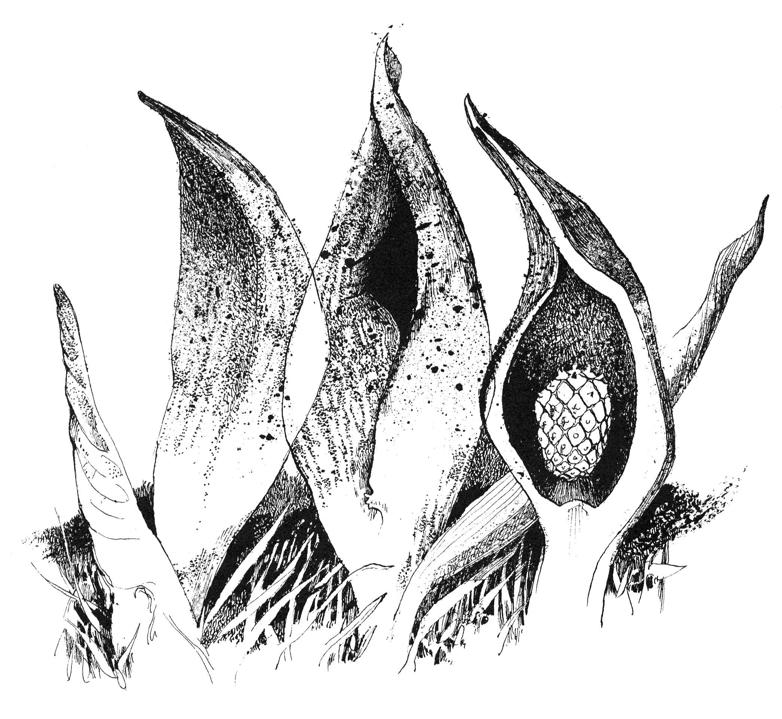
“Thoreau’s Wildflowers’’ pairs excerpts from Thoreau’s journal with drawings by the artist Barry Moser, borrowed from the 1979 book “Flowering Plants of Massachusetts.’’ It is organized chronologically, beginning with observations Thoreau made in March, the onset of spring, which is when he considered the year to really start. “Thoreau’s Wildflowers’’ ends in February, when the Concord landscape was still covered in ice and snow and Thoreau took it as a matter of faith that nature would revive again.
“He paid very close attention to the time plants first sprouted in the spring, first blossomed, first set their seed,’’ says Wisner. “A major theme in the journal and my book is anticipation. Thoreau speaks of looking for things fatefully, as in fate that these cycles will continue to turn.’’
One of Thoreau’s favorite plants was the skunk cabbage, an unlovable species by some measures: It’s ugly looking and carries a foul smell. But the skunk cabbage is also one of the first plants to appear in the spring, which endeared it to Thoreau. In the journal excerpt quoted in “Thoreau’s Wildflowers,’’ he writes:
As the ice melts in the swamps I see the horn-shaped buds of the skunk cabbage, green with a bluish bloom, standing uninjured, ready to feel the influence of the sun. The most prepared for spring — to look at — of any plant.
Thoreau also gave special notice to the last color in the fall. His least favorite month of the year, says Wisner, was November, when the Concord landscape was cold and gray, and not yet redeemed by snow, which Thoreau loved. In November, the flowers were gone, but high on the surrounding hills, there was still one last burst of color to be observed.
“He writes about these enormous scarlet oaks as though they were metaphorically gigantic flowers,’’ Wisner says. “It becomes the climax of the journey he takes through the year.’’
In his journal, Thoreau advised that in order to appreciate the beauty of the scarlet oak, an observer had to prepare in advance to see it. This suggestion was consistent with an important theme in Thoreau’s thought. He believed people saw what they were prepared to see. As he put it in his journal:
The scarlet oak must in a sense be in your eye when you go forth. We cannot see anything — until we are possessed with the idea of it, and then we can hardly see anything else.
Thoreau first started keeping a journal without real pretensions as a scientist. Over time, though, he became more serious about making a systematic study of the seasons. Today his journals are a valuable reference point in the study of ecology in and around Concord — a way to assess how local sprouting times and plant variety have changed over the centuries.
“He was remarkably precise. There were hundreds of plants he identified correctly and could spot in their different forms during the year in Concord,’’ Wisner says. “He was really the only one at the time keeping this record of blooming times and sprouting times.’’
That transition, from an artistic mindset to a scientific one, ended up being fruitful for Thoreau as well. The more he observed nature, the more he was drawn into the sensual, seasonal world of plants and pollinators, the more he came to understand his own place in the landscape he was observing.
“Thoreau came to feel he was of equal measure to all of creation, not above it or separate from it,’’ says Corey.
Kevin Hartnett is a writer in South Carolina. He can be reached at kshartnett18@gmail.com.

