


INSURANCE
MassMutual to bring 1,000 workers to the Seaport
Massachusetts Mutual Life Insurance Co. said Thursday that it will bring about 1,000 workers to a $240 million office space the financial services firm plans to build on Fan Pier, making it the latest major business to expand in Boston’s booming Seaport District. Springfield-based MassMutual said the move is part of a broader strategy to consolidate operations in its home state and give the company increased access to the city’s growing pool of tech and financial industry workers. MassMutual will also add 1,500 jobs in Springfield — where it has had a headquarters since 1851, and now employs about 3,000 people — and invest $50 million in its campus there. Most of the additional workers for that expansion will come from an office MassMutual will close in Enfield, Conn., nine miles away and just over the state line. In addition, the company — which has about 7,300 employees overall — will close offices in New Jersey, North Carolina, Pennsylvania, and Tennessee and transfer those jobs to Massachusetts. It considered expanding elsewhere, a company spokesman said, but in the end decided to grow on familiar turf. — TIM LOGAN AND JON CHESTO
LABOR
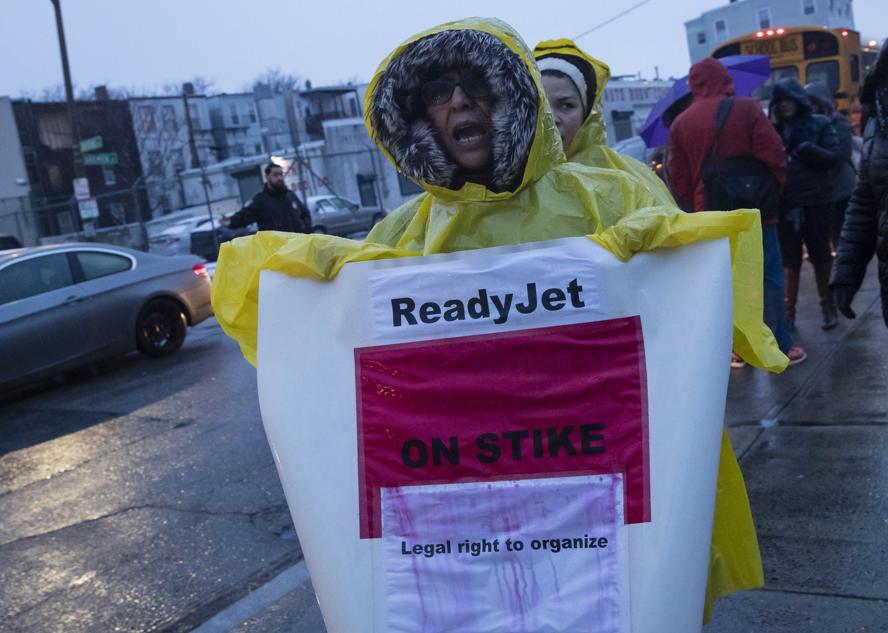
Contract workers at Logan call off strike after two days
Contract workers at Logan Airport abruptly called off their strike Thursday after two days, but picked up support from local officials who vowed to assist their efforts to unionize. The workers, who provide services for JetBlue Airways and other carriers, met with state legislators, Boston city councilors, and Governor Charlie Baker’s staff on Thursday, the union said, and the officials pledged to put pressure on the two companies that employ them, ReadyJet and Flight Services & Systems, as well as JetBlue and the Massachusetts Port Authority, to allow the workers to organize a union. The contract workers did not come to any sort of agreement with their employers, however. Several hundred baggage handlers, wheelchair attendants, cabin cleaners, and skycaps voted last week to go on strike to protest what they called threats and illegal surveillance by management during their six-year quest to form a union, but it’s unclear how many of them walked off the job. Airport officials said only a handful of workers missed their shifts over the course of two days, while the union organizing the strike put the number at more than 150. Airport officials said there was no impact on operations. The two companies have been fined for numerous wage theft and safety violations at Logan over the years, and the National Labor Relations Board has previously charged the companies with interfering with workers’ right to organize. — KATIE JOHNSTON AND MARGEAUX SIPPELL
ENERGY
Mass. delegation questions delivery of Russian LNG from sanctioned company
Liquefied natural gas is odorless, but Senator Ed Markey, Representative Seth Moulton, and other members of the Massachusetts congressional delegation say something stinks about how Russian LNG is arriving in New England despite US sanctions against the company that produces the fuel. The lawmakers are raising concerns after a tanker carrying LNG, including some from the newly opened Yamal plant in Siberia, unloaded its cargo at the Distrigas terminal in Everett last week. Another shipment containing some Russian gas is expected to arrive in Boston Harbor this month. Yamal’s majority owner, a Russian company called Novatek, has faced US sanctions since 2014, when the US Treasury prohibited new financing to the company and another Russian energy firm. The measure was a response, in part, to what the agency described as Russia’s destabilization of eastern Ukraine. But the sanctions didn’t deal with fuel imports from Novatek plants, just financing for their construction. Markey blasted the shipment in a letter on Thursday to Secretary of State Rex Tillerson and Treasury Secretary Steven Mnuchin. Markey said the shipment may violate the spirit of the sanctions by providing revenue to Novatek. He said the delivery calls into question the effectiveness of the sanctions, and he raised the prospect of adjusting them to better serve this country’s public policy goals. — JON CHESTO
HEALTH CARE
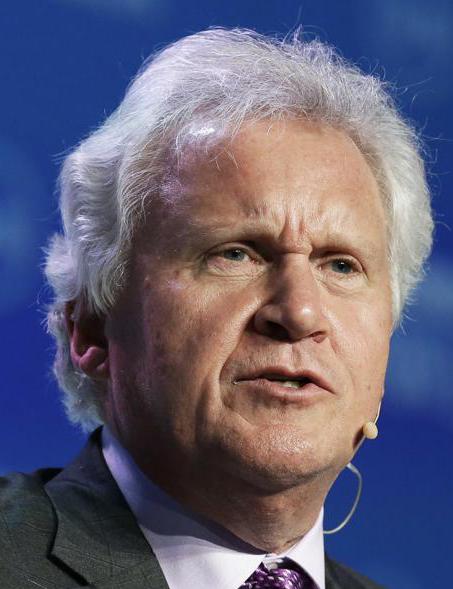
Immelt now chairman of athenahealth
Jeff Immelt is filling out his post-General Electric life with another high-profile company in the Boston area. The former chief executive who relocated GE to Boston is now chairman of athenahealth Inc., the Watertown-based developer of health care records software. Immelt arrives in the athenahealth boardroom as chief executive Jonathan Bush makes several moves to prepare the company for a new stage of growth and to respond to pressure from an activist investor. Bush had pledged to hand off his position as athenahealth chairman, among other things, and Immelt’s retirement from GE last year made him available for the role. The former GE executive has another experience relevant to athenahealth right now: tangling with an activist investor. Elliott Management, a feared Wall Street hedge fund that acquired a 9 percent stake in athenahealth, began pushing for changes last year, saying the company’s stock was undervalued. Athenahealth has since announced it would trim its workforce by 9 percent and expand the board of directors to 11 seats to include more independent members, first with the addition of Brian McKeon in September and again with Immelt’s arrival. Athenahealth also hired a new chief financial officer, Marc Levine, in December. — JON CHESTO
RIDE HAILING
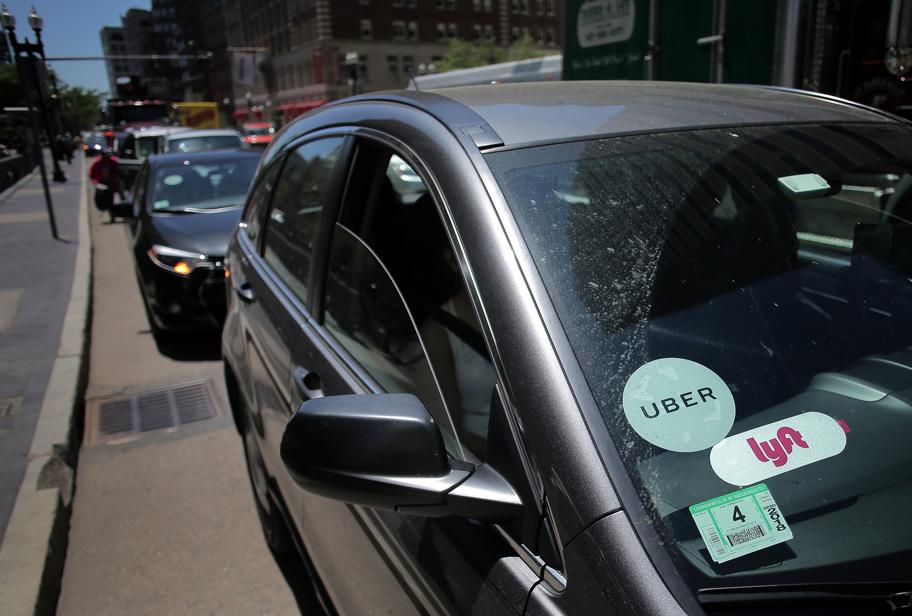
Uber and Lyft adding cars to already clogged streets, study finds
It’s a question that has dogged Uber and Lyft since they burst on the scene a few years ago: Is the convenience of having a ride at your fingertips undercut by its popularity, making Boston’s legendary traffic even worse? New research from a Boston-region planning agency suggests that ride-hailing services are indeed pulling people off trains, buses, and bicycles — or creating altogether new trips — and adding cars to the streets.In a survey of 944 ride-hail passengers by the Metropolitan Area Planning Council, nearly 60 percent said they would not have been in a car if they weren’t using the apps. The results add to a small body of research indicating that ride-hail services are adding to congestion in US cities already stifled by traffic. — ADAM VACCARO
GOVERNMENT
Massachusetts high court hears arguments over high-earners taxes
The proponents behind a state surcharge on high-earners found themselves defending their decision on Tuesday to bundle the tax proposal with a promise to spend more on education and transportation. The decision could become the undoing of the ballot question, judging from questions posed by members of the Supreme Judicial Court as they listened to oral arguments in a lawsuit challenging its legality. The justices are considering a lawsuit filed by business groups to block the proposal, scheduled for the November ballot. It would raise taxes on residents earning more than $1 million. If voters approve, the state’s personal income tax, currently at 5.1 percent, would be increased by 4 percentage points for earnings above $1 million. Backers of the ballot initiative, led by a union-funded group known as Raise Up Massachusetts, want to direct the additional money, as much as $2 billion a year, to transportation and education. Kevin Martin, a lawyer for the business groups, argued the ballot question is problematic because it combines different issues that are not directly related to each other — a tax increase and two spending proposals — in a single question. The state Constitution requires that ballot questions be limited to related matters. Martin also said the ballot question, a proposed amendment to the Constitution, would usurp the Legislature’s traditional role in appropriating state funds. Several of the six justices hearing the case on Tuesday seemed interested in the “relatedness issue.’’ — JON CHESTO

