


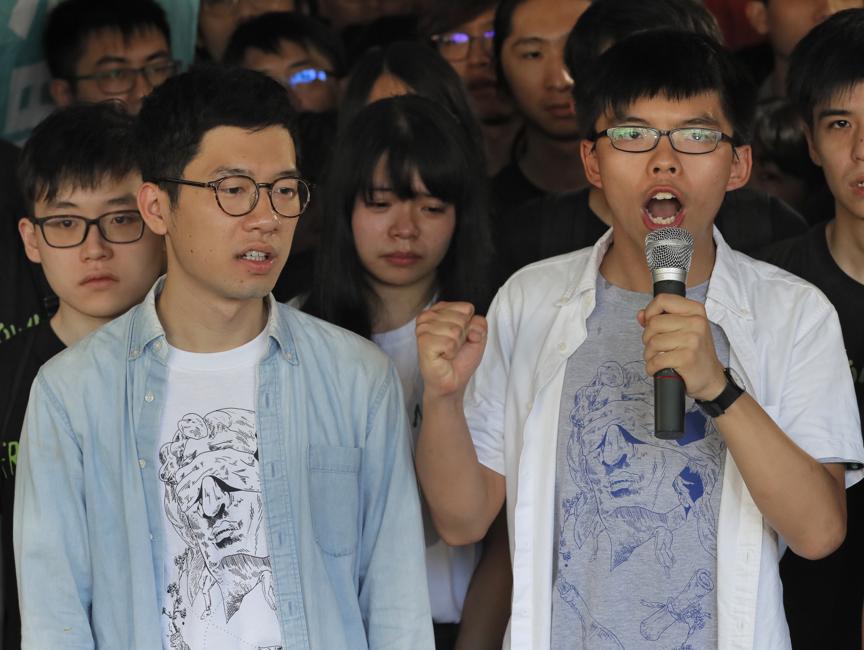
HONG KONG — Three prominent young leaders of Hong Kong’s democracy movement were sentenced Thursday to six to eight months in prison, a severe setback for the semiautonomous Chinese city in its struggle for greater political freedom under Communist Party rule.
Joshua Wong, the face of huge street demonstrations in 2014 for freer elections of Hong Kong’s leader, was sentenced to six months in prison. Two fellow protest leaders, Nathan Law and Alex Chow, were given eight and seven months, respectively.
The sentences risked casting the three young men as Hong Kong’s first prisoners of conscience, undermining the city’s reputation as a haven of civil liberties with special status in China.
Originally sentenced to community service and a suspended jail term, the three activists were given the prison sentences by an appeals court after the Beijing-backed local government successfully pushed for harsher punishments. By law, the prison terms left them ineligible for public office for five years.
“The government wanted to stop us from running in elections, and directly suppress our movement,’’ Wong said in an interview before the decision Thursday afternoon. “There’s no longer rule of law in Hong Kong, it’s rule by law.’’
After the sentences were announced, Wong posted a series of defiant messages on Twitter saying that he would not give up his fight for democracy. All three were taken into custody immediately.
They all intend to appeal their sentences, according to Lester Shum, a fellow protest leader, who read a statement outside the court.
In a statement issued in the morning, the Hong Kong Department of Justice defended its appeal for tougher sentencing as its legal right, adding that the three protest leaders “were convicted not because they exercised their civil liberties but because their relevant conduct in the protest broke the law.’’
Suzanne Pepper, a Hong Kong-based scholar of Chinese politics, said the new sentences were “part of a larger pushback by Beijing against Hong Kong’s democracy movement.’’
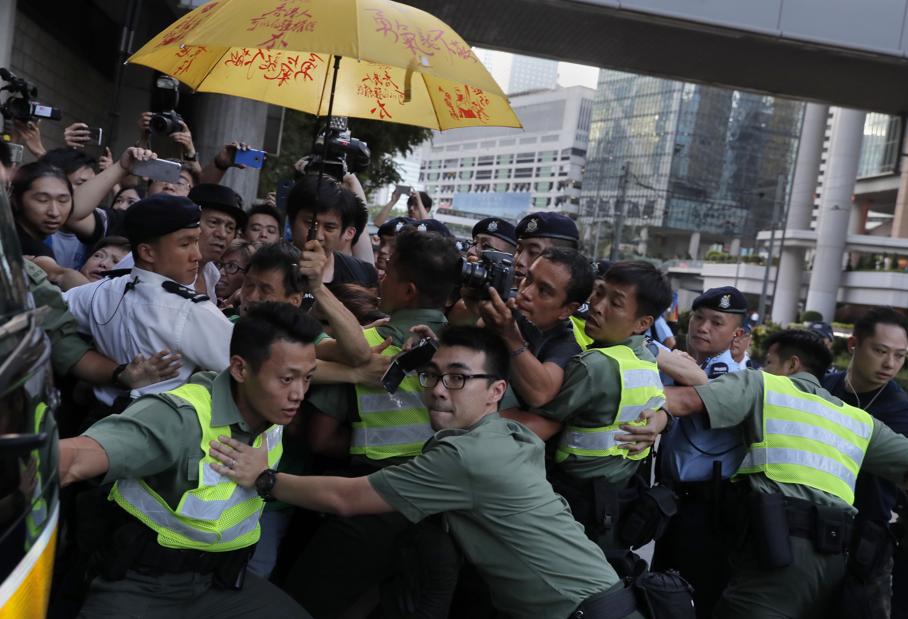
Wong and Chow were found guilty last year of unlawful assembly, while Law was found guilty of inciting people to take part in the assembly. The charges stemmed from the storming of a fenced government square in 2014 to protest Beijing’s strict limits on proposed reforms to the way Hong Kong elects its top leader, or chief executive.
The protests and the police response cascaded into weeks of sit-ins, later known as the Umbrella Movement, that paralyzed several major streets across Hong Kong but failed to win the protesters any political concessions.
The former British colony returned to Chinese rule 20 years ago under a “one country, two systems’’ governing principle that promised a high degree of autonomy. Yet the public’s trust in the political firewall has eroded as Chinese authorities appear ever more assertive in exercising their will in the city.
Last year, the Chinese government moved to unseat two dissident lawmakers elected in Hong Kong’s only citywide direct elections, ostensibly because they deviated from the official text when taking the oath of office. Last month, four more opposition lawmakers were removed from the city’s 70-member Legislative Council, including Law, who was elected last year as the city’s youngest-ever legislator.
A lower court had previously avoided deterrent punishment for Wong, Law and Chow, citing their “genuine wish to express their political ideals and concerns for society.’’ But prosecutors argued that lenient sentences would send the wrong message as they pursued legal action against even more participants and leaders of the largely peaceful protests.
The appeals court judges were in agreement that tougher sentences were warranted to deter unlawful protests.

