


OK, so here’s your new job: Turn around a 333,000-employee conglomerate that makes light bulbs, locomotives, MRI machines, wind turbines, oil drilling rigs, jet engines, and software. Over the last guy’s tenure, the stock price has dropped about 25 percent — while the Dow Jones industrial Average leapt nearly 150 percent. The upshot: your company was the worst performer in the Dow Jones group over the last 16 years.
You start on Tuesday.
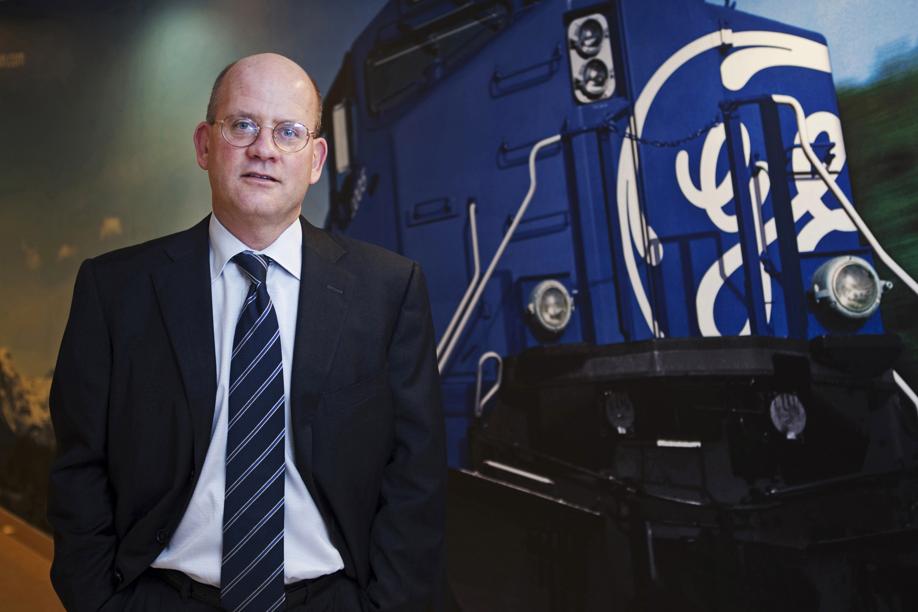
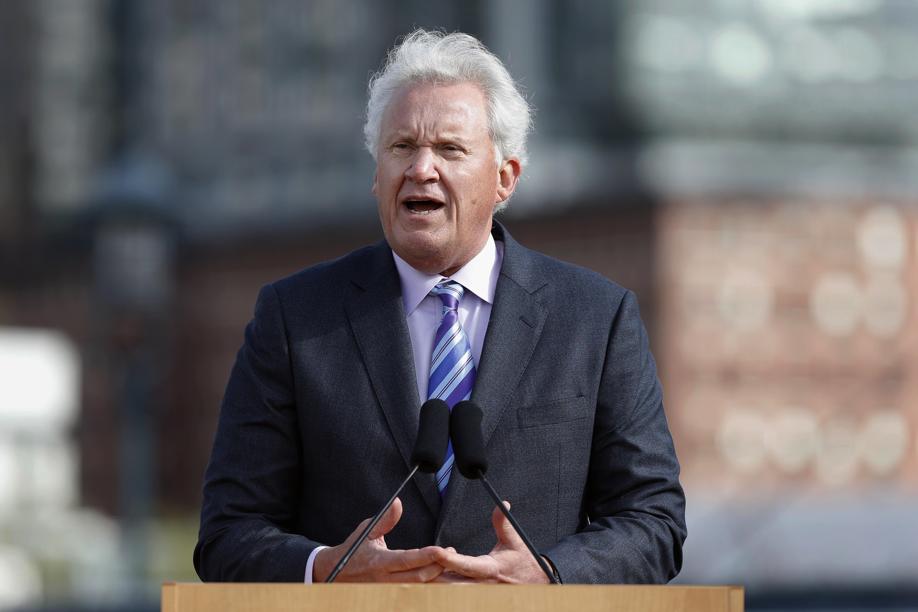
That’s the situation facing John Flannery, incoming chief executive of General Electric. Outgoing CEO Jeffrey Immelt tried to make Boston-based GE a leader of the “industrial Internet’’ — the idea being that all those expensive machines will be linked online so that their performance can be constantly monitored — while also unloading businesses like GE Appliances, NBCUniversal, GE Plastics, and GE Capital. It didn’t pay off, and even this month GE was reporting to Wall Street that its 2017 earnings would end up on the low end of what Immelt had forecast, leading to more slippage in the stock price.
Conglomerates were once cool — they had economies of scale, synergy, brand leverage, and a bunch of other business buzzwords. If some operations performed well in a down economy, others propsered in boom times. But these days, conglomerates can resemble wooly mammoths struggling in a tar pit. By the time they make a decision about what to do, smaller, nimbler companies have chased down the opportunity — and the mammoth has sunk a few feet deeper.
Everyone agrees that the new guy in the corner office, who’d previously led GE’s health care business, will have to do something radical, beyond trimming costs or tinkering with the organization’s structure. “I think there’s a very high likelihood that he makes significant changes,’’ says Ivan Feinseth, director of research at the investment bank Tigress Financial Partners in New York. Immelt “hasn’t created shareholder value, that’s why he is being replaced. Flannery has got to fix this to create some shareholder value.’’
But there is no instruction manual on how, exactly, you fix a 125-year old conglomerate in an age when fast-growing companies like Tesla, Amazon, and Boston-based Vertex Pharmaceuticals are stock market darlings.
Flannery will have to work through several big issues, says Nigel Coe, a Morgan Stanley analyst who follows GE. One is about the businesses it wants to be in.
“The goal of a conglomerate is to provide stable earnings growth, and GE has not delivered that,’’ Coe says. So while Immelt has sold off lots of businesses, one choice that confronts Flannery is whether to break GE up into two companies. One, Coe says, would include businesses like health care, aviation, and renewable energy — what he calls “the growth assets, where there’s a long-term structural growth story.’’ Another company would include oil and gas, transportation (GE makes railroad locomotives, for instance, and huge mining vehicles), and power generation — what he calls “the value GE, which value investors would want to own.’’
There’s also a question about GE Digital, and the company’s Predix software, which collects data from all sorts of Internet-connected machines and helps users understand what’s going on in a factory or water treatment plant, for example. Is this type of analytical software just something that customers will expect comes with the pricey industrial machinery they buy from GE — sort of like the way you expect a new car to come with air conditioning — or is it something that, in Coe’s words, “will be a stand-alone business that’s accretive to GE’s margins and revenue growth?’’
Boston venture capitalist Michael Greeley, whose firm Flare Capital Partners counts GE as an investor, says GE got a late start in software, “and it’s hard to have a competitive product there when you’ve started 10 years after incumbent players like Oracle and SAP.’’ But Greeley observes that since Flannery is coming from the GE Healthcare division, and “Boston is a health care town, I hope you’ll see a lot of research and development and acquisition activity to make the health care portfolio a higher-growth portfolio for GE.’’ That could mean building or acquiring businesses that offer healthcare services, hardware, or software.
Sean Becker, a Somerville entrepreneur who previously worked in GE’s energy business, doesn’t buy into my hypothesis that GE is headed for a big breakup — what some call deconglomeration. Instead, Becker sees big acquisitions ahead for GE, especially in overseas markets like India and China. “Flannery is an M&A guy with international experience at GE,’’ Becker notes. GE can also find opportunities, he says, in the shift from fossil fuels to renewable power and the smarter use of energy for things like lighting and air conditioning.
On a conference call this week, Flannery offered a report on what he’s up to as he prepares to move into the top job. He said he’s “taking a hard look at our corporate spending,’’ as well as doing “a series of deep dives into each of the businesses, looking at everything you would expect. What is the market outlook, where can we grow, where can we improve margins, how is the cash conversion, what returns are we getting on investment?’’
He’ll conduct that analysis, and then set a new course for GE, under extreme pressure from Wall Street and activist investors who were only too happy to show his predecessor the door. “Activist shareholders are looking for a quick hit,’’ notes Bill Aulet, director of the Martin Trust Center for MIT Entrepreneurship. “But great CEOs make decisions that pay off in the long-term.’’
GE is scheduled to move in 2019 from temporary space it now occupies into a new $200 million headquarters complex along Boston’s Fort Point Channel. My bet is that by that time it does, it will be a smaller, more focused — and maybe even more nimble — company.
Scott Kirsner can be reached at kirsner@pobox.com. Follow him on Twitter @ScottKirsner and on betaboston.com.

