




Boeing’s first astronaut mission ended Friday night with an empty capsule landing and two test pilots still in space, left behind until next year because NASA judged their return too risky.
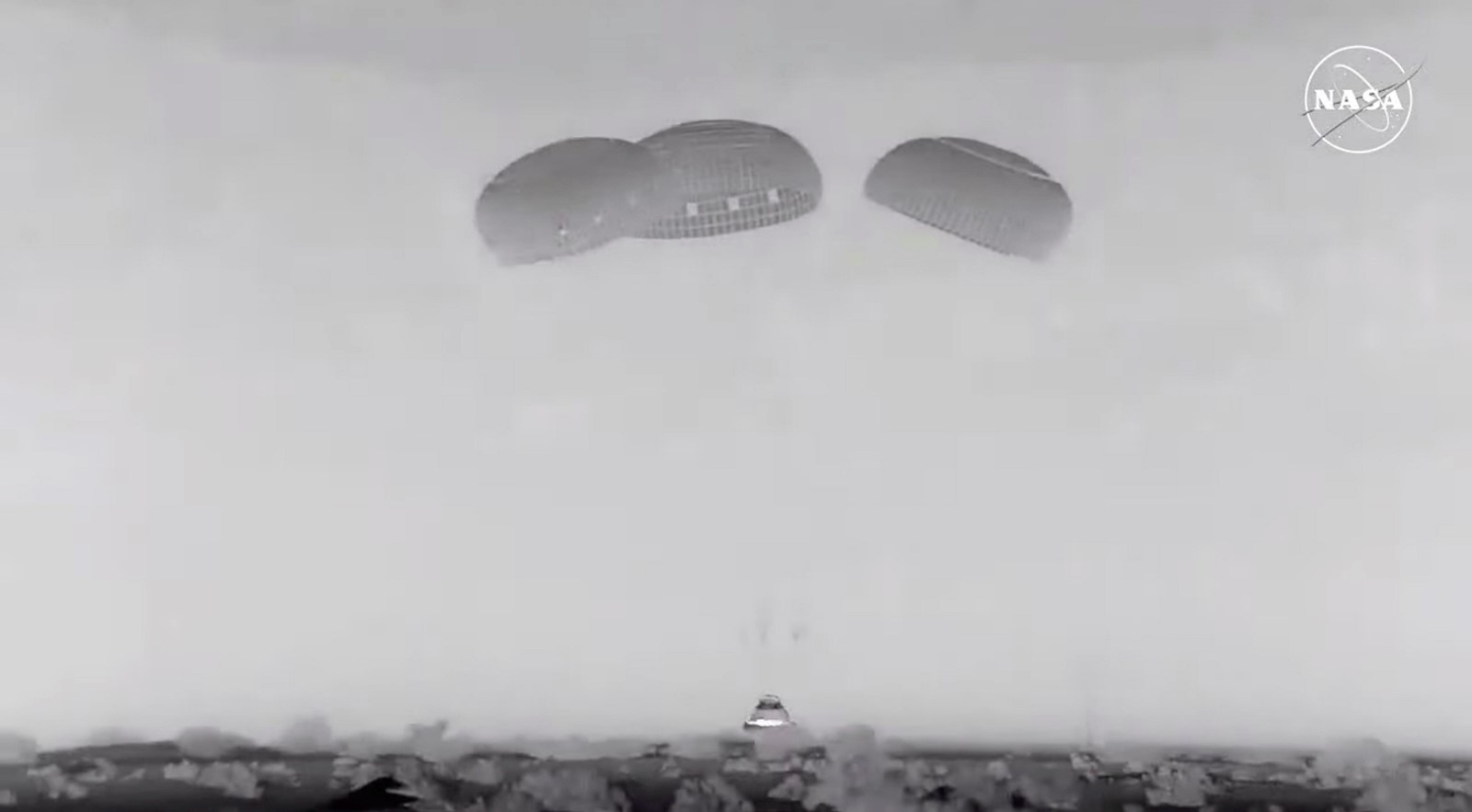
Six hours after departing the International Space Station, Starliner parachuted into New Mexico’s White Sands Missile Range, descending on autopilot through the desert darkness.
It was an uneventful close to a drama that began with the June launch of Boeing’s long-delayed crew debut and quickly escalated into a dragged-out cliffhanger of a mission stricken by thruster failures and helium leaks.
For months, Butch Wilmore and Suni Williams’ return was in question as engineers struggled to understand the capsule’s problems.
Boeing insisted after extensive testing that Starliner was safe to bring the two home, but NASA disagreed and booked a flight with SpaceX instead. Their SpaceX ride won’t launch until the end of this month, which means they’ll be up there until February — more than eight months after blasting off on what should have been a quick trip.
Wilmore and Williams should have flown Starliner back to Earth by mid-June, a week after launching in it. But their ride to the space station was marred by the cascade of thruster trouble and helium loss, and NASA ultimately decided it was too risky to return them on Starliner.
So with fresh software updates, the fully automated capsule left with their empty seats.
Williams stayed up late to see how everything turned out. “A good landing, pretty awesome,” said Boeing’s Mission Control.
Cameras on the space station and a pair of NASA planes caught the capsule as a white streak coming in for the touchdown.
There were some snags during reentry, including more thruster issues, but Starliner made a “bull’s-eye landing,” said NASA’s commercial crew program manager Steve Stich.
Even with the safe return, “I think we made the right decision not to have Butch and Suni on board,” Stich said at a news conference early Saturday. “All of us feel happy about the successful landing. But then there’s a piece of us, all of us, that we wish it would have been the way we had planned it.”
Boeing did not participate in the Houston news briefing. But two of the company’s top space and defense officials, Ted Colbert and Kay Sears, told employees in a note that they backed NASA’s ruling.
“While this may not h ave been how we originally envisioned the test flight concluding, we support NASA’s decision.”
 PREVIOUS ARTICLE

