


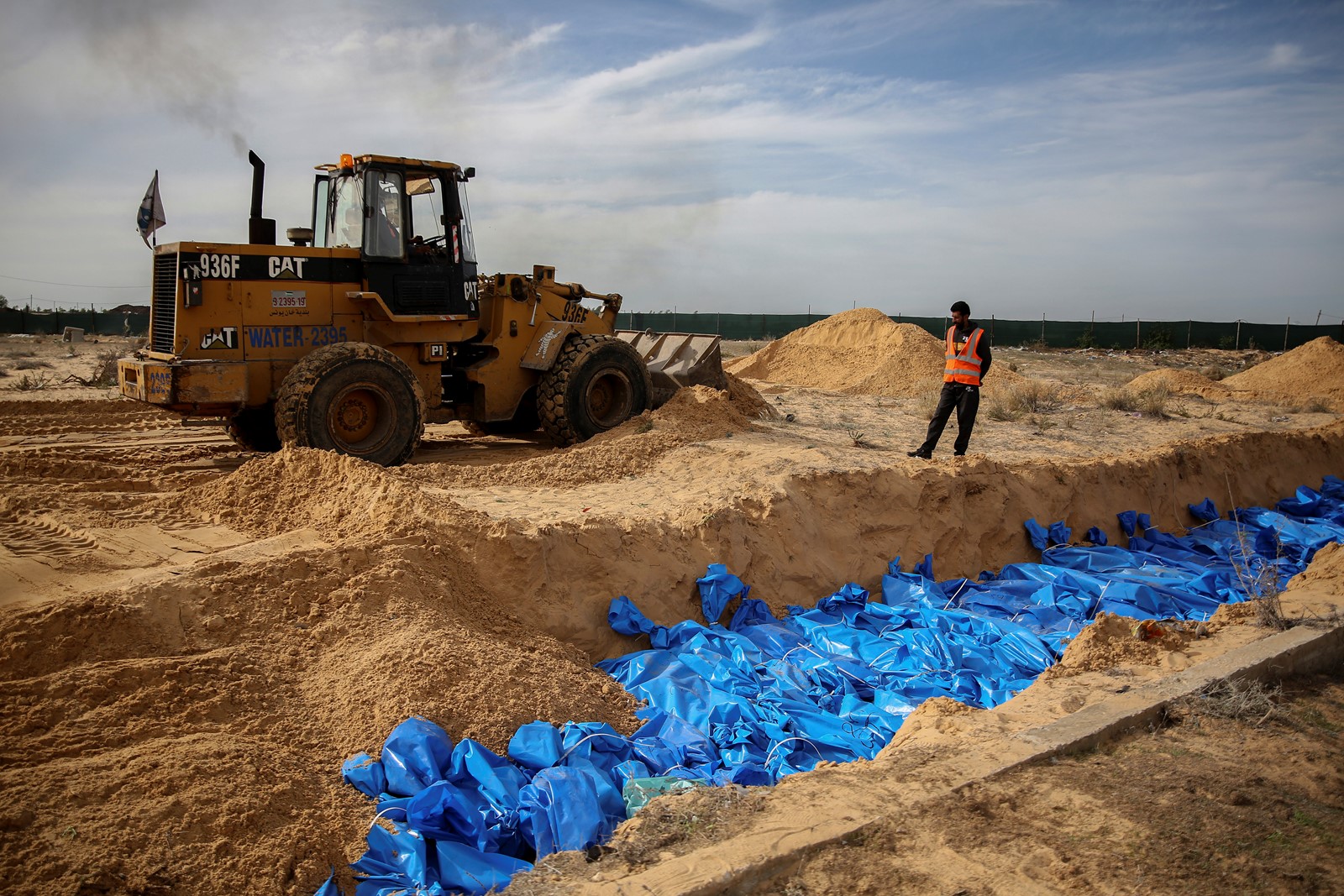


The number of Gaza Strip residents reported killed during Israel’s 10-week-old war in the territory already has surpassed the toll for any other Arab conflict with Israel in more than 40 years and perhaps any since Israel’s founding in 1948.
The Hamas-controlled Gaza Health Ministry said Thursday that the death toll had exceeded 20,000, putting it just above one of the most authoritative estimates of those killed in Lebanon by Israel’s 1982 invasion.
Though Gaza officials have said counting the dead has become increasingly challenging, most experts say the figure is likely an undercount and express shock at the enormity of the loss. Some military experts said more people had been killed more quickly in this war than during the deadliest stages of the U.S.-led wars in Afghanistan or Iraq.
Azmi Keshawi, the Gaza analyst for the International Crisis Group think tank, said this war was “more horrifying” than any he had experienced before. He said he and his family had fled his home in northern Gaza and moved six times so far. They now live in a tent near a U.N. shelter in the southern city of Rafah.
The Israeli military has engaged in an intense air and ground campaign to eliminate Hamas, the armed Palestinian group that rules Gaza and led the Oct. 7 attack that officials say killed about 1,200 people in Israel — the majority of them civilians but also including hundreds of soldiers.
Hamas, considered a terrorist organization by the U.S., still holds scores of hostages.
The high death toll reflects how Israel has chosen to wage the war, using thousands of airstrikes, heavy bombs and artillery in a small territory densely packed with civilians who cannot escape. Israel has said Hamas built an extensive tunnel network underground to shield its fighters and weapons, putting civilian infrastructure and people on the ground in the line of fire.
The latest war between Israel and Hamas already was thought to be the deadliest conflict for Palestinians in the 75 years since Israel was established. According to the Palestinian Central Bureau of Statistics, an estimated 15,000 Palestinians were killed during the war surrounding Israel’s creation in 1948.
The deaths in the current conflict, if the figures from Gaza are accurate, also have exceeded the most widely cited estimate of the toll for the initial three months of the 1982 invasion of Lebanon. But as in Gaza today, researchers say the number killed in Lebanon may never be known with confidence because of the fog of war, even four decades later.
That estimate comes from an analysis of police and hospital records compiled in 1982 by the newspaper An Nahar, which at the time was among the Arab world’s most respected. It put the death toll at 17,825. But the paper said that tally was most likely an undercount, and in 1982, he New York Times reported that “numbering the dead correctly is virtually impossible” in Lebanon.
In the 1967 Middle East war, nearly 19,000 Egyptians, Syrians and others were estimated to have been killed fighting Israel, while a similar number — mostly Syrians and Egyptians — died in the 1973 war, according to The Associated Press. As in the Gaza and Lebanon wars, the exact tolls for these wars also are not known, but most of the dead were believed to be combatants.
In contrast, the Gaza Health Ministry has said that about 70% of those killed are women and children. Thursday, the ministry said the death toll had reached 20,057, but Gaza authorities never give breakdowns for how many of those killed are combatants.
Israel claims it has killed some 7,000 Hamas fighters but has not explained how it arrived at that number.
The toll in Gaza is expected to rise significantly when Palestinians are able to dig out of the vast destruction that the war has wrought. A Gaza government spokesperson said Wednesday that in addition to the dead, 6,700 people are missing. Many are believed to still be buried in the rubble.
“The likelihood is that many people who are missing under the rubble will be determined to have been killed,” said Omar Shakir, the Israel and Palestine director for Human Rights Watch. For that reason, the death toll is “likely to increase even if the bombing were to stop today,” he said.
 PREVIOUS ARTICLE
