


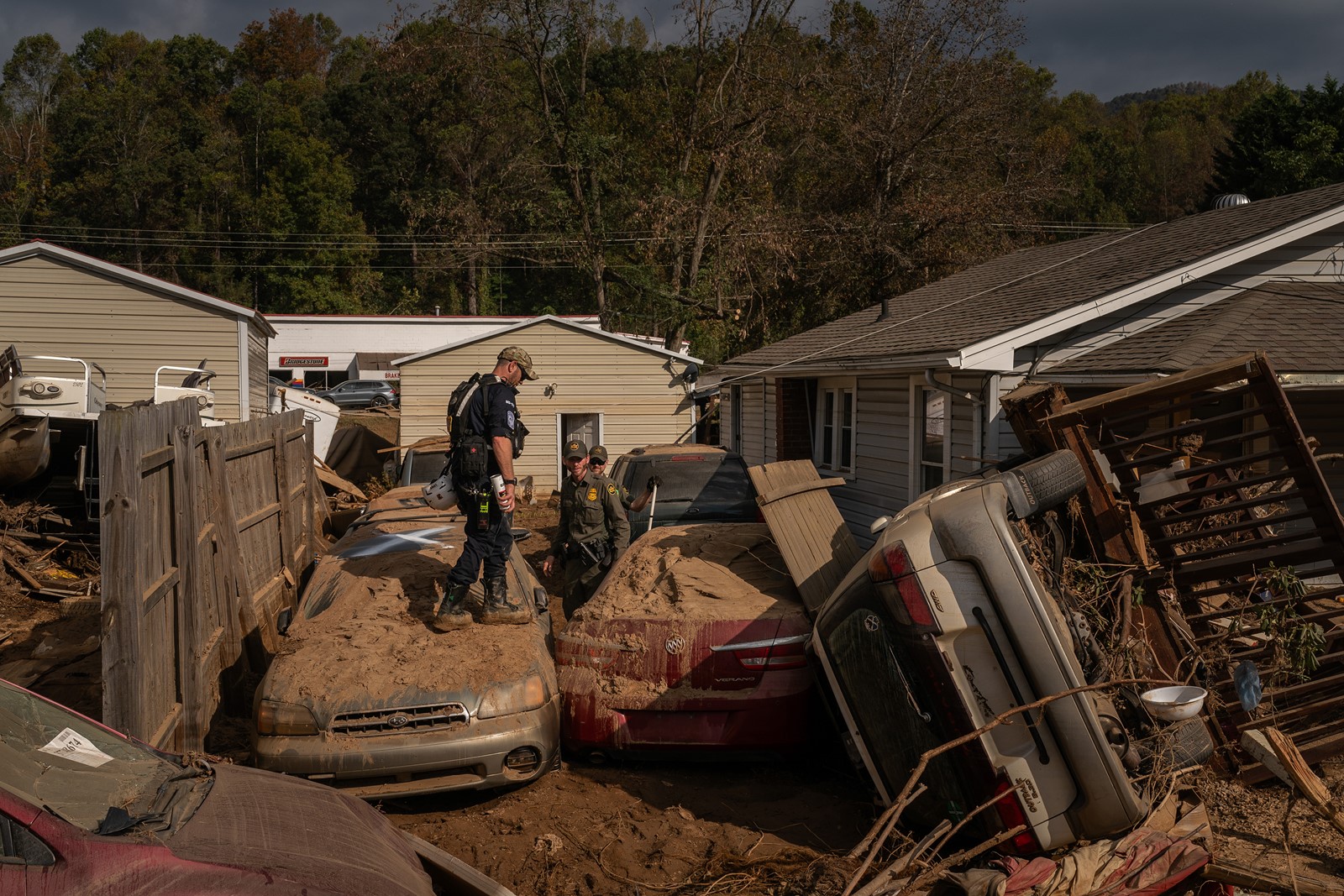


WASHINGTON — About $17 billion in federal disaster funds for states is getting an extra layer of review by Homeland Security Secretary Kristi Noem, causing unusual delays in payments, according to internal Federal Emergency Management Agency documents reviewed by the New York Times.
The delays stem from a directive issued by Noem in June that said any expenditure of $100,000 or more must be approved by her office, which oversees the disaster agency, to root out “waste, fraud and abuse.”
The bottleneck includes money that had already been approved by regional FEMA offices for things like debris removal and repairs to roads, bridges and water and sewer systems.
Noem’s directive has extended the final processing of large projects, a stage that normally takes a few weeks, by months, causing the backlog to balloon, according to three FEMA employees familiar with the process who requested anonymity because they were not authorized to speak publicly. FEMA has barred staff from discussing review timelines with state officials who ask about the status of aid, the employees said.
FEMA and Homeland Security officials did not respond to questions about the aid backlog.
In many cases, state and local governments have already completed relief and recovery work at their own expense, often under significant budget constraints, based on a pledge from FEMA to reimburse a share of the costs. In other instances, work cannot begin until Noem allows the money to flow. Some of the outstanding aid owed to states dates as far back as Hurricanes Harvey and Maria in 2017.
The $17 billion figure, which has not been previously reported, illustrates the scale of FEMA’s role leading disaster preparation and response, even as the Trump administration’s plans to reshape the agency, if not eliminate it in its current form, remain in limbo. FEMA spent an average of $12 billion per year on disaster aid over the three decades that ended in 2021, according to the Congressional Budget Office.
At the same time, new disaster claims are accumulating after a winter storm spread snow and ice from Texas to New England over the weekend. President Donald Trump approved emergency declarations across a dozen states as FEMA officials said they had readied hundreds of power generators, 7 million meals and 3 million liters of water at agency distribution centers.
The funding delays have left some disaster-struck communities with little certainty of when or whether help might come.
In June 2024, huge floods damaged or destroyed 500 homes in Rock Valley, Iowa, in the northwest corner of the state.
City officials have been waiting for Noem to approve $3.4 million in FEMA reimbursements to cover replacement vehicles, temporary leases for the town library and a maintenance facility, as well as emergency efforts taken at the height of the floods, said Tom Van Maanen, the city administrator. Rock Valley’s annual budget is typically less than $10 million, so the city has had to borrow $19 million to make ends meet, at a cost of $1,800 in daily interest that is not eligible for FEMA reimbursement, he said.
“We’re struggling,” Van Maanen said.
The town has dealt with other disasters, including a 2014 flood. This time, the damage was far worse and the recovery far more daunting, he said.
“It’s been a broken system for a long time,” Van Maanen said. “Adding another layer of review on top of the very thorough process we go through is frustrating.”
A significant portion of the pending FEMA projects are in a final review stage; others are earlier in FEMA’s normal review pipeline but were tagged for the extra scrutiny because of their cost.
Deanne Criswell, who served as FEMA administrator under President Joe Biden, called the backlog unusually large and said the final review stage was usually a cursory process that involves notifying members of Congress about large projects being advanced in their districts.
But now projects are languishing there.
The aid backlog has grown at the same time FEMA has taken other steps to tighten its purse strings. The agency has added new requirements for grant recipients, some of which judges have struck down, and this month has dismissed contractual employees whose assignments were up for renewal. (The agency halted those job cuts last week, as a winter storm began moving across the eastern United States, according to internal FEMA emails reviewed by the Times.)
The Trump administration’s larger plans to overhaul FEMA remain unclear after officials in December abruptly canceled the release of a task force report that was to recommend ways to overhaul the agency.
Trump on Friday issued an executive order extending the work of the task force.
 PREVIOUS ARTICLE
