




Earlier this month, I wrote that California’s jungle primary system can lend itself to unpredictable results.
That said, “unpredictable results” is a gross understatement for what new polling indicates could possibly occur.
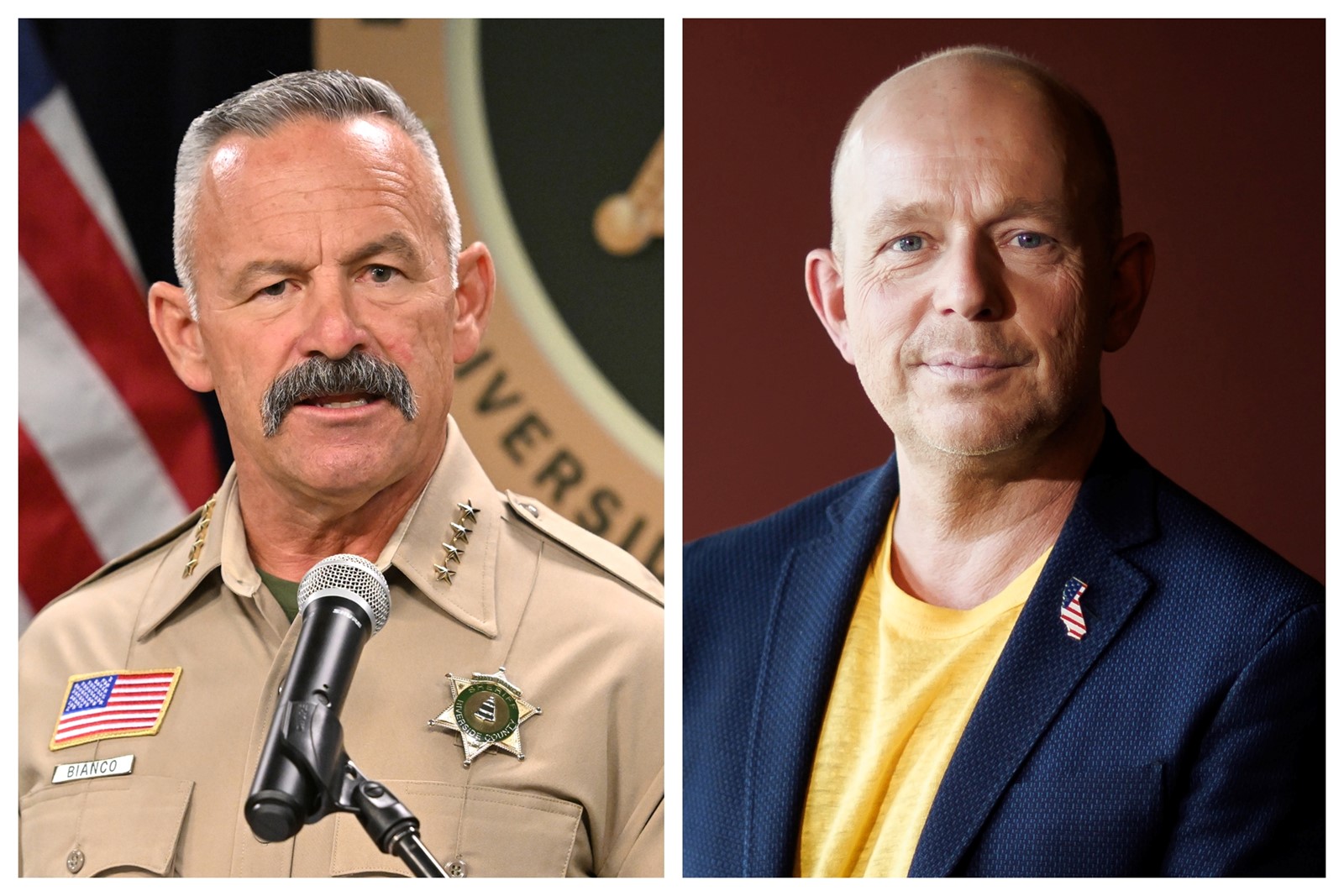
Indeed, according to the CA Voter Index survey, first reported by Linh Tat and commissioned by California’s Democratic Party, two Republicans — Steve Hilton (16%) and Chad Bianco (14%) — lead the race.
Three Democrats — Rep. Eric Swalwell, Katie Porter and Tom Steyer — trail, with 10% apiece.
None of the other five candidates — Xavier Becerra, Antonio Villaraigosa, San Jose Mayor Matt Mahan (3% each), Betty Yee (2%) and Tony Thurmond (1%) — were close to double digits.
Roughly 3 in 10 respondents were undecided (24%), refused to answer (3%) or said they may vote for another candidate (2%).
Perhaps even more concerning for Golden State Democratic officials should be that Hilton and Bianco lead among a wide array of key voting blocs.
Rather, Hilton (14%) and Bianco (13%) are also the top vote-getters among independents, who make up roughly 20% of the sample and are an extremely critical demographic.
Moreover, among independents who do not lean toward either party — what the survey calls “pure independents” — Bianco (16%) and Hilton (15%) are well ahead of the next closest Democrat, Steyer (9%).
Likewise, the two Republicans are holding sizable leads among older voters, who are the biggest voting blocs and are typically the most likely to vote.
Among those aged 50-64, Bianco and Hilton receive 16%, 6 points higher than Swalwell and double Katie Porter.
Finally, for voters over 65, Hilton is the clear favorite within the entire field — his 25% support is double the next closest candidates, Bianco and Swalwell (12% each).
Were the Voter Index survey the only poll reflecting the chances for a Democratic self-inflicted wound, it could possibly be considered little more than an outlier.
But it is not.
This comes on the heels of a previous survey from the UC Berkeley Citrin Center, which also showed the two GOP candidates leading, with the Democrats piled up behind them, seemingly siphoning votes from each other.
To be sure, this is not a sign that California is turning red — let alone purple.
Democrats outnumber Republicans in the state by almost 2 to 1, and no candidate, including the Republicans, exceeds the share of undecided voters, which could determine the outcome.
Instead, this highlights the potential for Democrats to hurt themselves via a combination of having too many candidates — none of whom have been able to distinguish themselves — and the refusal of lower-tier candidates to drop out, even this late in the race.
Quite simply, if two Republicans make it to the general election, Democrats will have only themselves to blame.
While there is considerable time before June’s primary, the window for Democrats to avoid an unprecedented result is quickly closing.
Cognizant of that danger, California Democratic Party Chair Rusty Hicks told reporters that the results are “yet another reminder of the undeniable fact that all candidates must honestly assess their viable path to win.”
This warning is identical to a plea Hicks made in early March.
Under Hicks’ definition of “viable” — having a legitimate path to 20% of the vote — it would appear that Democrats now have two choices: either separate themselves, or hope that the lower-testing candidates drop out.
And yet, immediately before the Voter Index survey was released, California Democrats undercut a fantastic opportunity to give top-tier candidates a chance to introduce themselves.
USC was forced to cancel a debate among the six highest-polling candidates after facing intense criticism that the candidates were all White.
Igniting the controversy was a letter from former California Attorney General Becerra, protesting “the decision to remove him from the debate and replace him with Mahan.”
The reason for replacing Becerra with Mahan — invites were based on a formula developed by a USC professor — is considerably less important than the result.
As a result, all invited Democrats — Swalwell, Porter, Mahan and Steyer — lost a chance to make an impact just as voters began paying closer attention, something Hicks called “a missed opportunity.”
Moreover, it’s likely that the debate’s cancellation and resulting media attention will have the opposite effect of what Hicks believes is imperative: lower-tier candidates dropping out.
Becerra’s decision to write the letter in the first place — and celebrate the outcome on X — suggests that he is not planning to drop out.
Of course, Becerra — along with Mahan, Yee, Villaraigosa and Thurmond — could reverse course, but the attention on the debate may have given them renewed reasons to stay in the race.
According to Addisu Demissie, a California Democratic strategist, it could actually boost the lagging candidates, making it even harder for Democrats to consolidate votes. As he told the New York Times, “In the short term, it draws attention (to the lower-tier candidates) which might draw money to them.”
Ultimately, whether or not the Democratic candidates allow an extraordinary own goal remains to be seen.
If a number of lower-tier candidates drop out and cross-endorse, the sizable “reserve” of undecided voters could shrink, along with support consolidating around one or two of Swalwell, Porter or Steyer.
Conversely, should the Democratic candidates continue down this path, Californians may very well end up being asked which of the two Republicans they prefer to govern a state no Republican has led for 15 years.
Douglas Schoen is a longtime Democratic political consultant.
 PREVIOUS ARTICLE
