


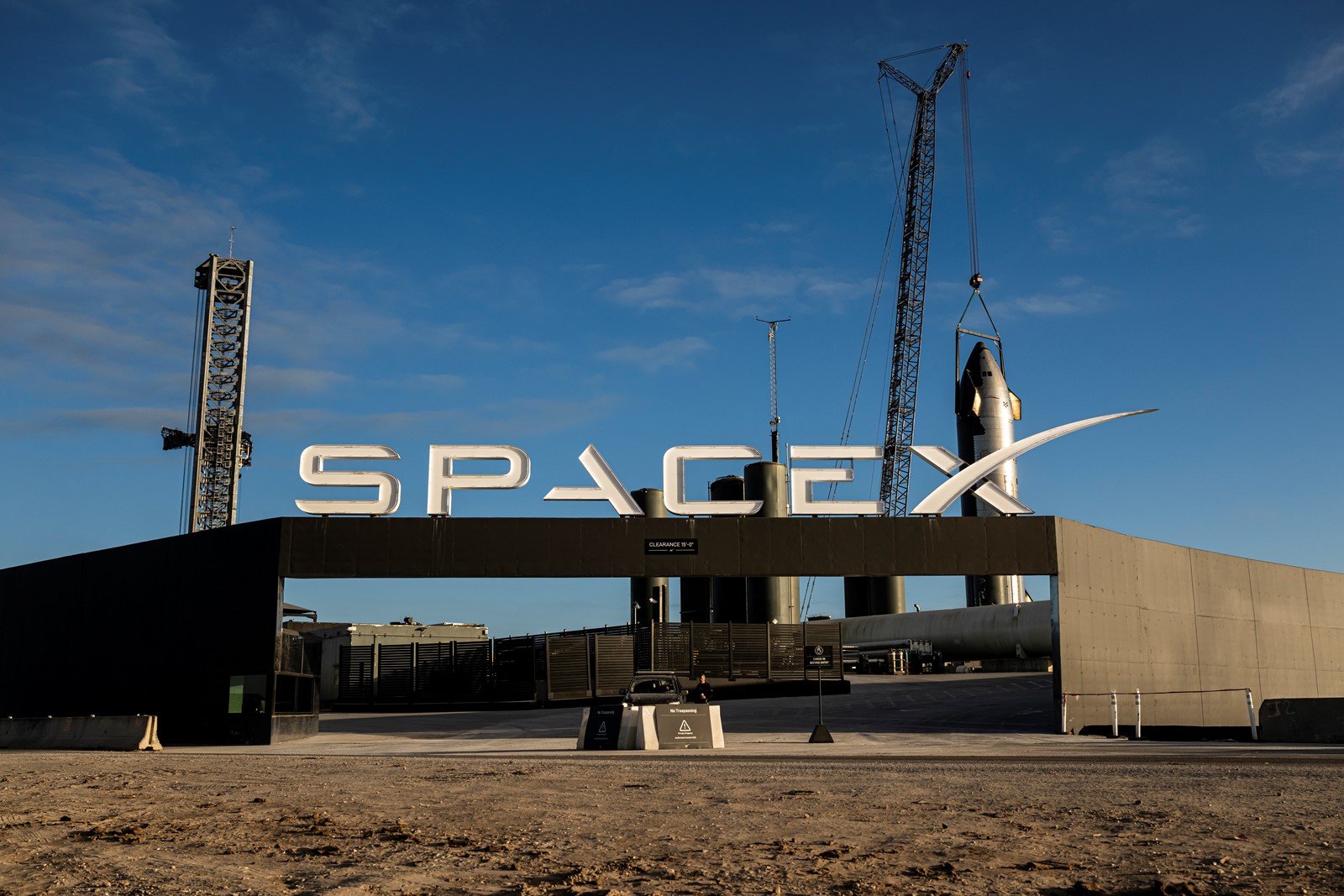


Elon Musk’s space technology company, SpaceX, recently asked the U.S. government for permission to launch 1 million satellites. The idea is to put solar-powered data centers into orbit, an ambition shared by other tech giants. But Earth’s orbit is already packed with spacecraft and space junk. And greenhouse gas emissions are affecting the upper atmosphere in ways that could significantly increase the clutter in space.
By the end of the century, half as many satellites might safely fit in Earth’s orbit, researchers have found.
Over the past half century, the world has sent all manner of satellites up into space — spy satellites, GPS satellites, weather satellites and more — nearly 15,000 in all. SpaceX has launched two-thirds of those, which power its Starlink internet service.
The million or so more that SpaceX is proposing would be used as data centers for artificial intelligence. Tech companies have faced backlash and scrutiny over the huge energy and water demands of AI data centers. In space, the company says, servers could take advantage of plentiful solar power and wouldn’t need water for cooling.
It’s not a unique idea. Google’s Project Suncatcher is developing orbiting data center technology. Jeff Bezos, who owns the space company Blue Origin, has said he’s interested in similar efforts. And last year, China began launching AI-computing satellites that it hopes will eventually number in the thousands.
The companies did not immediately respond to a request for comment.
These proposals have drawn scorn from critics who say orbital data centers would be too costly and technologically out of reach. These voices include Sam Altman, the CEO of Open AI, who has called the concept “ridiculous.”
Even if Musk’s plan becomes technologically achievable, there may not be enough room.
According to a research paper published in Nature Sustainability last year, climate change is expected to sharply reduce the room available for satellites in some particularly useful and in-demand orbits.
That’s because the greenhouse gases that are warming the planet, such as carbon dioxide, are also causing the upper atmosphere to cool and contract, making the already extremely thin air up there even thinner. That’s bad news for satellite orbits because the drag from the thin air in the upper atmosphere is what helps force objects back down toward Earth.
In other words, it acts as a cleaning mechanism, over time removing dead satellites and other space junk that would otherwise stay there, clogging up orbits. The objects largely burn up as they reenter Earth’s lower atmosphere.
“So we’re losing this cleaning force that we rely on,” said William Parker, a scientist at The Aerospace Corporation, which conducts research and development for U.S. space programs, who led the study while at the Massachusetts Institute of Technology. There is currently no other way to remove large amounts of space junk or decommission satellites, he said. (Other scientists are studying the environmental issues with this method, like pollution from incinerated metals and the risk of falling fragments.)
The vast majority of satellites operate between roughly 250 and 620 miles above Earth. By the end of the century, the study estimates this zone will be able to safely hold fewer than 150,000 typical satellites, or only about half as many as today, Parker said, as more space junk lingers longer because of the atmospheric effects tied to climate change.
Along with tens of thousands of functioning satellites, Earth orbit is full of junk metal and debris such as dead satellites, spent rocket boosters and even lost tools from spacewalks by astronauts. Zipping along at 17,000 mph, that litter is dangerous. Even a speck of paint can cause serious damage if it hits something.
There are currently tens of thousands of orbiting pieces of debris being monitored by the U.S. Space Force.
“A million satellites, are you kidding me?” said Jonathan McDowell, an astrophysicist and space sustainability analyst with the Center for Space Environmentalism, an organization of researchers. Although satellite operators often ask for more real estate than they plan to use, he said, even a fraction of the SpaceX request would be too much. As space gets more crowded, collisions with debris become more likely, McDowell said, and each crash would create more orbiting fragments.
 PREVIOUS ARTICLE
