


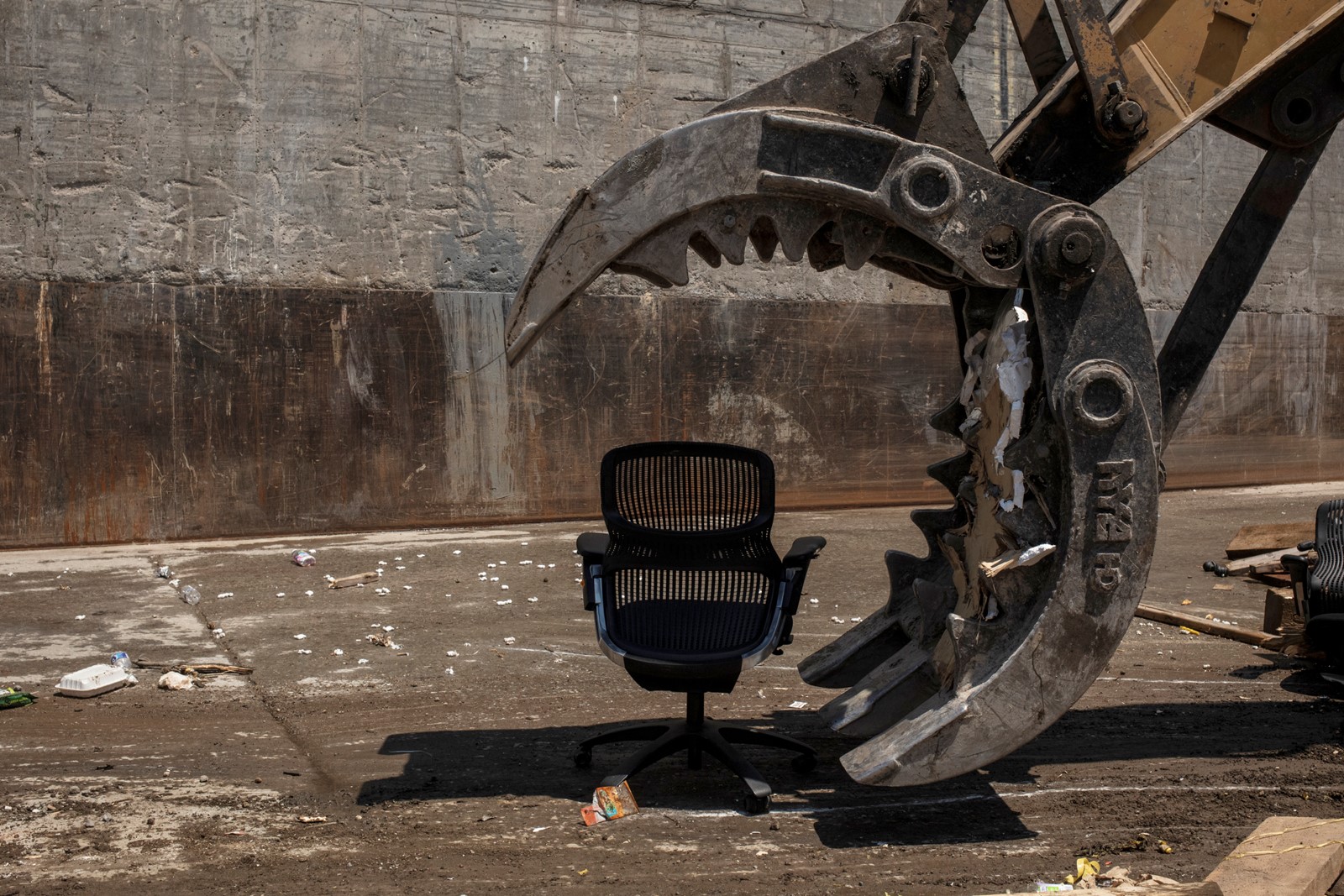


Herman Miller is one of the most revered makers of office furniture in the world, its designs so esteemed that its Aeron chair, which became a fixture of cubicles, was put in the New York Museum of Modern Art’s permanent collection.
This month, some Herman Miller chairs, which can retail for over $1,000, met a less dignified fate: an appointment with the crushing metal jaws of an excavator.
More than three years after the coronavirus pandemic began, about half of the office space in the New York City metro area in June was occupied, according to Kastle Systems, a security-card company tracking activity in office buildings. The hollowing out of the city’s cubicles has raised existential economic and cultural questions, but also a big logistical one: What do you do with all that office furniture?
The answer can often be found in the back of a moving truck — en route to the auction block, a liquidator or, more likely, a landfill. Some of the furniture has found new purpose in schools, churches and movers’ living rooms; other pieces have been repackaged by hip resellers, or shipped across the globe.
Over 70 million square feet of direct office space was available for lease in Manhattan in the second quarter of 2023, a record high, compared with about 40 million square feet before the pandemic began, according to Savills, a large commercial real estate brokerage that tracks the market. New leasing also remains far below pre-COVID-19 levels.
A small class of movers and liquidators has been thrust into the suddenly growing office-afterlife market. Lior Rachmany, CEO of Dumbo Moving and Storage, said a rush of businesses put their furnishings into the company’s storage facilities in 2021 and 2022. Close to 2,000 midsize companies in the region, from law firms to tech startups, have stored office equipment in Dumbo’s three New Jersey warehouses since COVID-19 hit.
The shift in the wait-and-see posture has translated this year into a growing number of clients failing to pay for storage, Rachmany said; the company now holds auctions for delinquent lots five times a year, up from once or twice a year before the pandemic. It also regularly donates unclaimed items to local charities, he said, but a lot of that inventory still gets discarded because of a lack of warehouse space.
At a Dumbo company warehouse recently in East Orange, New Jersey, on an industrial stretch opposite a cemetery, a crew of workers was preparing to jettison the last of a 9,500-pound office lot that a Brooklyn tech company had in storage since April 2021.
According to Rachmany, the client paid for the disposal of, among other things: 25 Herman Miller chairs; 20 computer monitor stands; 10 cubicle panels; nine boxes of carpet; and two flat-screen TVs.
“The amount of waste in this industry would boggle your mind,” said David Esterlit, the owner of OHR Home Office Solutions, a refurbishing company and liquidator in midtown Manhattan that has resold equipment from big office tenants.
Despite efforts to reuse and repurpose office equipment, most still ends up in the trash, said Trevor Langdon, CEO of Green Standards, a sustainability consulting company that helps to minimize office waste.
 PREVIOUS ARTICLE
