




ALEXANDROPOULIS, Greece >> When a withering financial crisis forced Greece to rethink its economy a decade ago, it bet big on green power . Since then, Greece’s energy transition has been so swift “it almost feels utopian ,” one Greek environmentalist said.
Mountainous ridgelines and arid islands are covered in wind turbines and solar panels that today provide nearly two-thirds of the nation’s electricity.
But now Greece is deliberately pivoting back toward fossil fuels, just not to burn at home. This time it’s betting that it can become one of Europe’s main suppliers of natural gas, with much of it shipped from the United States.
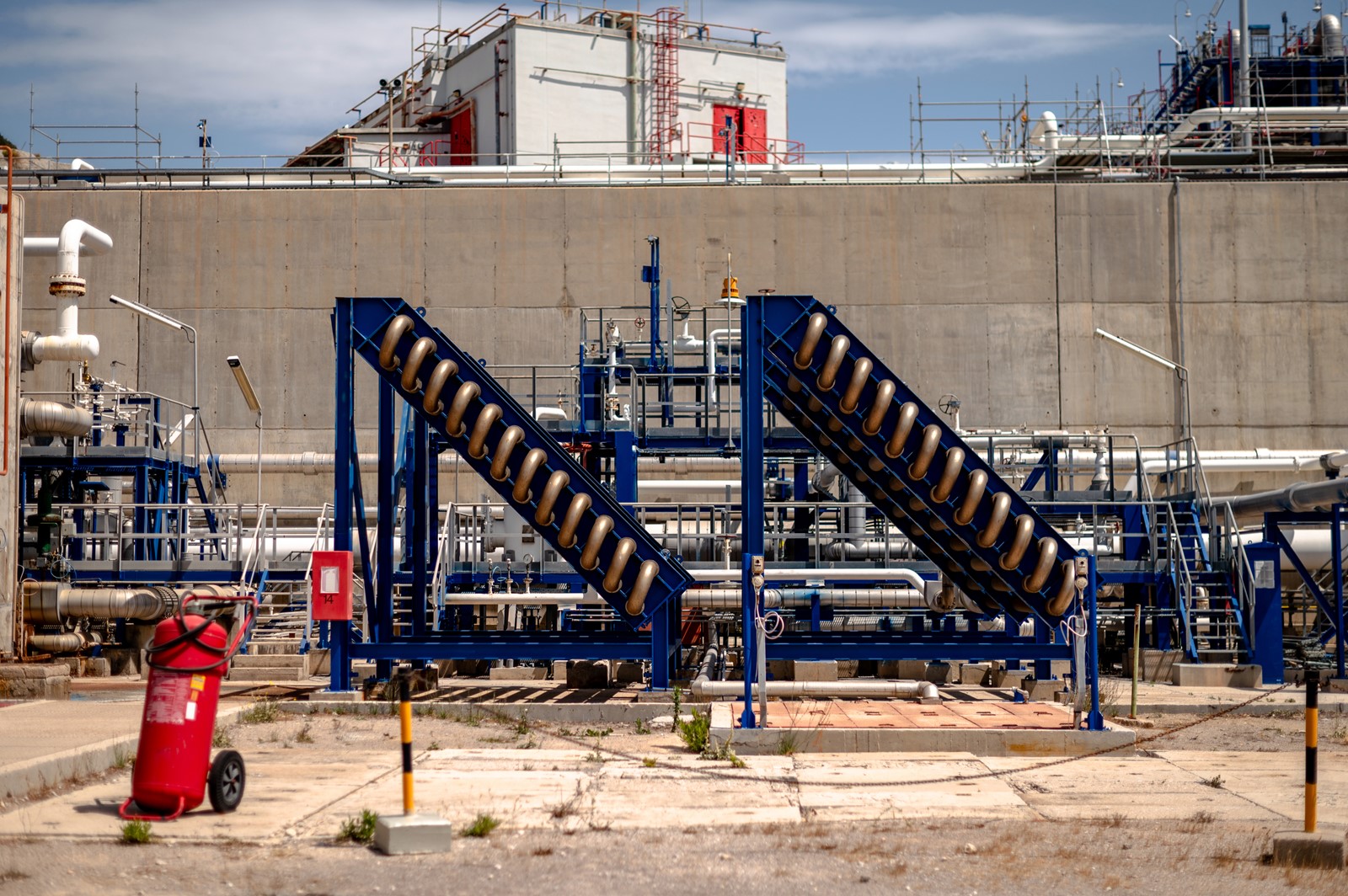
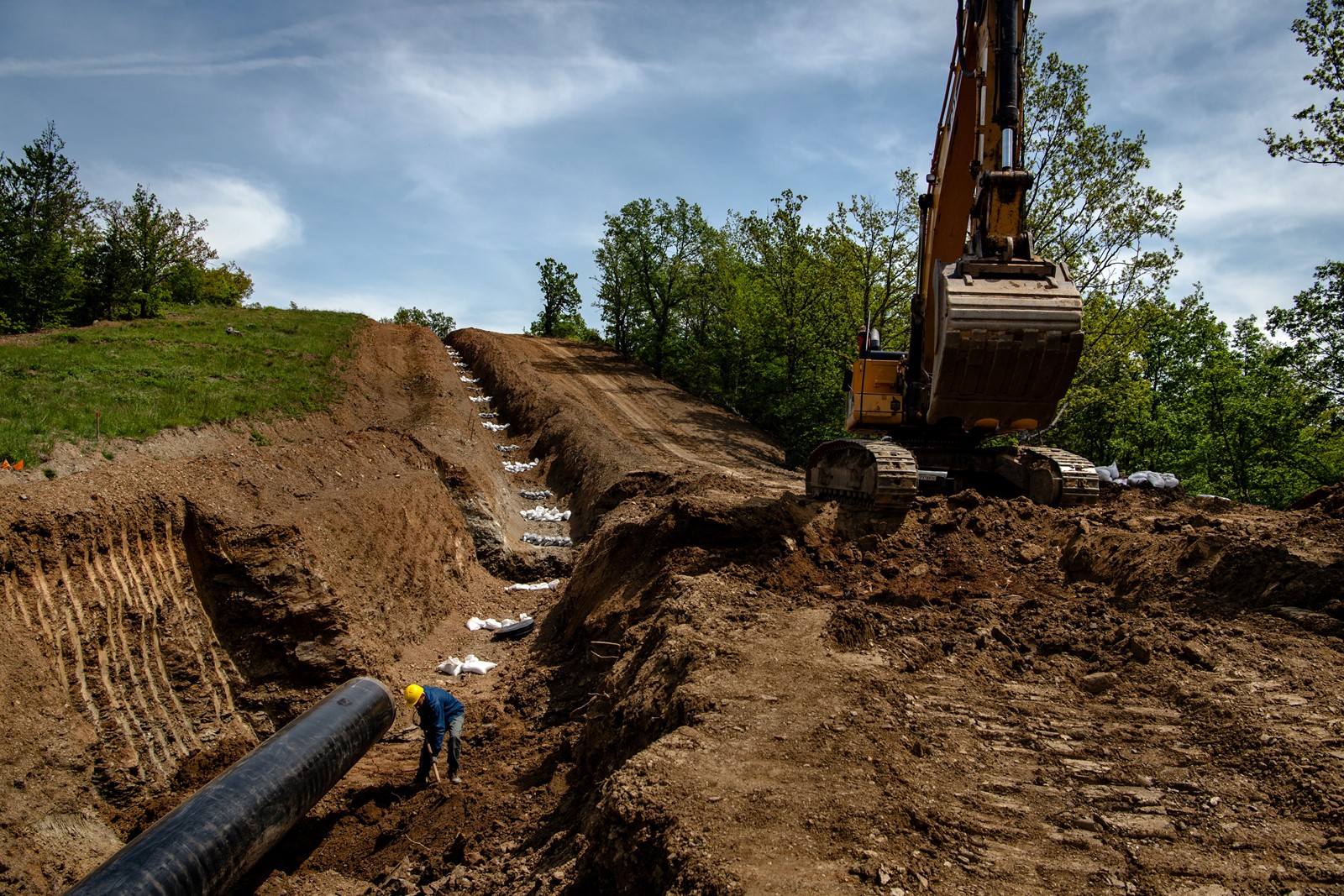
Both Greek and European Union subsidies have funded new pipelines that crisscross the country and connect to a new import terminal that will send gas to a broad swath of Central and Eastern Europe for decades to come.
The investments in Greece are among investments into natural gas around the world, with significant consequences for climate change. In coming years, nearly $1.5 trillion will go into constructing pipelines and terminals, according to Global Energy Monitor. Twenty percent of that spending is in Europe.
The world’s pivot to gas speaks to a kind of hedging that increasingly defines global climate negotiations: While nations have agreed on the necessity to transition away from fossil fuels as quickly as possible, almost all major economic powers are promoting gas as a “transition fuel.”
Its proponents argue that gas is cleaner-burning than coal and oil, and more reliable than renewables like wind or solar. Critics counter that renewables are increasingly affordable and that gas is anything but reliable, as Europe should have learned through collectively spending trillions of additional dollars on it during the energy crisis that followed Russia’s invasion of Ukraine, draining government coffers and causing electricity prices to soar.
Natural gas is a climate threat in two ways. Burning it produces carbon dioxide, the main greenhouse gas warming the world. Large but unknown quantities of it also leak into the atmosphere unburned, where it has highly potent but shorter-term planet-warming effects. These concerns prompted the Biden administration this year to pause issuing permits for new export terminals while it assesses their effects on the climate.
But the United States is still far and away the world’s main exporter of gas. And those concerns haven’t stopped the administration from pushing for Greece to become a new hub for American gas exports in Europe.
In this arrangement, Greece gets billions of dollars of heavily subsidized gas infrastructure, but the bigger payoff is political, not financial. Greece positions itself as central to European energy security, and it plays a key role in the West’s strategy to isolate Russia.
The real money will be made by American gas companies. Since Russia’s invasion of Ukraine, the United States has more than doubled its exports of liquefied natural gas, or LNG, to Europe, amounting to nearly $100 billion in trade.
In Greece, the newest centerpiece is a floating gas terminal off the country’s northern coast. The facility was once an enormous tanker, but today it is stationary, held in place not just by anchors but also by its connection to an undersea pipeline with branches stretching across Europe.
In April, its first delivery of LNG arrived from the Gulf Coast. The operators of the terminal hope that more than half of its supply will come from the United States.
That terminal is “near and dear to my heart,” said Geoffrey R. Pyatt, the former U.S. ambassador to Greece and Ukraine, speaking this month in New York City at a private event on Mediterranean energy supplies. Pyatt is now the State Department’s top energy official.
Pyatt and other U.S. officials have lobbied European nations to use Greece’s new terminal and pipelines, promoting American LNG as a natural replacement for Russian gas .
“It is unfortunate to say, but war gave us the demand,” said Kostis Sifnaios, who heads Gastrade, the company operating the new floating terminal. “If I think about the money the U.S. puts into Ukraine, Bulgaria, Moldova and so on, somehow they will have to get paid back, no? That’s why you see so much American LNG flowing into this region.”
Sifnaios recalled Pyatt and other officials “actively lobbying countries like Serbia, Bulgaria and North Macedonia and encouraging them to make bookings” for gas from the new terminal. Even Ukraine is a potential customer.
But the real market is in the Balkans and Central Europe. Balkan countries like Bulgaria and Serbia are behind the rest of the continent in transitioning to renewable energy.
Energy analysts as well as environmentalists have raised concerns that easing their access to gas may discourage building renewables, and leave the poorer countries among them more susceptible to the price shocks that the gas market has seen in recent years.
“The Balkans were essentially skipped over for investment by Europe for the past 20 years,” said Antonio Tricarico, a regional expert at ReCommon, an organization that studies fossil fuel interests in Europe. “While it may look like now they are getting attention, they are really just getting skipped again, this time by getting hooked to gas instead of helped with renewable energy.”
The Institute for Energy Economics and Financial Analysis, as well as the EU’s internal energy regulation agency, project that demand for LNG in Europe will reach its peak this year, in large part because even though Europe’s biggest economies are investing in gas, they are simultaneously building out renewables at a rapid pace. By 2030, Europe is projected to have nearly three times as much LNG import capacity as it will need.
 PREVIOUS ARTICLE

