


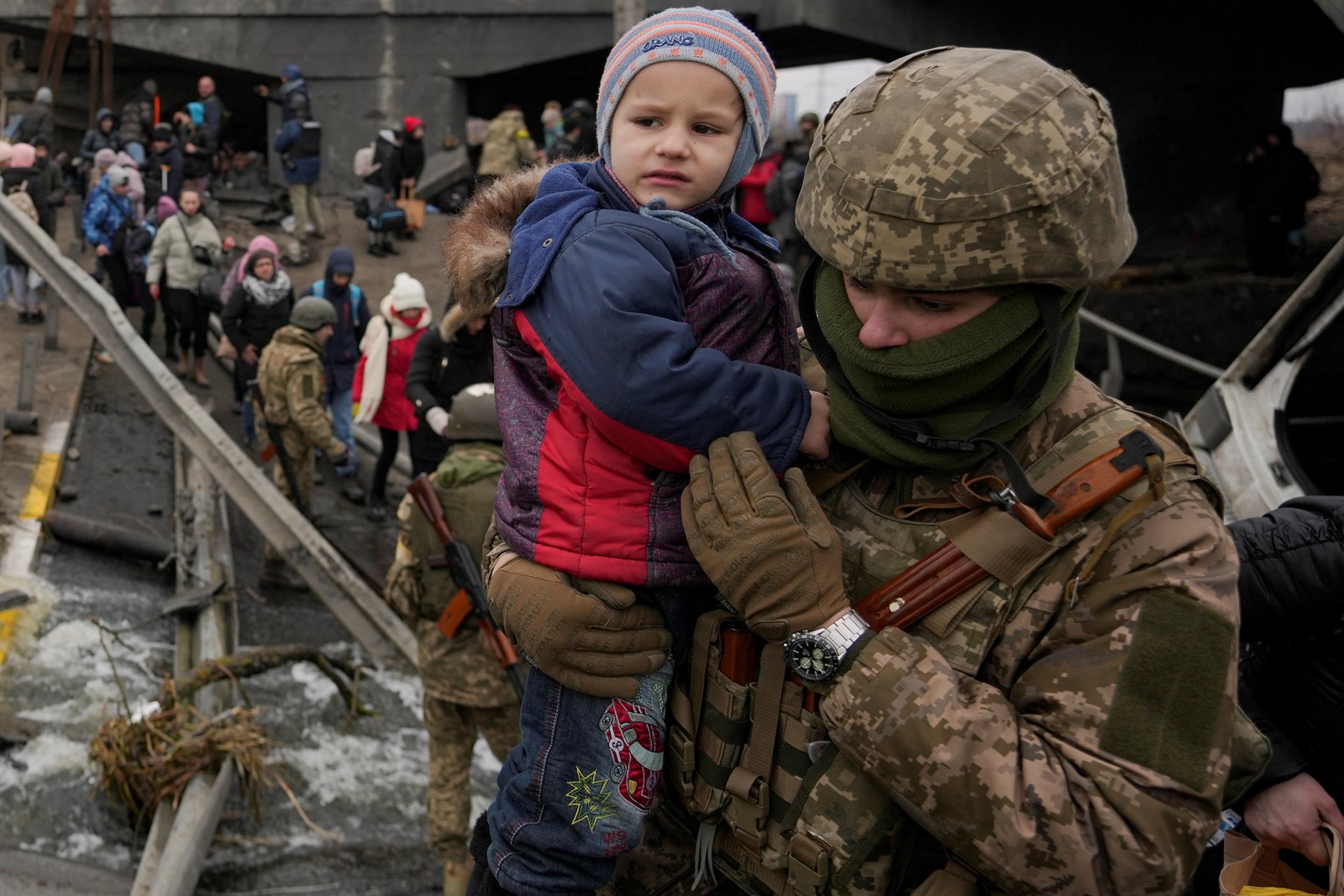


KYIV, Ukraine >> When Russian tanks rolled into Ukraine in February 2022, the conventional wisdom was that the capital, Kyiv, would soon fall and the rest of the country wouldn’t last long against a much larger enemy.
Instead, it was that narrative that quickly collapsed. The Ukrainian army proved it could slow the advance of Russia’s forces and, if not drive them out completely, then — with enough support from the West — at least forestall defeat.
But nearly three years later, the outlook is again grim. Russia is expending huge amounts of weaponry and human life to make small-but-steady territorial gains to the nearly one-fifth of Ukraine it already controls. Ukraine, meanwhile, is struggling to minimize losses, maintain morale and convince allies that, with more military aid, it can turn the tide.
As this brutal war of attrition grinds toward its 1,000th day, neither side seems eager to negotiate. President-elect Donald Trump has said he could quickly end the war, though it is unclear how or in whose favor he might tip the scales.
This backdrop appears to be driving Russia’s strategy in eastern Ukraine, according to Phillips O’Brien, a professor of strategic studies at the University of St. Andrews, Scotland. Trump could try to force an end to the war by halting the supply of weapons to Ukraine, he said.
“If Trump cuts aid to Ukraine and a cease-fire leads to a frozen conflict, Russia wants to secure as much territory as it can now,” O’Brien said.
For Ukraine, the key to any cease-fire would be guarantees from the West that it won’t allow Russia to re-invade in the future. Otherwise, O’Brien said, “a cease-fire is a recipe for constant instability in Europe.”
Russia is advancing
In the war’s first year, Ukraine lost huge amounts of territory — but it also achieved notable victories. It resisted a much larger adversary with superior air power to survive as an independent country, and it reclaimed some land through gutsy counteroffensives, giving the underdog — and its wealthy allies — the confidence to stay in the fight.
In the second year, which was punctuated by Ukraine’s devastating loss of Bakhmut and its failed counteroffensive, the armies essentially fought to a standstill along a 620 mile front line. Toward the end of that year, the U.S. Congress delayed the approval of a $61 billion package of aid for weapons, and economic and humanitarian assistance.
With Ukraine’s ammunition dwindling, its outlook deteriorated significantly as the war’s third year began. In February 2024, the town of Avdiivka fell after months of airstrikes by Russia, which used highly destructive Soviet-era bombs retrofitted with navigation systems.
“The Russians have paid a very high price to keep advancing, but they’re willing to pay that price in lives to gain a few more meters of territory each day,” said Justin Crump, head of the British strategic advisory firm Sibylline.
Tens of thousands of soldiers from both countries have been killed since the start of the war in 2022, according to estimates, and the U.N. says at least 11,700 Ukrainian civilians have been killed.
Outside resources
To keep its war machine going, Russia — like Ukraine — has turned to allies for help.
Iran supplies Russia with drones and possibly missiles, and North Korea has sent ammunition — and even troops, who have been deployed to Russia’s Kursk region.
Russian President Vladimir Putin claimed this year that 700,000 of his troops are fighting in Ukraine. Analysts say Putin would need a much larger force to accelerate Russia’s advance, but that he is unlikely to mobilize more troops because it could stoke internal discontent.
Ukraine’s foothold in Kursk is another complicating factor for Putin, and it could be used as a bargaining chip in any future cease-fire negotiations.
Captain Yevhen Karas, a Ukrainian commander in Kursk, said the fighting inside Russia is highly dynamic, but he believes it will prove effective in diverting Russia’s attention and resources.
“Even a creeping, retreating front exhausts the enemy significantly,” Karas said.
Ukraine has asked the West for longer range missiles and its blessing to fire at air bases deep inside Russia. But its allies have so far resisted, wary of escalating tensions with a nuclear-armed Russia.
Vital role of the U.S.
What direction the war takes next will depend in large part on how the incoming Trump administration plays its hand.
Trump, who has touted his good relationship with President Vladimir Putin and called the Russian leader “pretty smart” for invading Ukraine, has repeatedly criticized American backing of Ukraine.
During his only campaign debate with Vice President Kamala Harris, Trump twice refused to directly answer a question about whether he wanted Ukraine to win — raising concerns that Kyiv could be forced to accept unfavorable terms in any negotiations.
Without security guarantees from the West, Ukraine could find itself vulnerable to future Russian aggression. Analysts say a cease-fire based on the current state of the battlefield would set a dangerous precedent, implying that Europe’s borders are up for grabs through military action — something that hasn’t happened since World War II.
“This would also have a lot of traction in countries like China, India, and elsewhere,” said Richard Connolly, a Russia expert at the Royal United Services Institute in London. “They could present that as a strategic defeat not only for Ukraine, but also for the West.”
 PREVIOUS ARTICLE
