


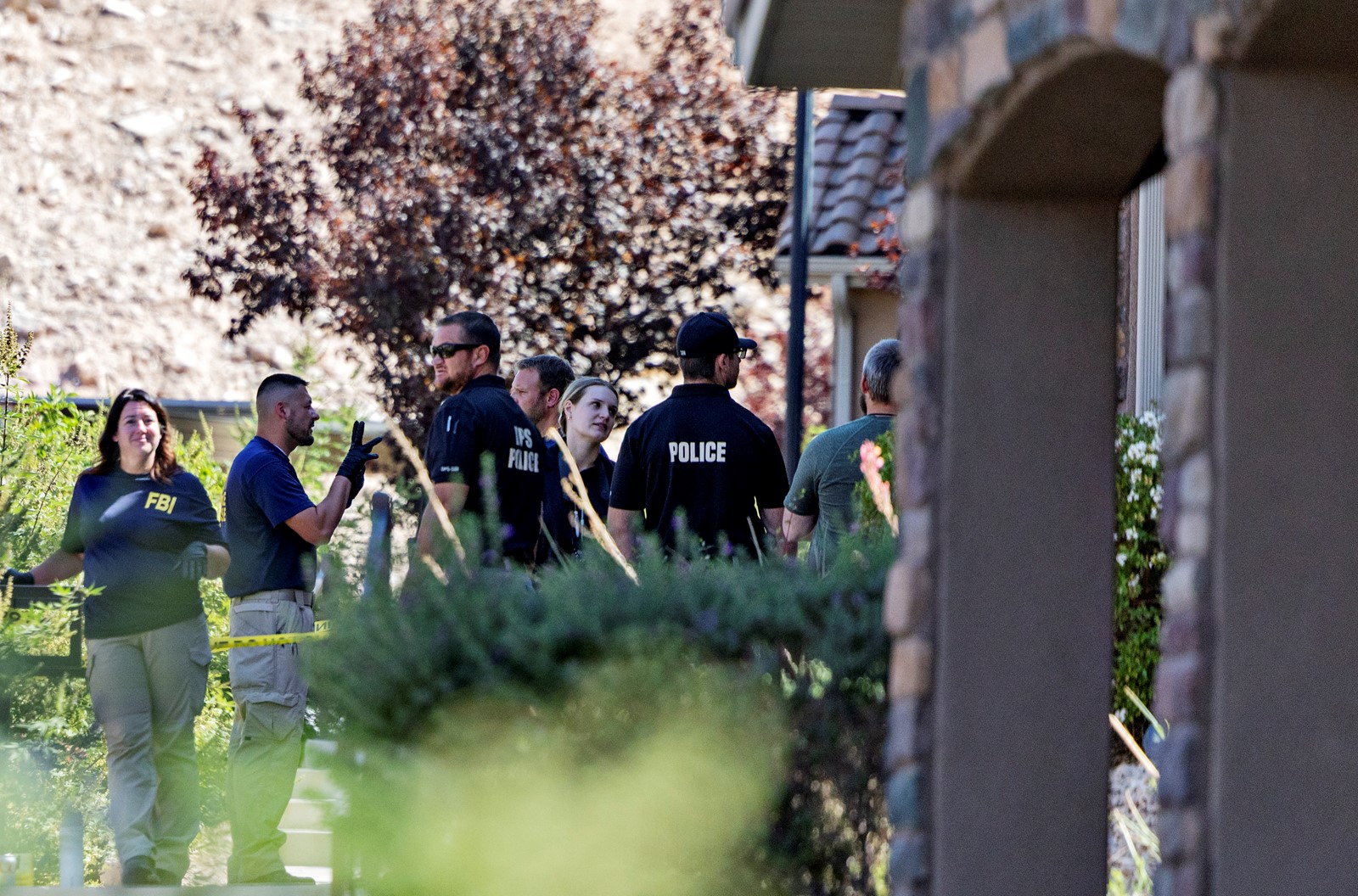


OREM, Utah — Kash Patel, the director of the FBI, on Friday described the arrest of the man accused of killing activist Charlie Kirk as “historic” — a fast-track triumph for law enforcement that proved the effectiveness of the Trump administration’s push to “let good cops be cops.”
The reality was more complicated.
While the federal government, led by the FBI, surged investigative manpower and technological firepower — high-tech drones, fingerprint experts, video analysts, evidence processing teams — the hunt for Kirk’s killer ended in the mundane way that many searches do. Someone called in a tip to local law enforcement and identified the suspect, Tyler Robinson, a 22-year-old Utah man.
“A family member of Tyler Robinson reached out to a family friend who contacted the Washington County Sheriff’s Office with information that Robinson had confessed to them or implied that he had committed the incident,” Utah Gov. Spencer Cox said Friday. “We got him.”
What did make the investigation historic was the intense level of federal involvement spurred by the political significance of the man who was killed, and the unfathomable impact of his killing in a divided country sliding from vitriol to violence. Kirk was close to President Donald Trump, who broke the news of the arrest on Fox. Patel, a former podcaster, moved in the same conservative circles as Kirk and considered him a friend.
The evidence collected and analyzed by the bureau is likely to play a critical role in state and local prosecutions. But it was not clear whether anything the FBI did in the days after the shooting played a decisive role in shortening the search.
Robinson’s arrest late Thursday in many ways fit the unpredictable pattern of dragnet investigations, which are often resolved through a combination of shoe-leather police work, high-tech forensics and plain luck. They seldom conform to a neat narrative — and are often hampered by miscalculations and missteps before reaching their goal, officials said.
That appears to be the case with Robinson, who surrendered to local authorities after a frantic 33-hour search that ended 250 miles south of the crime scene.
Kirk was shot shortly after noon Wednesday.
The event had been staffed by a modest contingent of campus police officers, along with Kirk’s security, but there was no major law enforcement presence that would have made it more difficult for the shooter to slip away. The FBI was on the scene within 16 minutes. The bureau mobilized planes, hostage-rescue teams and technicians while flying pieces of evidence to forensic labs on the East Coast.
Near the campus, officers scoured neighborhoods, knocked on doors and looked in possible hiding places — inside chicken coops, on a construction site, in backyards. But the gunman appeared to be long gone.
As the search widened, Cox and police officials said, the federal government provided important technical and logistical support. Patel hailed the effectiveness of coordination among all of those involved in the search.
It is possible, current and former officials said, that images of the shooter taken by surveillance cameras at the scene and disseminated Thursday by federal authorities prompted Robinson’s family to come forward or persuaded Robinson to surrender.
But it appears to have taken the bureau half a day longer than necessary to release the images, which were in the possession of FBI agents in Salt Lake City as early as Wednesday night, Patel complained to his team.
In a testy conference call early Thursday, Patel and his deputy, Dan Bongino, called out subordinates for waiting nearly 12 hours to show them the photos — and said they would have released them immediately had they been aware they were available, according to people familiar with the exchange.
 PREVIOUS ARTICLE
