




in a meeting Thursday with CPW and FRICO officials.
A bird-banding team of 20 professional biologists and trained volunteers had faced bulldozers as they netted and gathered data on migratory Wilson’s warblers, Yellow warblers, House Wrens, towees, Yellow-rumped warblers, Lincoln’s sparrows, and other species. The 350 bird species documented in the park include white pelicans, great blue herons, cormorants, egrets, bald eagles, golden eagles, and several types of hawks and falcons.
“All of the Barr Lake habitat is important to us. It is a stopover for migratory birds, a place to rest and refuel. It is a great place for birds that live here year-round with the water and the prairie around the reservoir. It is good nesting habitat,” Nickolaus said. “We were very concerned with the speed” of the cutting, she said. “We were assured they will work with us. We got answers we needed and assurances that they are hearing us, hearing our concerns.”
None of the cottonwoods cut down so far held bald eagle nests, CPW park manager Michelle Seubert said.
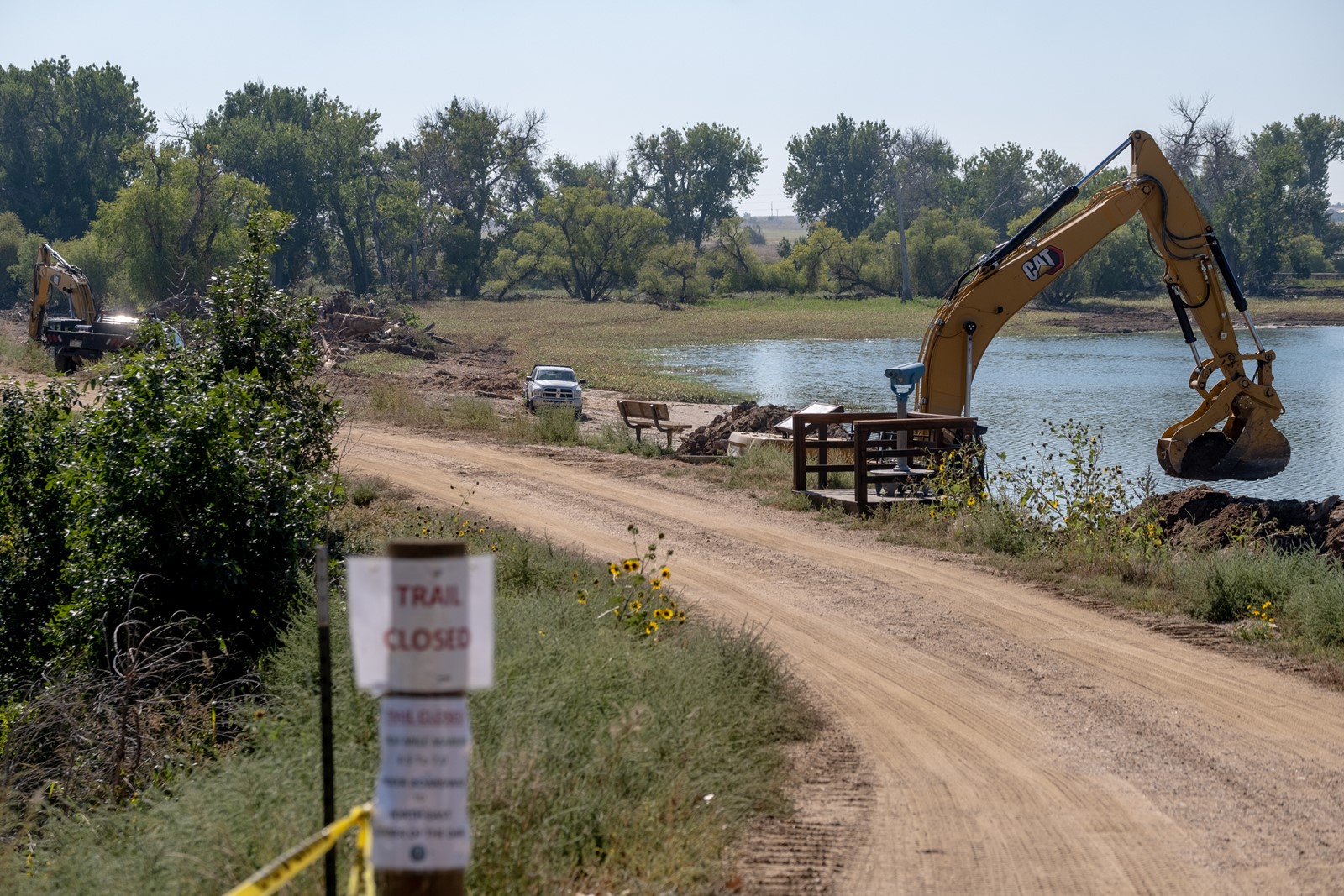
FRICO crews will clear trees growing in a 10-foot buffer at the base of the dike along the reservoir, Seubert said.
No estimate of the total number of cottonwoods in the park and those to be cut in the coming years was available, she said.
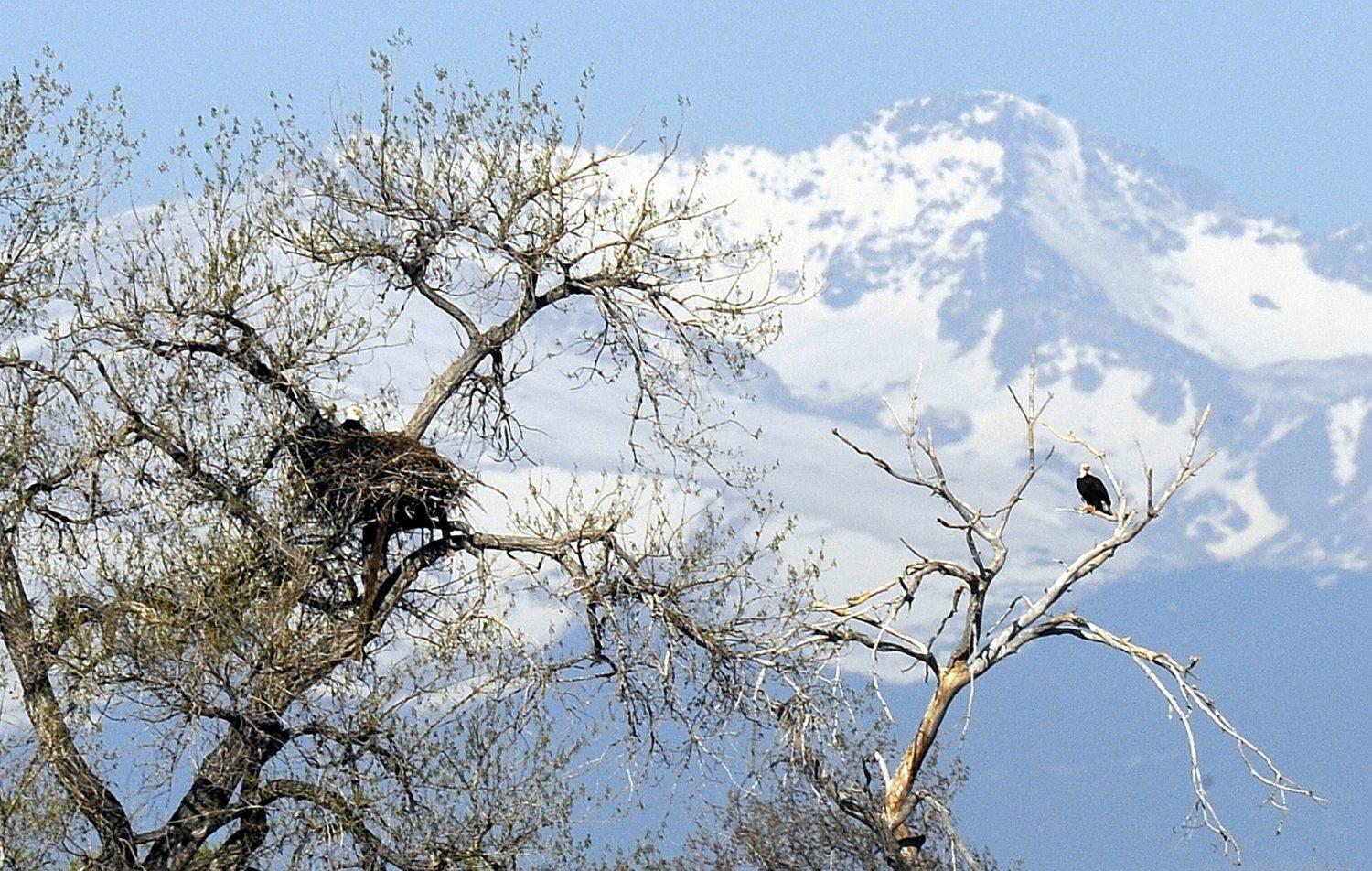
Bald eagles nest in cottonwoods on the west side of the reservoir and bulldozers are removing trees on the east side. Fewer cottonwoods mean less habitat for eagle roosting.
FRICO officials declined to comment.
About a dozen bald eagles have been living in the park year-round, and park officials said they spotted three on Thursday. At least one nesting pair of eagles has been documented in the park every year since 1986, officials confirmed. Since then, bird monitoring teams have documented at least 63 eagles born and raised in the park.
The park spans 2,715 acres, located 27 miles northeast of Denver along Interstate 76. FRICO owns the dam, dikes, and reservoir, with CPW holding an easement that allows recreation. CPW crews stock the reservoir with fish about four times a year. Coyotes, badgers, foxes, rabbits, white-tail deer, and mule deer also live in the park.
Tree removal over a four-mile stretch will be necessary “for dike safety so that it doesn’t break when the water comes in,” CPW spokeswoman Kara Van Hoose said. That water will flow through canals from the South Platte during winter. “FRICO did an environmental impact study, and has kept us informed of their plans,” Van Hoose said. “The trees that are being taken out don’t hold nests for the bald eagles and nesting doesn’t start until February or March.”
 PREVIOUS ARTICLE
