


5 reasons electric vehicles to upend conventional cars
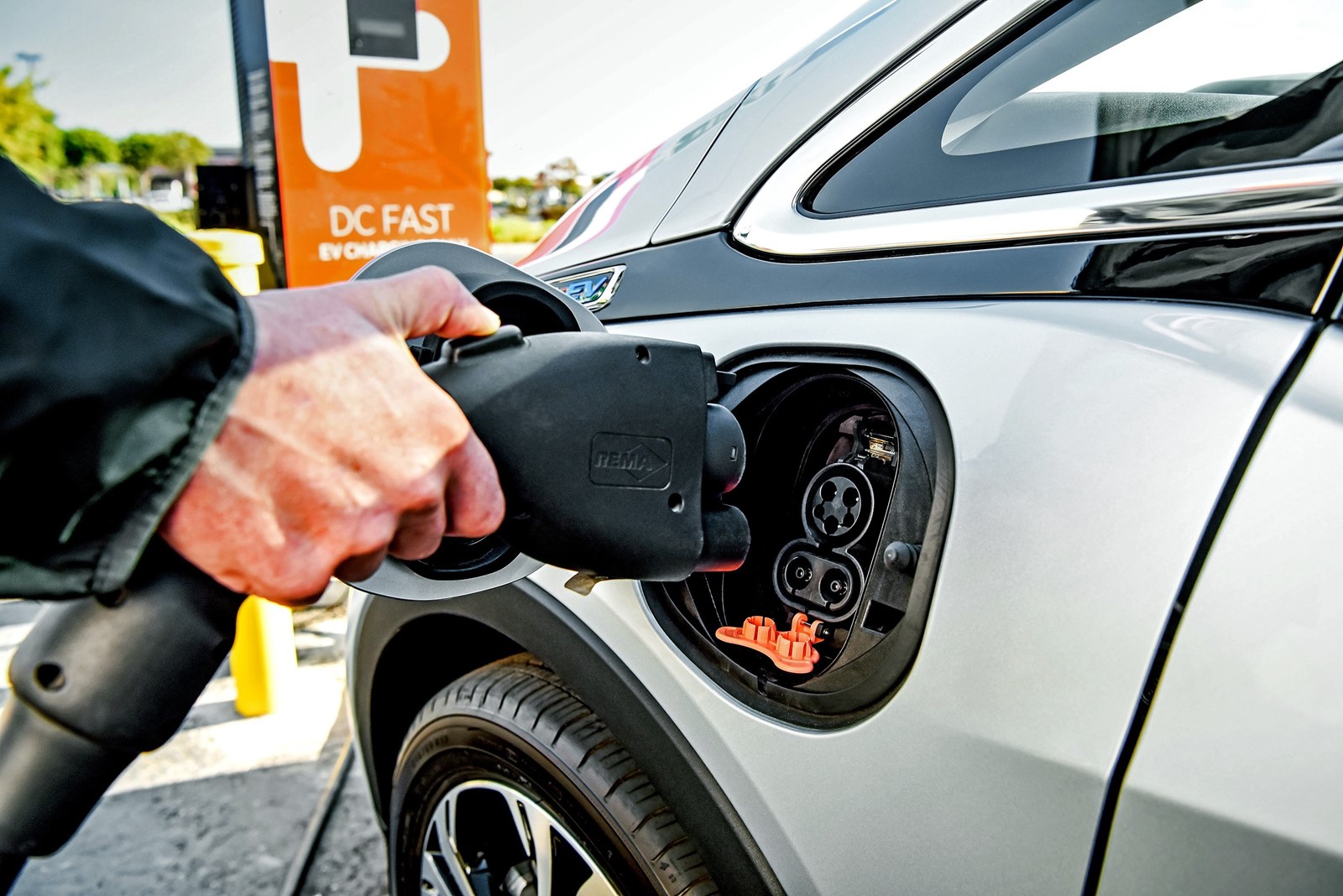


Plug-in cars may still seem few and far between on your daily commute, but a new report says they’re progressing toward broader acceptance. The 40-page study, released this month by the University of Michigan’s Transportation Research Institute, says plug-in and battery-electric cars are increasingly competitive with conventional vehicles.
The institute credits recent advancements in a range of areas, plus future trends in vehicle costs and charging infrastructure, as reasons that plug-in cars such as pure electric vehicles and plug-in hybrids can replace their plug-free counterparts for most U.S. drivers “in the relatively near future.”
Why? Here are five reasons.
Part of that is because plug-in cars aren’t as pricey as they once were. Relative to the average cost of all new cars, plug-ins have dropped. Citing data from Automotive News and Green Car Reports, the institute found the difference in median cost between a conventional model-year 2017 car and a plug-in hybrid is less than $10,000, while the difference between a conventional car and a fully electric car is less than $5,000, and that’s before any state or federal tax credits.
There is also more global competition among automakers. BMW plans to offer a plug-in variant of nearly every model, Mercedes-Benz and Volkswagen are planning dozens of plug-in models in the near future, and automakers from Aston Martin to Volvo are expanding their plug-in portfolios.
“Tesla is somewhat overrepresented in the data in recent years, but we were trying to take a look at the capabilities of all EVs, independent of manufacturer,” Brandon Schoettle, one of the study’s authors, said in an email to Cars.com. “If we looked at performance by make, or by make and model, we would certainly need to (average) those into two values for (Tesla’s) two models.”
On a model-by-model basis, the average range for a 2017 electric cars is 141 miles, a Cars.com analysis shows. But the thrust of the study still applies, as the model-by-model average in 2014 was 98.1 miles. Meanwhile, the battery range for plug-in electric cars has stayed about the same over that span — still 26 miles, by the study’s tally.
A new Nissan Leaf is expected to get over 200 miles in range, which is a target analysts believe will help consumers get over range anxiety, or the fear the plug-in car will run out of charge before reaching its destination. Some Tesla models near 300 miles in range, while the Chevy Bolt has a 238-mile range.
At the same time, batteries are getting cheaper. The cost per kilowatt-hour fell 80 percent between 2009 and 2015, then fell another 20 percent from that in 2016. Several studies expect the cost to fall further in the years to come.
Nowhere does this become more apparent than with charging times. Despite the increased range for EVs, charging times have converged in recent years with plug-in hybrids. The latter group still charges faster, but the institute notes that EVs have improved to less than double the charge time, on average, versus plug-in hybrids, or 4.8 hours compared with 2.8 hours on 240-volt (Level 2) chargers.
More public chargers are coming via a $1.2 billion settlement as part of the Volkswagen diesel emissions cheating scandal.
Put another way: In 2050, the government projects the cost to charge a plug-in car as equivalent to paying less than $1.50 per gallon of gas, while that gallon of gas will run more than $3. Prices are likely to fluctuate less too: Between 2000 and 2017, the price of electricity fluctuated 62 percent, the institute notes. The price of gas, by contrast, fluctuated 253 percent.
 PREVIOUS ARTICLE
