


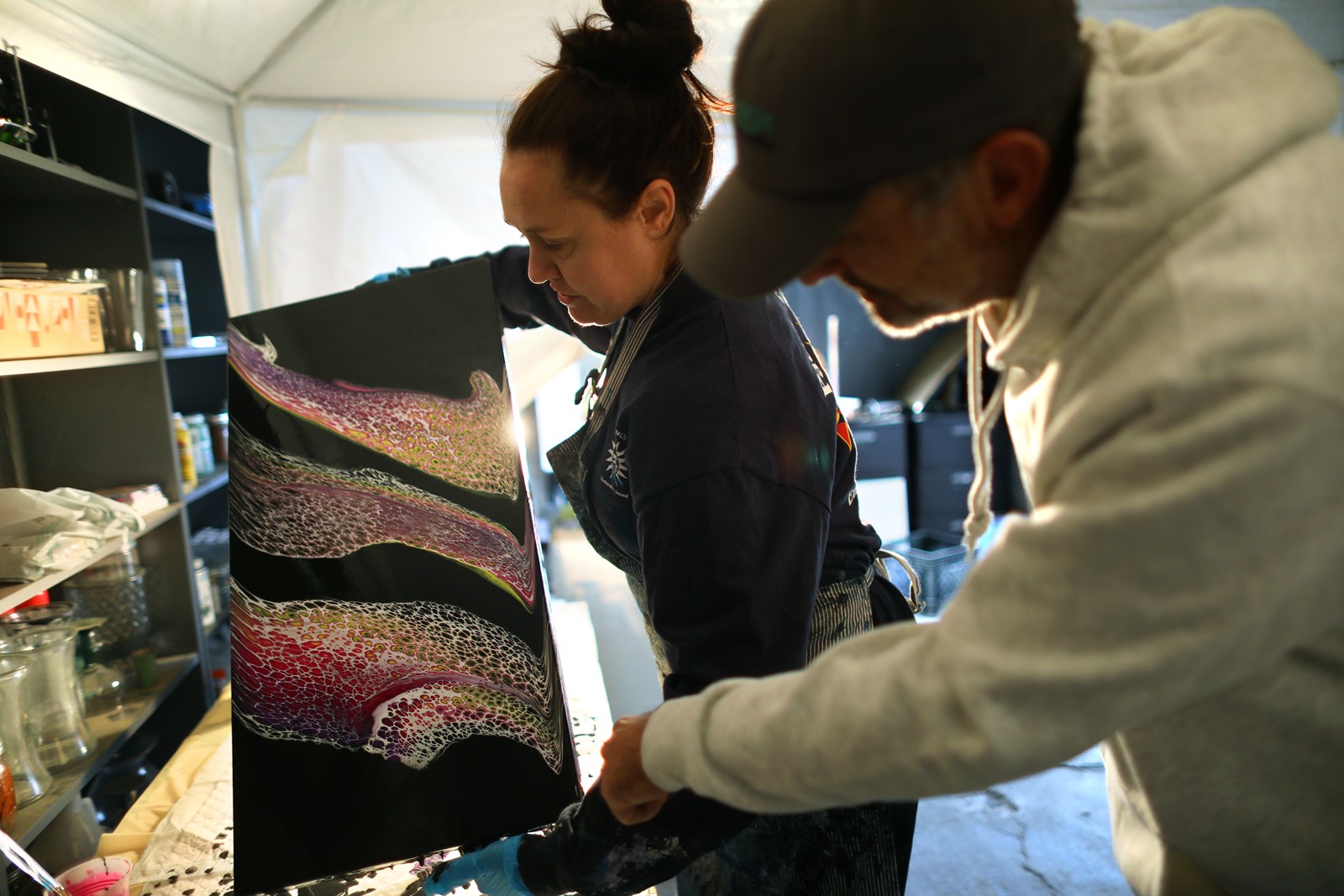


Scott Donovan was in a bad place.
Donovan, 50, had been homeless for about five years, sleeping outside a recycling place in Livermore. He lived day to day, thinking mainly about his safety and what he could eat that day.
That changed when a Livermore police officer who knew Donovan took him to Goodness Village — a tiny home program serving the formerly unhoused population in the Tri-Valley. He moved into his new home there in 2021.
“It was really odd at first because I’m not used to people treating me with respect, caring about me for no reason,” Donovan said. “The village completely changed my life. … It’s just the best place I could ever imagine.”
Now, Donovan is focused not on wondering where his next meal will come from but on building a small art business he started with his partner Tiffany Bailey, 38, who is also a resident at the village. They began painting together at a picnic table on the grounds of Goodness Village before clearing out a small, cramped space inside an old barn on the property and turning it into an art studio.
Goodness Village was born out of program founder and director Kim Curtis’ experience over the past 20 years working with chronically homeless individuals. Curtis specializes in mental health and substance use disorders. The nonprofit works with people with higher levels of need and who require 24-hour support to maintain their housing.
The village’s tiny homes — 28 single-occupancy, climate-controlled units that each run about 160 square feet and have bathrooms and kitchenettes — are on the grounds of the CrossWinds Church. There are no religious requirements to be eligible to live there.
“I’ve always provided services to those that they identify as hardest to serve,” said Curtis, whose last job was at Santa Rita Jail in Dublin. “And it’s never been my experience that they’re the hardest to serve. I find that if you treat people with respect and dignity, and you follow through on what you said you’re going to do … you’re going to get that in return.”
 PREVIOUS ARTICLE
