




If you watched any Olympic event this summer, you likely saw top athletes make whatever they were doing “look easy.” You know what I mean; seasoned athletes can make even the most torturous contests, like boxing and the marathon, appear casual. Of the countless variables necessary to display such cool expertise, one in particular stands out: relaxation.
“You just have to relax,” I heard myself say recently to a fellow freediver who expressed anxiety about an upcoming dive. I’m laughing as I write this because, despite the fact that it’s good advice, it reeks of hypocrisy. The day before I had this conversation, I’d experienced a sublime day of freediving, where my mind was clear, calm and focused. My body and brain felt tranquil throughout the dive session and everything seemed to “click.”
Later, the very day I offered this advice, physical and mental fatigue left me unable to relax in the water. No matter how I calmed my breathing and tried to focus on the present, my mind was a mess as soon as I dove beneath the surface. Lacking focus and confidence, I turned early on every dive.
Relaxation is an art as well as a skill. It takes loads of practice to implement when it’s most needed. Being relatively new to freediving, I’m still learning ways to trick my mind into relaxation before and during a deep dive.
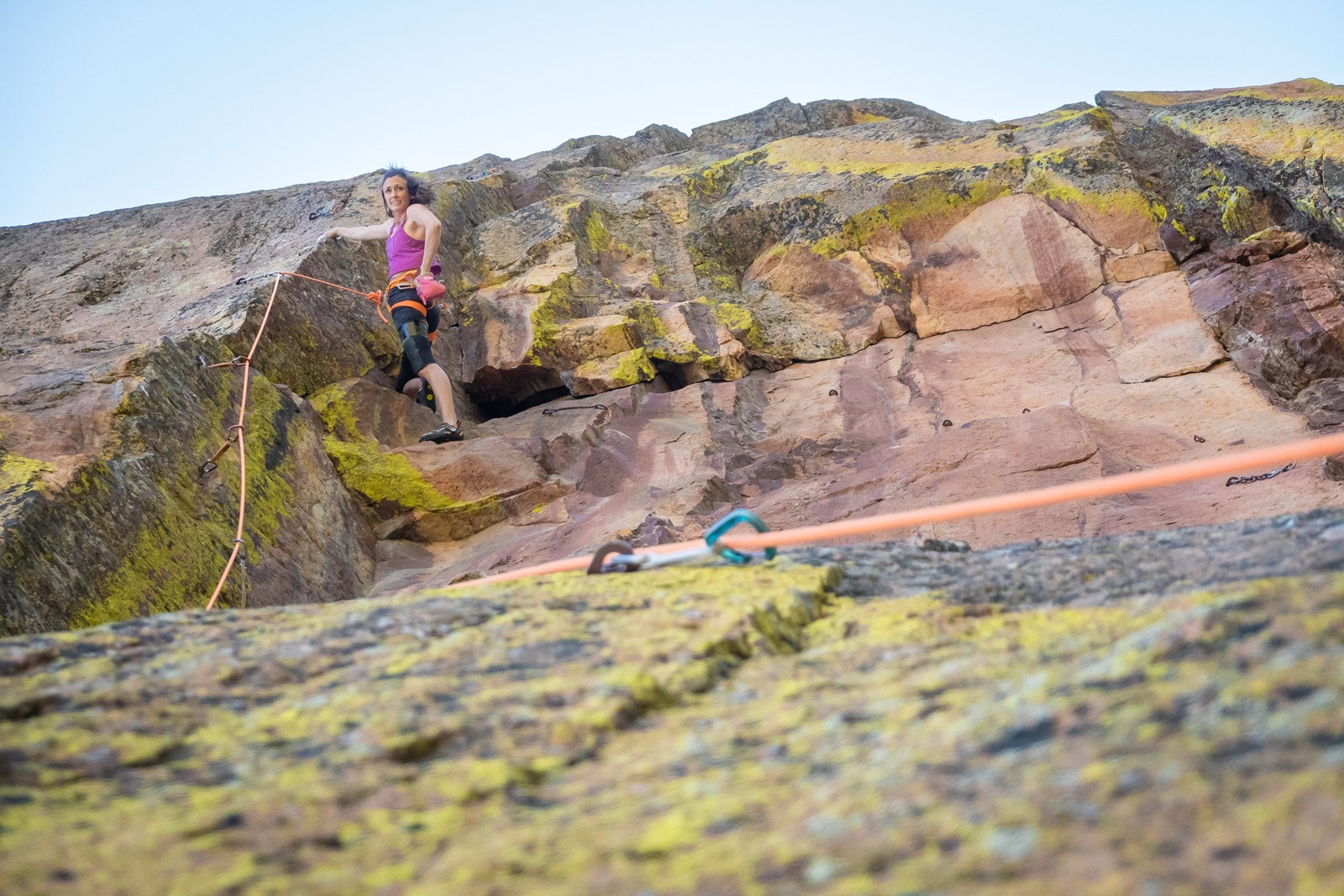
The same goes for climbing, despite decades of experience. I recently completed a two-pitch sport route in the Flatirons called Ciao Bella. Lurking at the top of the extremely thin route is a long, blank-looking section of sandstone with ripples, edges and pockets so small I could only find them all “by Braille;” I hung on the rope and rubbed my open palms and fingertips over the rock searching for irregularities I might be able to grab.
Most days I tried the climb, I held tension in my body, wasting energy with every move. At the insecure crux, I was afraid of falling despite it being safe to do so. I subconsciously over-gripped the tiny holds and my forearms and core became exhausted before I could get through that section.
It wasn’t until I had climbed the route with only one hang on the rope that I finally felt like I could do it without weighting the rope at all. Once I gained that confidence, it was easier for me to relax. In mid-September, after many days of working out the intricacies of movement, I finally climbed it without falling, thanks to that elusive mental state of relaxation even through the most strenuous moves.
The more I experience the importance of relaxation while climbing, the more I realize it’s the key to just about everything.
In my mid-20s, I endured a sort of early life crisis. I drifted away from religion, dropped out of college and got a divorce from my high school sweetheart. Running and climbing were my anchors, but I generally felt lost. At one point during these dark years, I was hanging out at Miguel’s Pizza, a beloved fixture of the Red River Gorge climbing scene in rural Kentucky, having a conversation with a friendly climber who was still living the “dirtbag” life in his 50s. He climbed all the time, lived in his car and ate whatever scraps of food Miguel could offer him at the end of the day.
By contrast, I had a job I enjoyed back in Seattle, and I’d turned my back on the privileges of a loving relationship and a college degree. Yet there I was telling this guy, who didn’t have a home and whose dinner consisted of leftover pizza crust dipped in sauce, how desperate I felt. He looked at me, his crow’s feet growing deeper as he smiled, and said, “Chris, nothing’s worth feeling desperate about.”
He was right. I didn’t fully understand it at the time, but he was absolutely right. How I felt was the result of my own choices (mostly poor ones), yet I had the power to choose otherwise.
I thanked him. Then I took a long, deep breath … and relaxed.
Contact Chris Weidner at cweidner8@gmail.com. Follow him on Instagram @christopherweidner and X @cweidner8.
 PREVIOUS ARTICLE
