


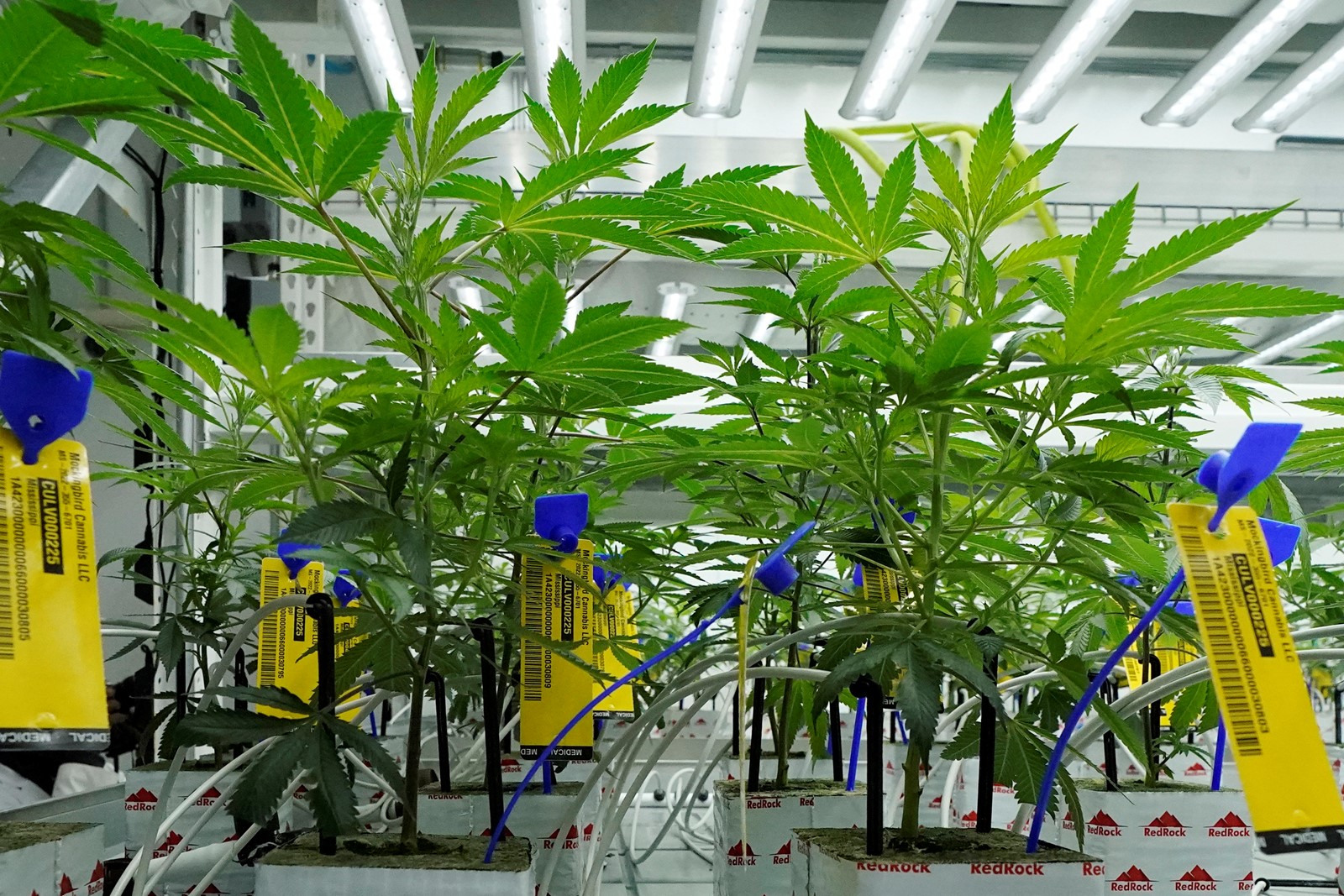


As the U.S. government moves toward reclassifying marijuana as a less dangerous drug, there may be little immediate impact in the dozen states that have not already legalized cannabis for widespread medical or recreational use by adults.
But advocates for marijuana legalization hope a federal regulatory shift could eventually change the minds — and votes — of some state policymakers who have been reluctant to embrace weed.
“It is very common for a state legislator to tell me, ‘Well, I might be able to support this, but ... I’m not going to vote for something that’s illegal under federal law,’” said Matthew Schweich, executive director of the Marijuana Policy Project, which advocates for cannabis legalization.
Although a proposal to reclassify marijuana would not make it legal, “it is a historic and meaningful change at the federal level that I think is going to give many state lawmakers a little less hesitation to support a bill,” Schweich added.
The U.S. Drug Enforcement Administration has proposed to shift marijuana from a “Schedule I” drug, which includes heroin and LSD, to a less tightly regulated “Schedule III” drug, which includes ketamine and some anabolic steroids. Federal rules allow for some medical uses of Schedule III drugs. But the proposed change faces a lengthy regulatory process, which may not be complete until after the presidential election.
In the meantime, the proposed federal change could add fresh arguments for supporters of ballot measures seeking to legalize marijuana. Florida voters will decide on a constitutional amendment allowing recreational cannabis this November. Public votes could also be held in several other states, including South Dakota, where supporters plan to submit signatures Tuesday for a third attempt at legalizing recreational marijuana.
Following two previous failed attempts, a Nebraska group is gathering signatures to get two measures onto this year’s ballot: one to legalize medical marijuana and another to allow private companies to grow and sell it.
In North Dakota, criminal defense attorney Mark Friese is a former police officer who is backing a marijuana legalization ballot initiative. He said the proposed federal reclassification could immensely help this year’s initiative campaign. North Dakota voters rejected legalization measures in 2018 and 2022 but approved medical marijuana in 2016.
“The bottom line is the move is going to allow intelligent, informed discussion about cannabis legislation instead of succumbing to the historical objection that marijuana is a dangerous drug like LSD or black tar heroin,” Friese said.
Others aren’t so sure the reclassification will make a difference.
Jackee Winters, chairperson of an Idaho group backing a ballot initiative to legalize medical marijuana, said it’s tough to get would-be supporters to sign their petition.
“People are literally afraid to sign anything in Idaho that has to do with marijuana,” she said. “They’re afraid the cops will be coming to their house.”
The proposed federal change may have little affect in 24 states that already legalized recreational marijuana for adults, or in an additional 14 states that allow medical marijuana. But advocates hope it could sway opinions in a dozen other states that either outlaw cannabis entirely or have limited access to products with low levels of THC, the chemical that makes people high.
Georgia has allowed patients with certain illnesses and physician approval to consume low-THC cannabis products since 2015. But until last year, there was no legal way to buy them. Eight dispensaries are now selling the products.
The Georgia Board of Pharmacy last year also issued licenses for low-THC products to 23 independent pharmacies, but the federal DEA in November warned pharmacies that dispensing medical marijuana violated federal law.
Dawn Randolph, executive director of the Georgia Pharmacy Association, said a federal reclassification of marijuana could open the way for pharmacists to treat marijuana products “like every other prescription medication.”
In other states, such as Tennessee, elected leaders remain hesitant to back either medical or recreational marijuana. Tennessee Senate Speaker Randy McNally, a Republican, previously said he wouldn’t support changing state law until the federal government reclassifies marijuana.
But after reports about the DEA’s recommended reclassification, McNally still held off on supporting any push to legalize medical marijuana.
Removing marijuana as a Schedule I drug “would only start the conversation in my mind. It would not end it. There would still be many issues to resolve if the downgrade to Schedule III happens as proposed,” he said Thursday.
In Wyoming, a decade of pro-marijuana efforts through ballot initiatives and legislation has gotten nowhere. Gov. Mark Gordon, a Republican, has been ambivalent about legalizing medical marijuana and opposes legal recreational pot. The GOP-led Legislature didn’t even debate the latest bill to decriminalize marijuana and legalize medical marijuana.
“Resistance will be a lot less palpable,” legalization advocate Apollo Pazell said.
 PREVIOUS ARTICLE
