


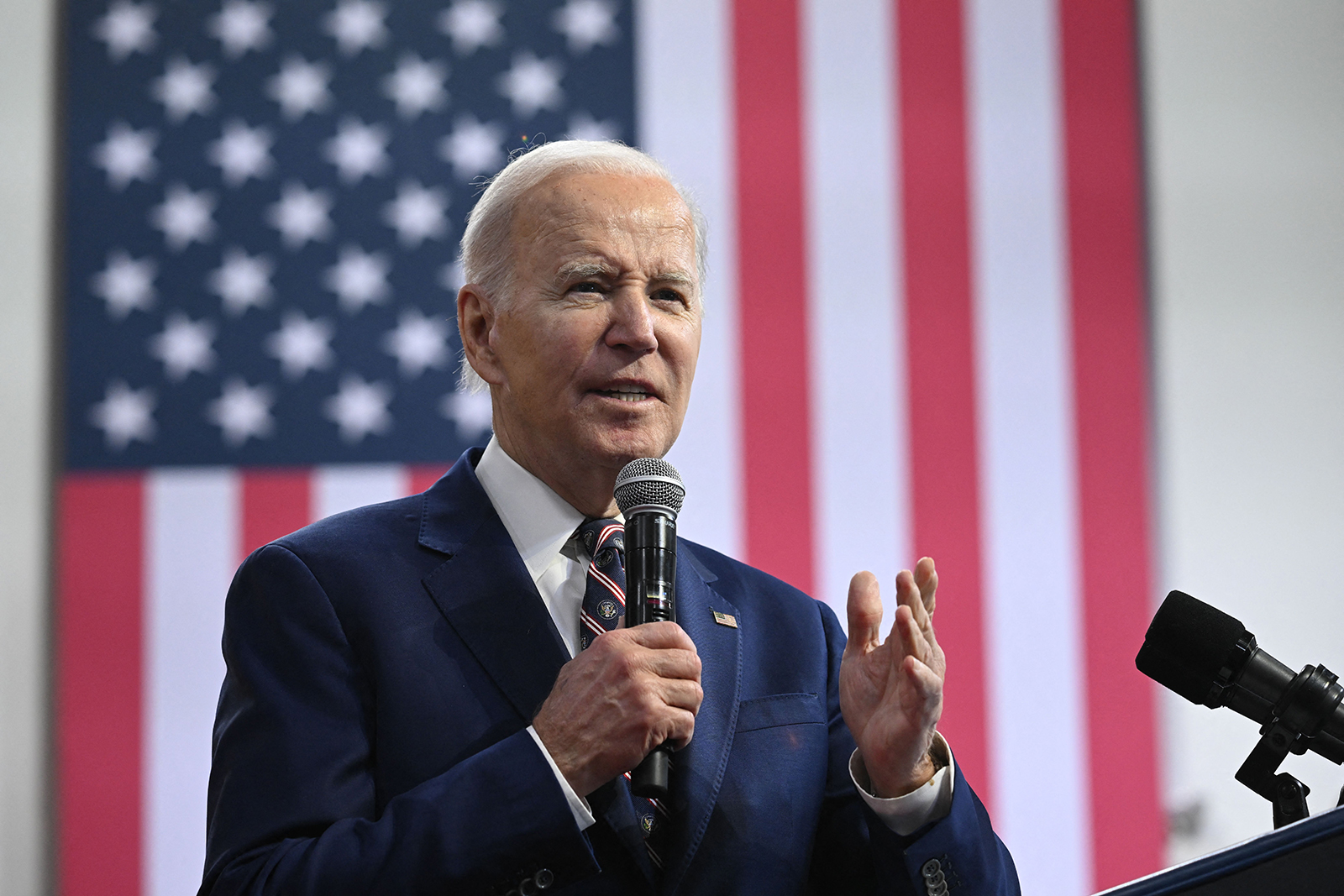


WASHINGTON — President Joe Biden was expected to secure the 235th judicial confirmation of his presidency, an accomplishment that exceeds his predecessor’s total by one after Democrats put extra emphasis on the federal courts after Donald Trump’s far-reaching first term when he filled three seats to the Supreme Court.
Senate Majority Leader Chuck Schumer, D-N.Y., has teed up votes on two potential California district judges, likely to be the last judicial confirmations this year before Congress adjourns and makes way for a new, Republican-led Senate. He said he hoped to complete the votes by the end of Friday.
The first confirmation will tie Trump’s number, the second will break it. Come next year, Republicans will look to boost Trump’s already considerable influence on the makeup of the federal judiciary in his second term.
Biden and Senate Democrats placed particular focus on adding women, minorities and public defenders to the judicial rank. About two-thirds of Biden’s appointees are women and a majority of appointees are people of color. The most notable appointee was Supreme Court Justice Ketanji Brown Jackson, the first African American woman to serve on the nation’s highest court.
“Prior to our effort, the number of women on the federal bench was really diminished. It was overwhelmingly white males,” said Illinois Sen. Dick Durbin, the Democratic chairman of the Senate Judiciary Committee.
Biden also placed an emphasis on bringing more civil rights lawyers, public defenders and labor rights lawyers to expand the professional backgrounds of the federal judiciary. More than 45 appointees are public defenders and more than two dozen served as civil rights lawyers.
While Biden is expected to get more district judges confirmed than Trump did, he had fewer higher-tier circuit court appointments than Trump — 45 compared to 54. And he got one Supreme Court appointment compared to three for Trump. Republicans, much to Democrats’ frustration, filled Justice Ruth Bader Ginsburg’s seat on the court the week before the 2020 presidential election. Ginsburg had passed away in September.
Democrats also faced the challenge of confirming nominees during two years of a 50-50 Senate. Rarely a week went by in the current Congress when Schumer did not tee up votes on a judicial confirmation as liberal groups urged Democrats to show the same kind of urgency on judges that Republicans exhibited under Trump.
Sen. Charles Grassley, R-Iowa and the next chairman of the Senate Judiciary Committee, said Democrats showed newfound resolve on judicial confirmations.
“They learned a lesson from the first Trump administration,” Grassley said. “Paying attention to the number of judges you get and the type of judges you put on the court is worth it.”
Part of the urgency from Democrats came as they watched the nation’s highest court overturn abortion protections, eliminate affirmative action in higher education and weaken the federal government’s ability to protect the environment, public health and workplace safety through regulations. The cases showed that the balance of power in Washington extends to the judicial branch.
Trump will inherit nearly three dozen judicial vacancies, but that number is expected to rise because of Republican-appointed judges who held off on retirement in hopes that a Republican would return to office and pick their replacement.
Sen. Richard Blumenthal, D-Conn., acknowledged that the sense of accomplishment for Democrats is muted somewhat, knowing that Trump will have another term to continue shaping the federal judiciary.
Grassley promised that he’ll work to top Biden’s number.
“Let me assure you, by January 20th of 2029, Trump will be bragging about getting 240 judges,” he said.
 PREVIOUS ARTICLE
