




Rhonda Dennis was ready to leave her corporate job. She’d been in the field for 20 years and the benefits were decent, so decent the gig came with six weeks of paid vacation. But she could feel the need for change bubbling to the surface. Throwing caution to the wind, Dennis decided to quit and chase her passion for cooking. What came next: R&R Breakfast Spot in Chino.
Dennis had no professional experience in a kitchen outside of cooking for her family, but she felt things were going well. She scoped out a spot that felt perfect for what she and her team envisioned. At the first property tour, Dennis prayed at the establishment’s doorstep, hoping she and her family would get approved to lease it. Those prayers seemed to be answered as positively as she had hoped for.
By January 2020, they were ready for business, and while they expected some turbulence in their first days, the last thing on the family’s mind was a global pandemic. By March 2020, the coronavirus forced the closure of thousands of restaurants nationwide, causing a massive disruption in the hospitality industry that would directly affect the family business. Within a few weeks, Dennis’ father lost his life to COVID-19.
“It was really hard for us,” Dennis said in a phone interview. “We closed until we got the first PPE loan, and we closed for a day when my dad died. I miss him terribly, but this restaurant is an homage to him. My dad was very big on breakfast. I used to eat breakfast for dinner. He consistently would make me breakfast in the mornings, even as an adult.”
According to a report by the House Committee on Small Business, Black businesses were disproportionately affected by the pandemic. The report found that between February and April 2020, Black business ownership dropped more than 40%, the most significant decline for any ethnic group.
Part of helping restaurants get back on their feet was ensuring the community and its neighbors knew of their existence. After the murder of George Floyd by Minneapolis police Officer Derek Chauvin, Dennis said, the restaurant experienced a significant increase in foot traffic due to online campaigns by activists pushing to support local Black businesses, who then referenced R&R Breakfast Spot.
“We had so many people that were for Black businesses, and several of those people hadn’t even had us before,” she said. “I’d love for (Floyd) to have his life back, but it was one of the things that I felt was almost sacrificial because he did so much for the Black community. It wasn’t just me who had this experience. It was a lot of other businesses.”
While activists pushed for support for Black communities and businesses online in 2020, organizations like Black Restaurant Week LLC had experience driving similar marketing strategies that boosted each eatery’s visibility.
Warren Luckett founded Black Restaurant Week in 2016 in Houston, focusing on celebrating the African diaspora’s cuisine for two weeks across the city. Since then, it has expanded to several regions, including Los Angeles and surrounding metro areas. Aug. 23 through Sept. 1, the organization will help showcase Southern California businesses that will also be offering discounted menu items, including those from African, Caribbean and African American traditions and beyond, including vegan specialties, pescatarian options and various chicken dishes.
“During the pandemic, we realized that it was going to be so important for us to support these businesses, not just during the two-week campaigns but truly throughout the year,” Luckett said in a phone interview. “In 2020, we established Feed the Soul Foundation, our business development arm that provides restaurants with grants and consultants that allow them to improve their human resources, hiring practices and operational procedures. It also helps them create new websites and menus.”
New challenges have emerged from the post-COVID economy including inflation, higher produce costs and supply chain disruptions. Luckett said labor costs increased further for restaurants in California after state lawmakers increased the minimum wage to $20 an hour for fast-food workers.
“It’s been a really hard time for restaurants to retain quality staffing with a lot of the traditional workforce who received different stimulators and opportunities throughout the pandemic,” Luckett said. “They never returned afterward, so there’s been a shortage of that quality of labor. Restaurants have to pay much more for their labor, and even as they do, it’s still hard for them to retain quality staff. Without quality staff, those high labor costs eat into their margins. It’s been harder on these business owners.”
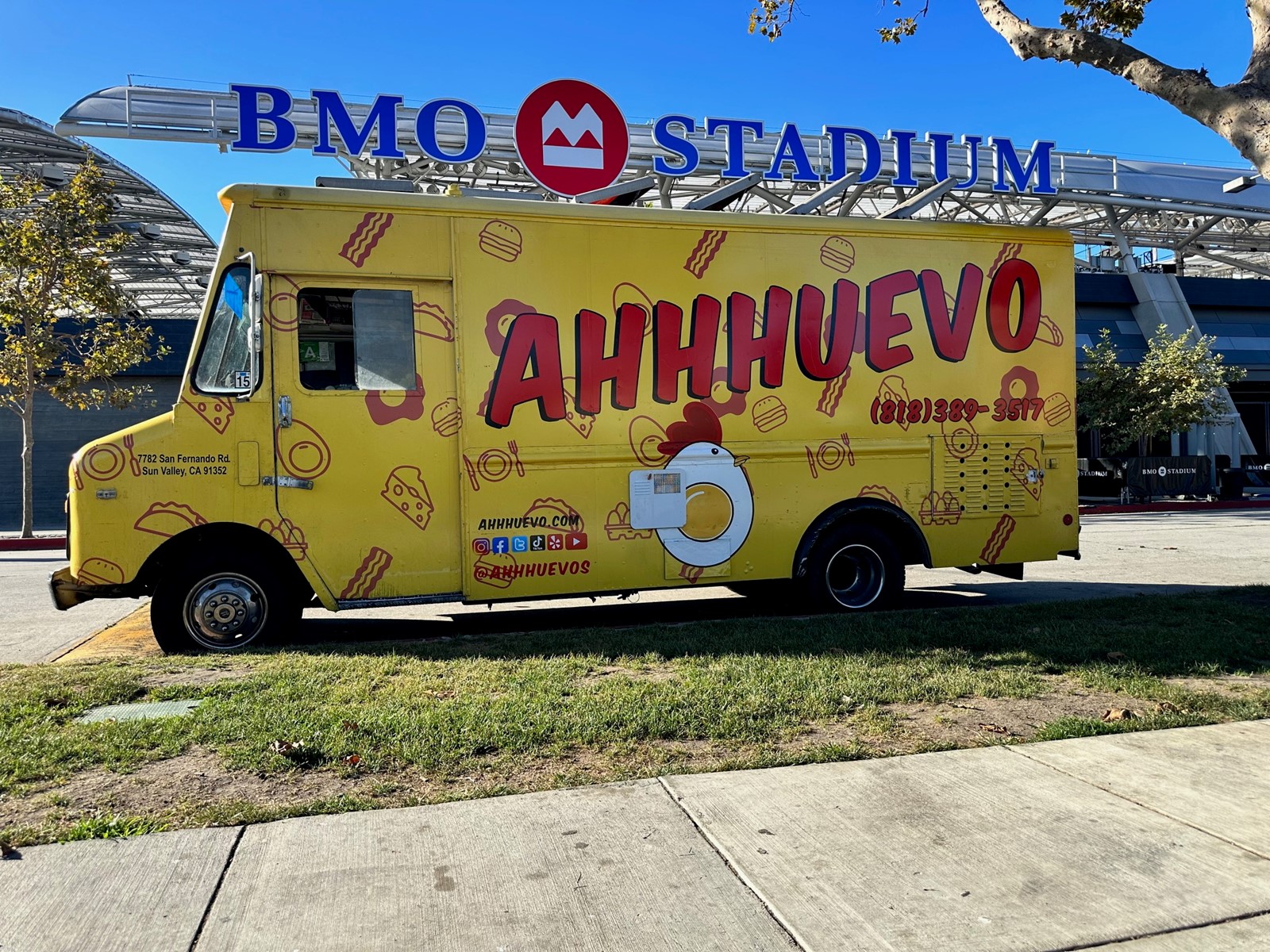
Moe Adams, owner of the AhhHuevo food truck, which specializes in breakfast and brunch egg dishes, works to ensure he’s ready to adapt his business to the ongoing economic turbulence. That includes learning Spanish to communicate with his Spanish-speaking clientele in Los Angeles, where he’s operated since 2017, explaining the rationale of menu prices to his customers and ensuring he’s ahead of any mandatory minimum wage laws.
“What I like to do is to make sure that we take care of everybody before it becomes mandatory,” Adams said in a phone interview. “People are trying to live, and we make sure everybody feels appreciated. We’ve already been paying above that just to ensure everybody’s happy. We want to pay a wage that reflects the job we’re doing and shows each individual that we want to continue to work with them.”
Adams said one of the benefits of working with Black Restaurant Week over the past three years is the networking events the organization hosts, where participants work to ensure Black businesses can access grants and learn each other’s best practices.
Leslie Jones, co-owner of 1010 Wine & Events in Inglewood, which specializes in serving a range of vintages from Black-owned companies worldwide, said the wine bar opened in August 2021 and served as the kickoff party for Black Restaurant Week that year. In a phone interview, she said the coinciding events showed her what an asset it was to have the organization advocating on their behalf.
“A lot of customers have come in because they were on the Black Restaurant Week website, Instagram page or other social media pages and discovered us through there,” Jones said. “They also do a really good job of building a network of Black restaurant owners in whatever city they’re in. I’m very familiar with their restaurants, but owning a restaurant, you’re not necessarily able to go out to them that often because you’re working while they’re open. So to be able to step away and meet the people with restaurants that I love and look up to is a great system.”
Despite the exposure and networking boosts that Black Restaurant Week provides, some businesses, such as Dennis’, are still trying to keep their doors open in the midst of a volatile economy for restaurants.
Dennis said the family establishment’s heating and cooling systems, fridge and icemaker went out for three consecutive days, which cost upward of $10,000 to fix. She’s since applied for help from the Feed the Soul Foundation, which has been assisting her financially and offering guidance on running a successful business.
“By next month, I have to figure out whether R&R Breakfast Spot will still exist,” Dennis said. “It’s a very fulfilling journey because I love having a restaurant and building memories for my community. We have so many people who come out and support us and make it a goal to do that. They come to celebrate everything from family events to birthdays and sobriety. That’s what keeps me going.”
For more information on Black Restaurant Week, visit blackrestaurantweeks.com.
 PREVIOUS ARTICLE

