




The group of 15 backcountry skiers would have had only seconds to process the mass of snow heading toward them — traveling at as much as 100 mph — after one skier spotted it and shouted “Avalanche!”
When the collapsing slab of snow calmed, those left unburied would have to scramble to locate and aid the rest of their companions who had been buried in the snow. Last week’s avalanche near Lake Tahoe was the deadliest in the state’s history, killing nine people.
The ensuing rescue attempts would have been harrowing, experts said, as those on the surface typically only have about 10 minutes to locate and dig out avalanche survivors before they run out of oxygen.
The survivors on the surface would first have to check for further avalanche danger. Then they would call for help using a cell phone or satellite communication device. And then they would begin their search for the others.
“This is all (in) seconds,” said Robert Rice, a UC Merced associate professor and former avalanche forecaster.
An initial avalanche occurrence report from the Sierra Avalanche Center confirmed that three of the survivors of last week’s deadly avalanche were buried before being dug out by their fellow skiers in the moments after the disaster.
The three would have to switch their avalanche beacons to “receive” mode to attempt to track down those buried. The devices provide directional arrows and estimated distances to help responders find an approximate location of others wearing beacons nearby. Rescuers can then begin using collapsible probe poles to pinpoint a more precise location.
Once a person is thought to be located, digging can take minutes to an hour, depending on the depth of the snow, experts said. With 12 skiers buried under the snow and only three on the surface, it would have been highly unlikely that all 12 could be located alive, according to experts.
“It’s really difficult to even get one person out of the snow in 10 minutes,” said Wendy Antibus, education coordinator for the Sierra Avalanche Center.
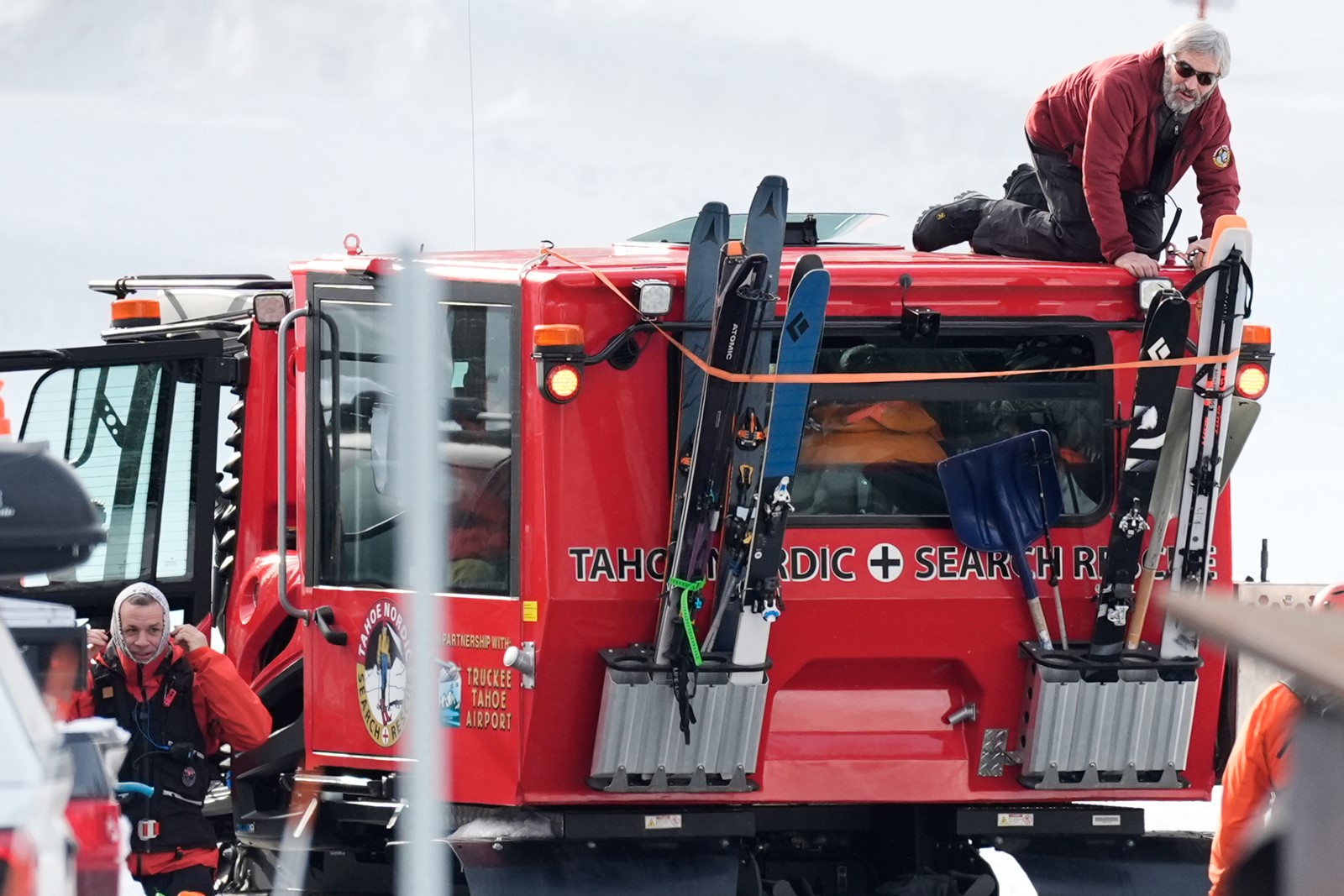
The group of backcountry skiers and their guides had been making its way back from a three-day trip to the remote Frog Lake huts on Feb. 17 when they were struck by the avalanche around 11:30 a.m. Amid near-whiteout conditions that evening, rescuers made it to the scene to find the survivors — the three unburied along with the three that group had rescued; the survivors had then been able to locate three of their deceased companions. The survivors were transported off the mountain, but recovery operations for those left on the mountain were delayed for several days due to continuing severe weather and avalanche danger.
The bodies of the nine deceased skiers were recovered by rescue teams on Friday and Saturday after avalanche mitigation. The nine victims included six women who were part of a group of friends described by their families as skilled skiers who were “connected through the love of the outdoors.” The three other victims were guides with Blackbird Mountain Guides, the company leading the trip.
Based on data collected in recent days once weather conditions allowed responders to reach the area, the report also confirmed that the 400-foot slide was a soft-slab avalanche. Rice said such an event — typically made of more powdery snow, often recently fallen — could have either involved the new snow itself or a weaker layer underneath failing and releasing the new snow on top.
The slope where the avalanche occurred was located beneath Perry’s Peak, a steep slope east of Castle Peak, dotted with trees except for the gap of white face where the avalanche began, according to the report.
The avalanche that hit the party was rated by the center at 2.5 on the classification scale for destructive potential, with a 2-class slide capable of burying people, and a 3-class avalanche capable of smashing trees or destroying a small building.
“This is a small enough area, and probably the visibility is bad that day,” Antibus said. “I doubt they had much time to react. … Maybe they heard a noise, and then all of a sudden there’s an avalanche there.”
For those buried, the first 10 to 15 minutes are the most critical for survival.
“You may just die of trauma before you ever stop moving,” said Andy Anderson, an avalanche forecaster with the Tahoe National Forest Sierra Avalanche Center. “But if you survive the ride, then you have some air, and as you breathe, you create a mask of ice around your face, which then limits the amount of air you have, and you end up rebreathing carbon dioxide and asphyxiating.”
Once victims are dug out, responders must provide basic first aid, Antibus said — checking for injuries, helping with breathing difficulties due to inhaled snow and ensuring they are as warm as possible to avoid hypothermia.
The digging itself poses its own challenge because the avalanche snow, some of which may melt due to the friction of movement, would refreeze into ice once it comes to a stop, Rice said. The collapsible shovels used by backcountry skiers are sturdy but digging a person out “can be pretty exhausting,” Antibus said.
The basic exams for backcountry guides in the United States require that they can locate and dig out two transceivers in seven minutes, Antibus said, but there are not set standards for skiers on guided trips. As skilled backcountry skiers, most of those in the group caught in the avalanche would have likely taken avalanche education. Most guided trips practice avalanche rescue early on, as well.
Much of the known information about conditions in the area comes from forecasters who went out to the scene alongside rescue workers, but even that was not possible until several days after the avalanche, Anderson said. Further details were provided by rescue team members.
“We still do not have all the information that we hope to get,” Anderson said. “Some of it we’ll never get just because of the conditions and the circumstances surrounding that event.”
The avalanche is still under investigation, with both the Nevada County Sheriff’s Office and the state’s Division of Occupational Safety and Health running separate probes. Due to the weather conditions, the forecasters were not able to collect any information on the pit profile of the avalanche, which allows them to view the snowpack layers making up the avalanche’s slab and to determine which layers failed, Anderson said. They also have no photos of the avalanche area taken before it was covered with fresh snow, and have not yet spoken with any of the survivors.
“It kept storming for a few days after the avalanche, and so all of that stuff has been buried by new snow and no longer exists, basically,” he said. “We can’t tell which layer broke — it’s just filled back in with snow.”
The buried evidence shows the power of nature to create new conditions in the blink of an eye.
“We may not ever get that detail of information,” he added, “simply because the storm erased it.”

