




A proposed 300-megawatt battery energy storage project near Vacaville drew more than five hours of public comment Tuesday, with local officials, residents and energy industry representatives offering sharply different views on whether the facility belongs on agricultural land near the city.
The California Energy Commission heard testimony on the proposed Corby Battery Energy Storage System (BESS) project, proposed for about 40 acres of unincorporated land near Kilkenny and Byrnes roads, approximately 250 feet southeast of Vacaville’s jurisdictional boundary and about five miles northeast of downtown.
CEC staff has recommended certification of the project, finding that its potential environmental impacts and operational risks — including noise, fire hazards and containment — can be managed or mitigated within regulatory standards during normal operations. The project is also expected to provide economic benefits and support electric-grid reliability, the staff noted.
But many of the hundreds of residents who attended Tuesday took turns urging the commission to reject the project, citing concerns about lithium-ion battery fires, potential groundwater contamination, noise, loss of prime agricultural land and the lack of permanent jobs the facility would provide.
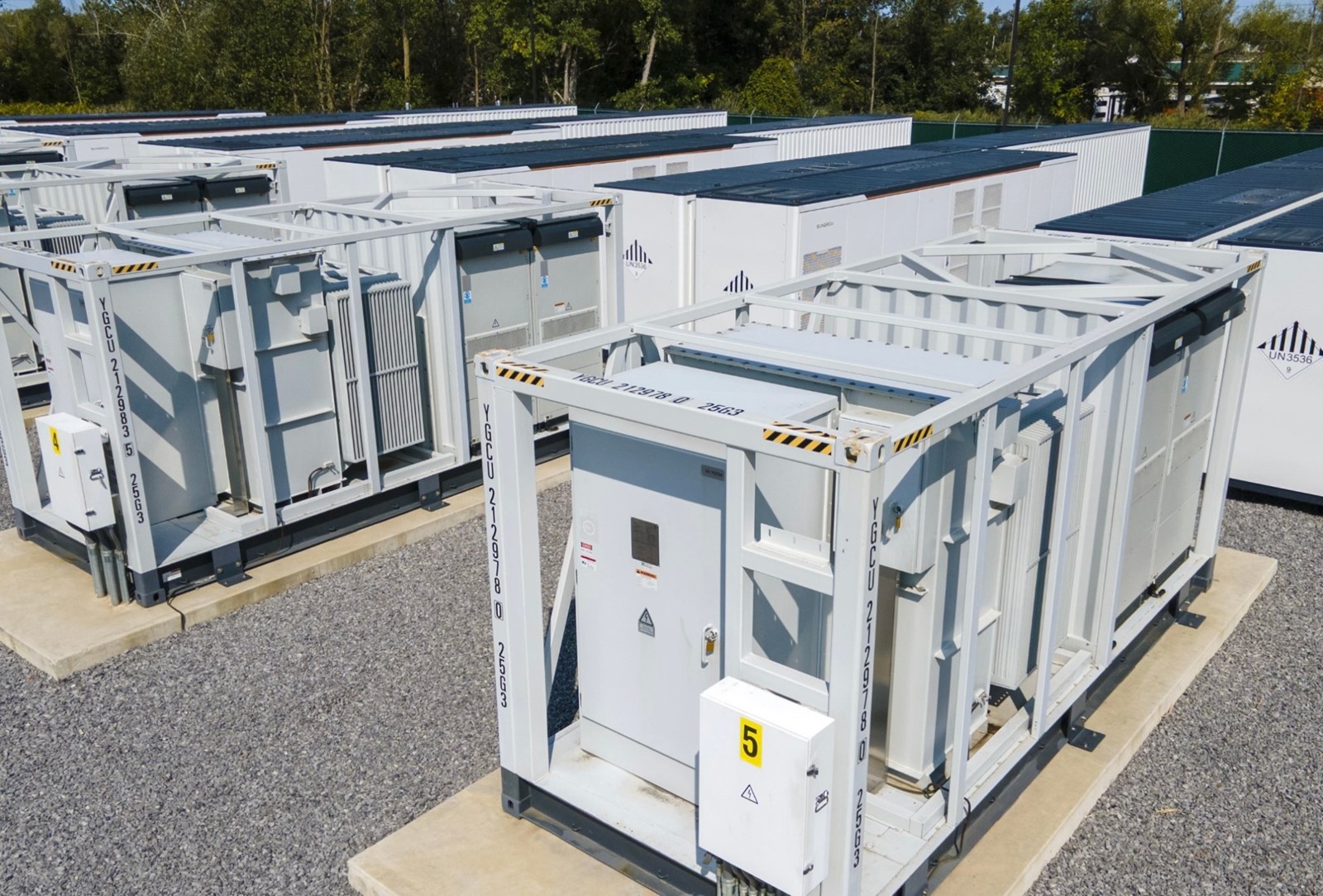
The proposed facility would be capable of storing up to 1,200 megawatt-hours of electricity. It would include batteries, a project substation, inverters, fencing, a sound barrier, roads, drainage facilities and other infrastructure.
Vacaville Mayor John Carli was the first local official to address the commission. He emphasized that the city is not opposed to battery energy storage as a technology, but argued that the Corby site is inappropriate because of its location and the city’s plans for future growth.
“It’s important that you understand as you consider the importance of this moment,” Carli said. “The City of Vacaville is not against battery energy storage systems at the grid scale.”
Carli pointed to the city’s proximity to the Vaca-Dixon substation and said Vacaville has previously considered land for a battery storage facility. But he said the proposed Corby site is located in an area that the city and county have identified for future development.
He noted that Vacaville is considering residential annexation of hundreds of acres in its northeast and east-of-Liesure Town growth areas, potentially placing the proposed project in the path of future residential and commercial development.
“So it isn’t just prime ag land,” Carli said. “It’s residential and commercial areas.”
Solano County Supervisor Mitch Mashburn also spoke against the project’s proposed location, while stressing that the county recognizes the importance of battery storage to the electrical grid.
The county has adopted an ordinance governing where battery energy storage systems can be located and how they should be regulated, Mashburn said. The proposed Corby site does not meet those local requirements.
He also cited Measure T, the county’s voter-approved orderly growth regulation.
“We recognize the Legislature has given the CEC authority to the opt-in process to supersede local land use authority,” Mashburn said. “However, that does not erase the county’s general plan.”
Vacaville Vice Mayor Mike Silva similarly urged the commission to honor local land-use decisions.
Silva, who said his family includes fruit pickers and people who have worked the land, described agricultural land as a precious family and community legacy.
“Solano County went through a long, deliberate process to evaluate the safety and placement of battery energy storage systems,” he said.
Vacaville City Councilmember Roy Stockton distinguished opposing battery storage and opposing its proposed location.
“Let me make one thing very clear: I am not opposed to battery energy storage,” Stockton said. “I am opposed to putting large-scale lithium-ion battery facilities in locations where consequences of a catastrophic failure could unnecessarily put residents and first responders at risk.”
“There is the difference between opposing technology and demanding that we locate that technology responsibly,” he added.
Residents who spoke during the hearing raised similar concerns.Neil Serr of Solano County questioned the state’s authority to override local decisions supported by voters and local ordinances.
“If a measure approved by approximately 70% of the voters, together with duly adopted city and county ordinances, says that certain uses should not occur in particular locations, how does the state of California justify overriding those decisions?” Serr asked.
Others focused on the potential consequences of a battery fire.
Savannah Haas, a Dixon resident who said she works as an ecosystem scientist and holds a doctorate in soils and biogeochemistry, raised concerns about the project’s location over the Solano groundwater subbasin and the Pudah fan aquifer.
She said the shallow aquifer could be vulnerable to chemical contamination and noted that Vacaville and Dixon rely on groundwater from the area, as do local farmers, ranchers and landowners.
Haas also pointed to the project’s proximity to Kaiser Hospital and Lonza, a major pharmaceutical manufacturing facility.
“If there is a fire at the site,” she said, smoke plumes could reach Dixon within an hour.
Darlene Conner told commissioners she was speaking as a mother and grandmother and that her daughter’s property is directly across from the proposed site.
She urged commissioners to consider locating the facility in an industrial area or using a different battery technology.
“The people living beside the Corby should not have to absorb the unnecessary risk simply because this particular parcel was available to the developer,” Conner said.
Dee Cole, whose family home is across from the proposed project, said residents would have to live with the consequences of the commission’s decision long after Tuesday’s hearing ended.
“This is a rural agricultural community,” Cole said. “It is where families live, where people have invested their savings, raised their children and built their lives.”
Sarah Dunn, speaking on behalf of Keep Vacaville Safe, asked the commission to reject the environmental impact report, raising concerns about what she described as errors in the report’s calculations involving metal deposition.
Michael Geller, who owns the historic Kilkenny House with his wife, also opposed the project, citing its agricultural zoning, the area’s reliance on wells and the potential for groundwater contamination in the event of a thermal runaway.
The hearing was not uniformly opposed to Corby.
Kara Martinson, representing the California Energy Storage Alliance and American Clean Power, spoke in support of the project and the broader need for battery storage.
“Battery storage is an essential part of the grid,” Martinson said, noting that more than 300 battery energy storage sites are operating in California.
She said projects such as Corby can help provide reliable electricity during periods of extreme heat, when demand is high, while allowing more renewable energy to be used and reducing reliance on fossil fuels.
Industry representatives also pointed to the CEC staff assessment, which found the project could strengthen grid reliability, support the state’s clean-energy goals and provide economic benefits to Solano County.
The project’s supporters said it would store electricity when supplies are plentiful and make that energy available when demand rises. They also cited construction jobs, investment and additional tax revenue.
The CEC staff assessment included reviews of environmental impacts, public health and worker safety, fire protection, emergency preparedness and compliance with state and local requirements.
If approved, the project would be subject to safety requirements including NFPA 855, a national standard governing the installation of stationary energy storage systems, as well as emergency response planning.
The commission did not make a final decision Tuesday.
Written comments on the project will be accepted until 4 p.m. Sept. 14. An updated staff assessment and the executive director’s recommendations are expected to be filed by Oct. 19.
The CEC is expected to consider the project’s opt-in application at a business meeting scheduled for Nov. 18.
 PREVIOUS ARTICLE
