


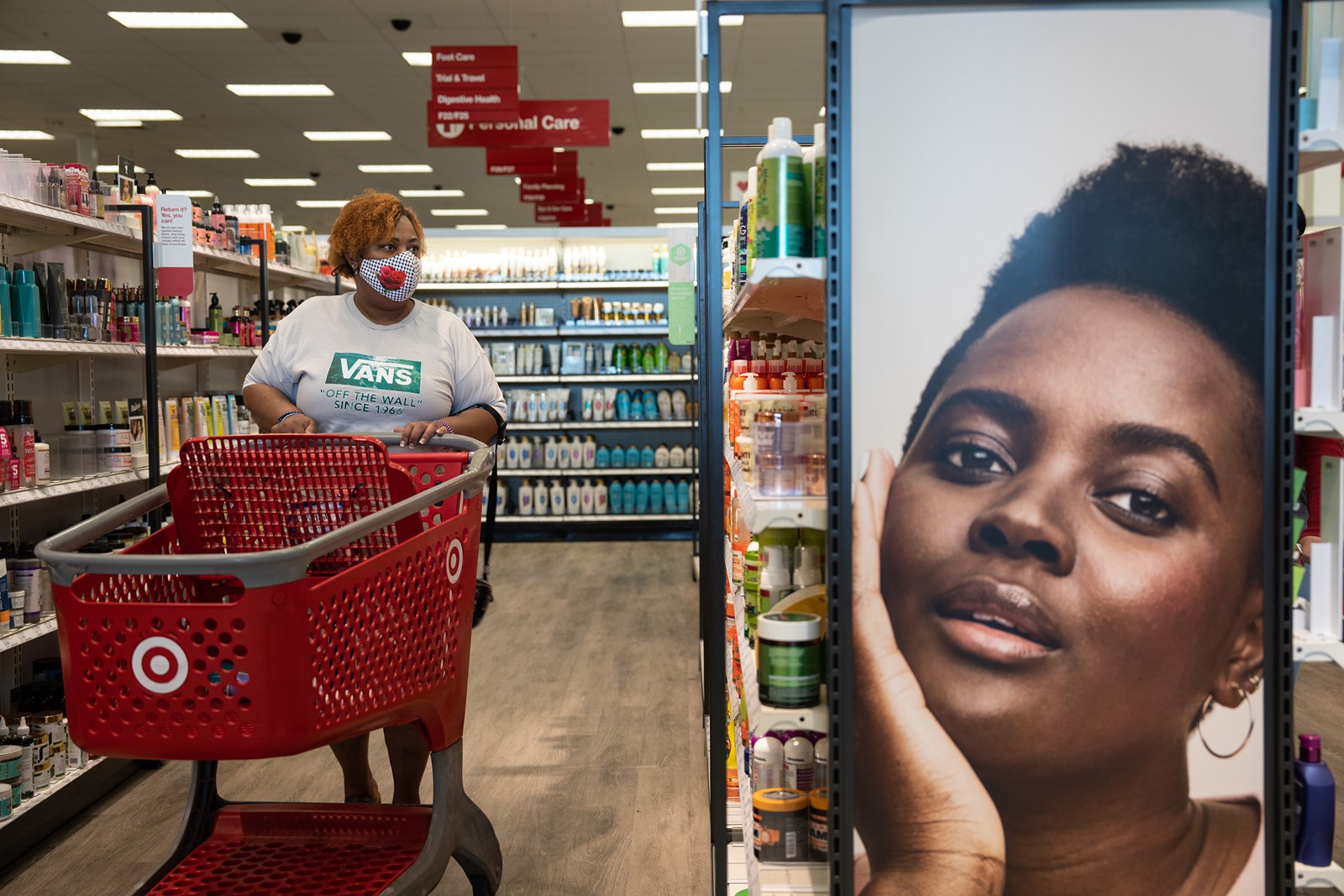


MINNEAPOLIS — Target Corp. earmarked billions of dollars for Black businesses and communities to address racial equity issues after the police killing of George Floyd two years ago.
The Minneapolis-based retailer made strides in that time, but a review of its benchmarks shows it still has a way to go to meet all of its goals.
Target increased its share of Black company officers, added more year-round products by Black entrepreneurs and expanded its base of contractors. While some experts suggest retailers’ interest in diversity is declining, Target executives vow to stay the course.
“You would never have a financial office that didn’t set goals,” said Kiera Fernandez, Target’s chief diversity and inclusion officer. “We have to have that same mindset when we think of diversity, equity and inclusion.”
Target leaders say they had already begun work to better serve Black workers and customers when Floyd’s murder on May 25, 2020, led to more calls for action about ending the unfair treatment of Black people in America.
In 2020, Target formed the Racial Equity Action and Change committee to spearhead some new visions, such as creating retail environments in which Black customers felt welcomed and finding ways to help grow the prosperity of Black communities.
Target has since added more tangible benchmarks and financial commitments, including promising to contribute $100 million through 2025 to Black-led organizations; spend more than $2 billion on Black-owned businesses, including marketing agencies and construction companies, by the end of 2025; and spend 5% of Target’s annual media budget on Black-owned media this year.
Target is not the only company to focus more on diversity and equity since Floyd’s death.
Retailers including Nordstrom, Sephora, Macy’s, Ulta Beauty and the Gap, have accepted the Fifteen Percent Pledge, which was launched in 2020, to advocate for Black businesses to make up 15% of retailers’ shelf space.
“The pandemic mixed with social changes has made many consumers demand more from their retailers,” said Kim Sovell, a marketing professor at the University of St. Thomas. “I’m not talking about good prices. I’m talking about thoughtfulness.”
According to McKinsey & Co., nearly half of consumers they recently surveyed believe companies should pledge to support Black-owned brands and vendors with a larger percentage of younger consumers, including Gen Zers and millennials, thinking that’s important.
Also, Black consumers have hundreds of billions of dollars of buying power that they are willing to redirect, research shows.
At Target, one of the REACH committee’s big priorities has been to increase the variety of products by Black founders. Target offers more than 100 Black-owned items,. Target now aims to sell more than 500 products from Black-owned businesses by the end of 2025.
 PREVIOUS ARTICLE
