


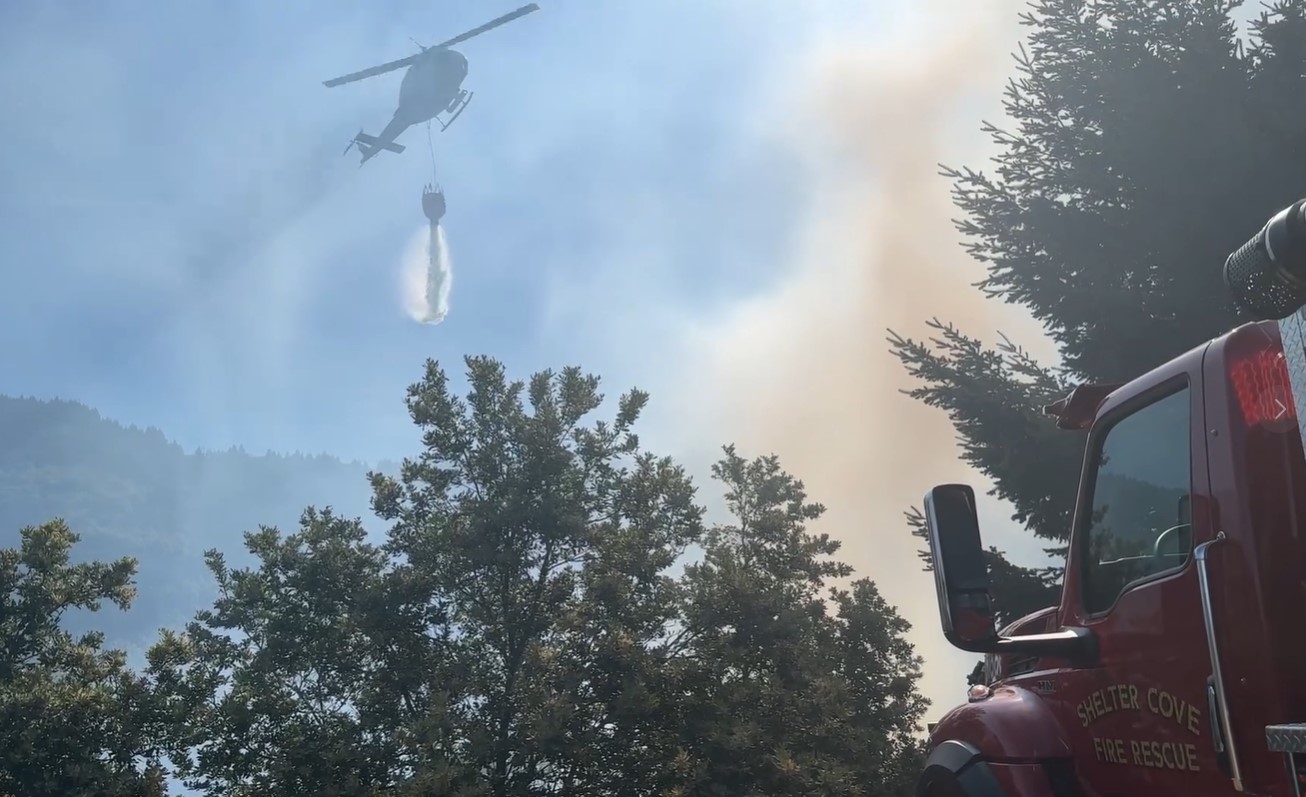
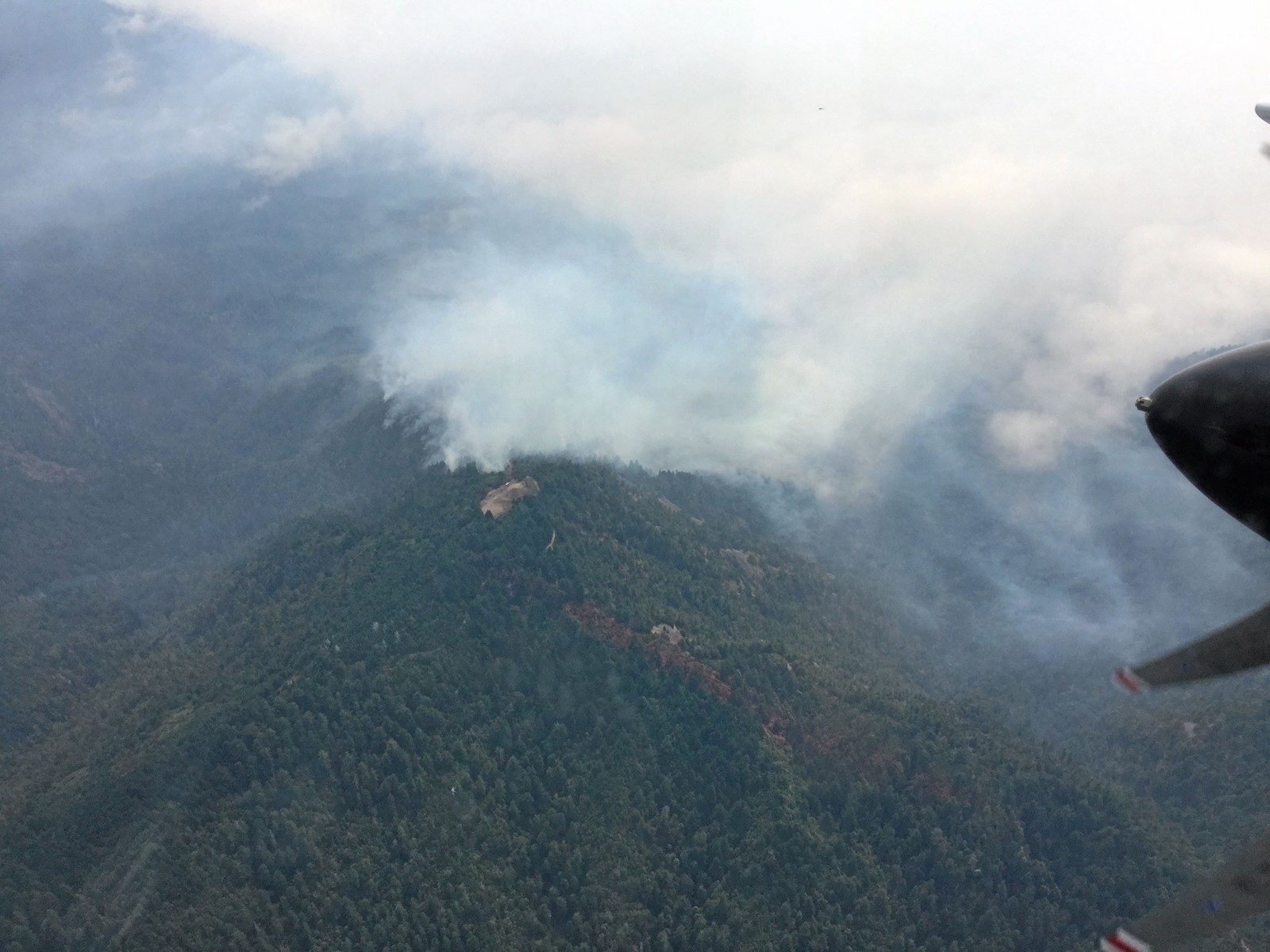


Shelter Cove, a coastal community with a single winding access road and home to about seven hundred residents surrounded by forest, was on its way to protect every home from wildfire in a federally funded fuels reduction project.
But earlier this month, the Shelter Cove Fire Department’s request for reimbursement for contracting work was rejected by the U.S. Forest Service in a short email. The email from Feb. 5 read “Hi, Nick, we received your advance request. But payments with BIL IRA and IIJA funds are on hold till further notice.”
The rejected funding request, sent in late-January, was for $320,000 of a $6,222,500 grant.
Nick Pape, Shelter Cove fire chief, later spoke with a U.S. Forest Service representative who told him these funds, which came from the Infrastructure Investment and Jobs Act of 2021 (also known as the Bipartisan Infrastructure Law) and were awarded to the district in March 2023, were not distributed because the USFS was doing an assessment of spending from previous years.
“This is a very timely grant. The work we’re doing now is in preparation for wildfire season 2025,” said Pape, who said the department has now issued a stop work order for this project due to the halt in funding.
“We are literally, quite literally, raking the forest around homes and property,” he added.
President Donald Trump famously recommended raking California’s forests in 2018 when visiting the remains of Paradise after the Camp Fire, the deadliest in California history. The Trump administration has pushed to review and block swaths of federal grant funding in an attempt to align funds with his wide-ranging executive orders. While the push was blocked by judges, agencies still appear to be scrambling to comply.
Pape said, so far, contractors have done fuel reduction for 80 structures and were protecting about 40 structures a month. He said they were on track to have the majority of the homes completed by Shelter Cove’s peak fire season in August and would have next started on vacant lots and greenbelt areas that surround the community. The community is bordered by the federally-owned King Range National Conservation Area and California’s Sinkyone Wilderness State Park.
He pointed to fast burning and destructive fires in California that have ravaged towns in the past decade and said he fears Shelter Cove could be next.
“Shelter Cove has all the elements of all those other towns. We have the abundance of overgrown fuel. We have the terrain, with us being on the side of a coastal mountain range, and we get the weather,” he said, noting warm, strong winds and the surrounding forest that commonly sees wildfires. In a Facebook post, he wrote “we face a ticking time bomb, waiting for the right conditions to align.”
“These communities are having a hard time bouncing back just due to the total damage and destruction, and where Shelter Cove is at, it would be very, very difficult to rebuild it out here,” he said.
The $6,222,500 grant from the “Community Wildfire Defense Grant program”, a six year project in Shelter Cove, was unique in that it paid for the protection of private lands. Pape says this is important because the 3,000 acre community has many elderly residents who have trouble controlling fast-growing fuels. The community also hosts many lots owned by absentee owners.
The lots in Shelter Cove are often small and close together, a resort with dubiously designed lots cooked up by Los Angeles-based developers in the 1960s, so it’s difficult for people to build defensible space of 100 feet around homes.
The Resort Improvement District has an ordinance that owners must maintain their property, and in the event the fire district cannot contact the property owners, they could invoke the ordinance to do the job themselves. But Pape says the community has largely jumped on board of the project, which was first started with outreach efforts and planning.
“This is really the biggest key to protecting the community from that damaging fire, not just getting out of the way,” he said. Pape also pointed out local contractors are suffering from this, who were hoping to have a large long term contract.
He emphasized property owners can still sign up for the program on the department’s website.
“We are anticipating these funds coming back, so we are not canceling the program by any means. We’re just putting it on hold until the funding is reinstated,” he said.
Sage Alexander can be reached at 707-441-0504.

