




A curious fellow, one Sherlock Holmes, first appeared on the literary scene in 1887, creating a role he call a “consulting detective.”
And within a few months of the introduction of Holmes in “A Study in Scarlet,” a similar character of sorts appeared on the streets of San Bernardino. The man, Harry Taylor, was probably the city’s first private detective.
On Feb, 27, 1888, he really made his mark when he went to Los Angeles and tracked down Christian Merkel, who had broken into the safe of Charles H. Lindner, owner of the Pearl Restaurant in San Bernardino. Merkel was brought back to the city and quickly sent to San Quentin for three years.
As you might expect, Taylor immediately became a bit of a celebrity, even with no Dr. Watson to chronicle his successes. A few days afterward, Taylor was summoned to Santa Barbara in hopes of tracking down another convict there. On March 6, he led Oceanside police to Joe Crum, who had broken out of jail a few days earlier.
But this Holmes went a little too far in his “investigations.” On March 31, Taylor wrongly accused a woman of stealing $150. And rather than summoning the San Bernardino Police Department’s version of Inspector Lastrade, Taylor demanded she pay him “bail money” to keep her out of jail, which she did.
Local police caught wind of his blackmail scheme and arrested Taylor.
“The artful Harry went a little too far in his detective ambition,” wrote the San Bernardino Daily Courier on April 5. It was also discovered that Taylor had swindled more than one person the same way.
“He is an audacious scoundrel, this would-be detective, ex-crook and worthless character in general,” concluded the Courier on April 14.
And it is a bit elementary to predict what happened next — Taylor, out on bail, skipped town and was never seen again, leaving his bondsman with a $300 tab.
Free lawn mowing
Mowing lawns and cutting down high weeds were never popular summer chores in Needles, or maybe any time.
Living along the Colorado River years ago demanded some creativity when summer triple-digit temperatures persisted on many days, even as the sun disappeared behind the hills. Pushing a lawn mower or swinging a scythe were never in homeowners’ plans.
The San Bernardino Evening Index of July 19, 1906, reported that Needles residents did make good use of what resources they had to get the work done. The only equipment required was a lasso.
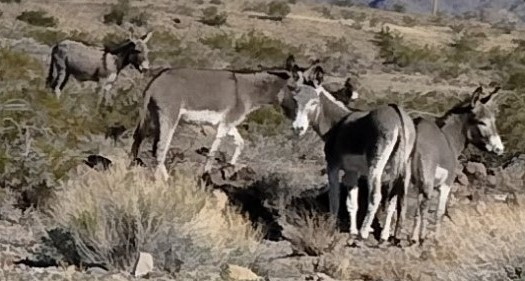
Their solution? “They catch a stray burro of which there are plenty around town at present, and shut it in their yard,” wrote the paper.
“As it is a question of work or starve with the animals, the lawn is soon rid of the long grass.” The well-fed burro was then freed and began looking for another free meal.
Joe Blackstock writes on Inhttps://www.pomonahistorical.org/land Empire history. He can be reached at joe.blackstock@gmail.com or Twitter @JoeBlackstock. Check out some of our columns of the past at Inland Empire Stories on Facebook at www.facebook.com/IEHistory.
 PREVIOUS ARTICLE
