


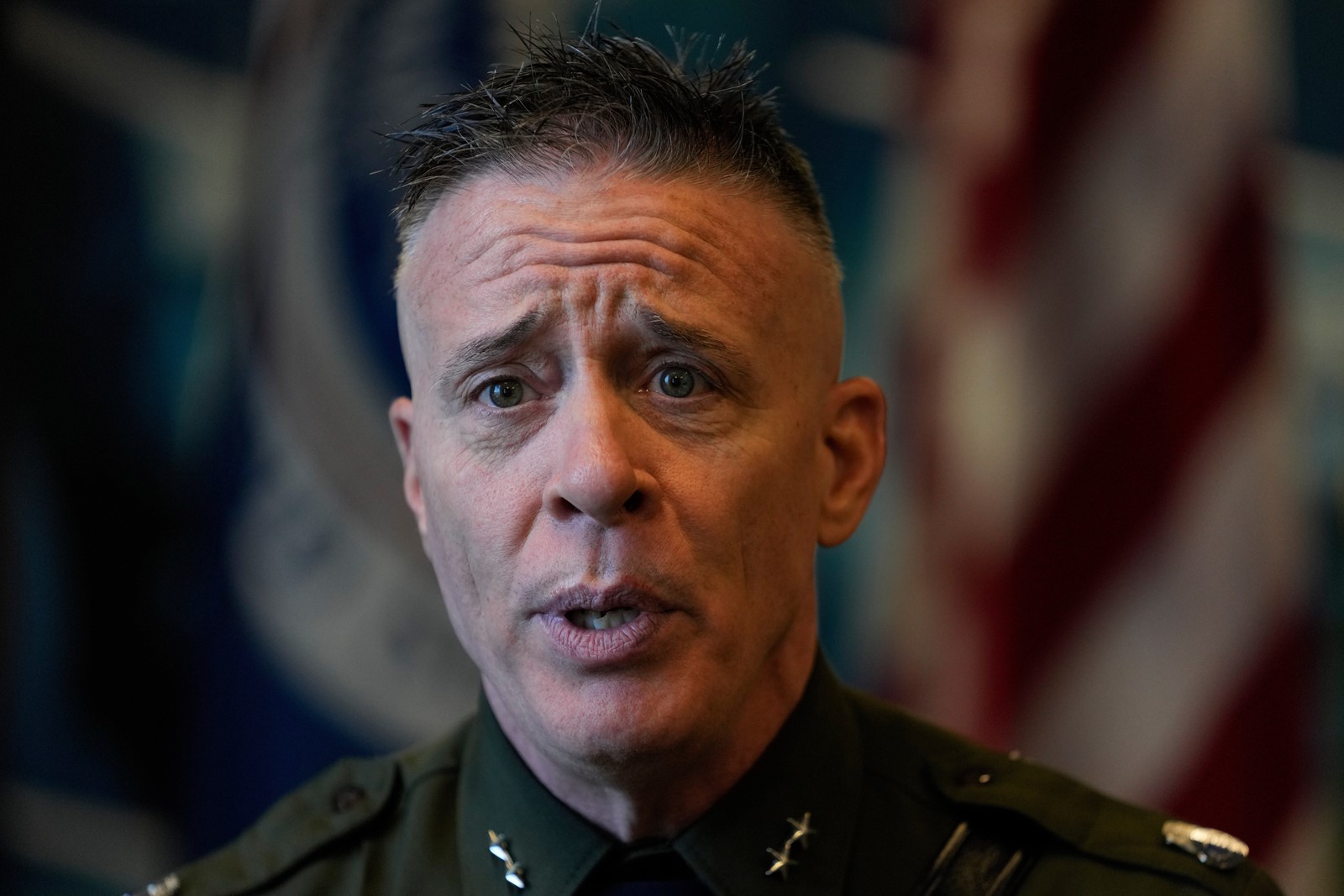


A federal judge in Chicago on Thursday issued an extensive injunction restricting federal agents’ use of force, saying Thursday that a top Border Patrol official leading an immigration crackdown repeatedly lied about threats posed by protesters and reporters.
The preliminary injunction came in response to a lawsuit filed by news outlets and protesters who allege federal agents have used excessive force during the operation that has netted more than 3,000 arrests and led to heated clashes across the nation’s third-largest city and its many suburbs.
“I see little reason for the use of force that the federal agents are currently using,” said U.S. District Judge Sara Ellis. “I don’t find defendants’ version of events credible.”
The order restricts agents from using certain riot control weapons, such as tear gas and pepper balls, “unless such force is objectively necessary” to prevent “an immediate threat.” It also bars agents from using physical force, including shoving protesters and journalists to the ground, and it requires agents to give two warnings before using riot control weapons.
Ellis said her order will prevent the “chilling of First Amendment right.”
A Department of Homeland Security official said in a statement that DHS plans to appeal the ruling, calling it “an extreme act by an activist judge that risks the lives and livelihoods of law enforcement officers.”
The Chicago area crackdown, part of the Trump administration’s growing federal intervention in Democratic strongholds, has triggered a litany of court action, including forcing improvements at a federal immigration facility activists say is a de facto detention center and blocking a National Guard deployment.
Thursday’s ruling largely mirrors an earlier temporary order that required agents to wear badges and banned them from using certain riot-control techniques, such as tear gas, against peaceful protesters and journalists.
After repeatedly chastising federal officials for not following her previous orders, she added a requirement for body cameras.
In delivering the injunction, Ellis quoted former late presidents including George Washington and a famous poem about Chicago by Carl Sandburg. She described protesters and advocates facing tear gas, having guns pointed at them and being thrown to the ground, saying “that would cause a reasonable person to think twice about exercising their fundamental rights.”
A day earlier, attorneys for both sides repeatedly clashed in court over accounts of several tense incidents since the immigration crackdown began in September. Several involved Gregory Bovino, a Border Patrol commander who has led the crackdown, including an incident where he threw a cannister of gas a crowd after alleging he was hit by a rock.
Ellis said Bovino walked back the claim about the rock after video evidence didn’t show it to be true. “Bovino admitted that he lied,” she said.
She also noted that Bovino denied using force on a man he was filmed “obviously tackling” to the ground.
Bovino, who led a similar operation in Los Angeles, has been forced to sit for hours of closed-door depositions related to growing legal challenges stemming from “Operation Midway Blitz.”
Clips of the private interviews, where Bovino is dressed in his Border Patrol uniform and at times evasive, were played in court, along with body camera footage.
Bovino — head of a Border Patrol sector in El Centro, Calif. — has repeatedly defended agents’ use of force, while also dodging questions about Border Patrol tactics.
Anti-protest rules speeded up
Meanwhile, the Trump administration is speeding up the implementation of new rules that would give the agency tasked with protecting federal government facilities greater authority to charge people for a broader array of offenses on or off those properties.
The changes outlining the powers of the Federal Protective Service, an agency within the Department of Homeland Security, were put forward in early January under the Biden administration and were slated to take effect on Jan. 1 of next year but instead went into effect Wednesday. The administration said the rules were being changed ahead of time so they could address a “recent surge in violence.”
They come as protests have surged against Trump’s mass deportation agenda, especially near buildings associated with immigration enforcement.
They also come as the Trump administration is facing lawsuits in both Chicago and Portland against what critics say is the excessive use of force by federal officers against protesters and others or unjustified attempts to bring in federal forces to protect facilities.
Activists and many political leaders have accused Homeland Security of aggressively suppressing peaceful protests and targeting activists trying to hold them accountable. Critics said the new rules could be used to target protesters.
 PREVIOUS ARTICLE

